

FCA (Free Carrier)
Concept Definition
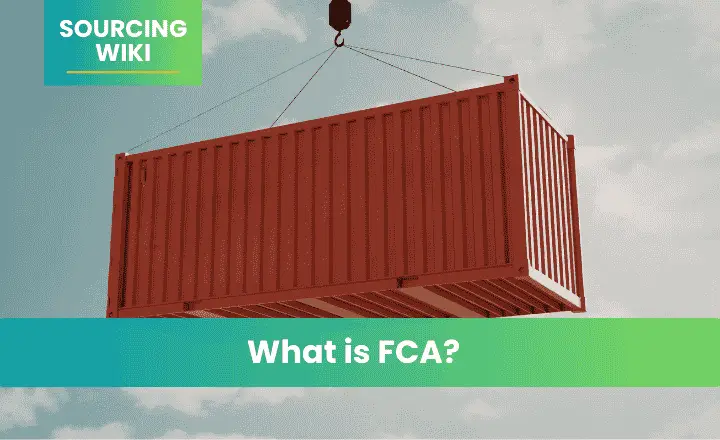
FCA (Free Carrier) is a versatile Incoterms® rule designed to be the modern, preferred alternative to EXW for containerized shipping. Under FCA, the seller is responsible for clearing the goods for export and delivering them to the carrier (or another party) nominated by the buyer at a "named place." Once the goods are delivered to that specific location, the risk transfers to you (the buyer).
What Is FCA Meaning in Shipping?
FCA is often described as the "smarter" version of EXW. While EXW forces you to handle everything, including the difficult export customs process, FCA requires the seller to handle the export formalities for you.
Scenario: Suppose you are buying a batch of cups from a seller in Yiwu, China, and you want to ship them to your warehouse in Los Angeles, USA. Under FCA (Named Place: Forwarder’s Warehouse in Yiwu), here is what happens:
- You hire a freight forwarder: You nominate a freight forwarder who has a warehouse in or near Yiwu.
- The Seller delivers the goods: The seller is responsible for loading the goods (if at their premises) and driving them to your nominated forwarder’s warehouse.
- Export Customs: The seller handles the export declaration and pays the related fees in China. This is the biggest benefit over EXW.
- Risk Transfer: Once the goods arrive at the nominated forwarder’s warehouse and are ready for unloading, the risk of loss or damage passes from the seller to you.
- Your Responsibility: From the moment the goods are at the forwarder's warehouse, you (the buyer) are responsible for the main carriage, import customs clearance, duties & taxes, and final delivery to your Los Angeles warehouse.
As you can see, FCA removes the headache of export declarations from you, while still allowing you to control the freight forwarder and the shipping costs.
Responsibilities: Who Does What?
To understand how FCA manages the workload, refer to this breakdown:
| Responsibility | Seller (Exporter) | Buyer (Importer) |
|---|---|---|
| Export Clearance | ✅ (Required) | ❌ |
| Main Carriage | ❌ | ✅ |
| Import Clearance | ❌ | ✅ |
| Duties & Taxes | ❌ | ✅ |
| Loading at Origin | ✅ (If at seller's premises) | ❌ |
| Risk Transfer | At named place of delivery | Upon arrival at named place |
Why Choose FCA Over EXW?
FCA is generally safer and more efficient than EXW for the following reasons:
- Export Compliance: In China (and many other countries), as a foreign buyer, you cannot legally declare goods for export yourself. You would need to hire a third-party agent. Under FCA, the seller (who is a local entity) handles this naturally as part of their obligation.
- Control: You still retain the ability to choose your own freight forwarder. This allows you to negotiate better rates or choose a carrier you trust, rather than relying on the seller's choice of logistics.
- Defined Risk: The "named place" is clearly defined in the contract. You know exactly where your responsibility begins, whereas EXW can sometimes be vague if the seller refuses to assist with loading or handling.
Expert Note: When using FCA, be very specific about the "Named Place." If you name a "Carrier's Terminal" as the place of delivery, the seller is not responsible for unloading the goods from their truck at that terminal. If you name "Seller’s Factory" as the place of delivery, they are responsible for loading your truck. Always clarify the delivery point to avoid unexpected labor fees.
Related Knowledge Base
Sourcing Practices & Insights: FCA (Free Carrier)
Latest Sourcing Guides

Comece hoje
Vamos transformar seus objetivos de compras em realidadeWeChat:+86 15157124615
WhatsApp:+86 15157124615
Endereço: Edifício 10 #39 Xiangyuan Road, Hangzhou, China
