

CPT (Carriage Paid To)
Concept Definition
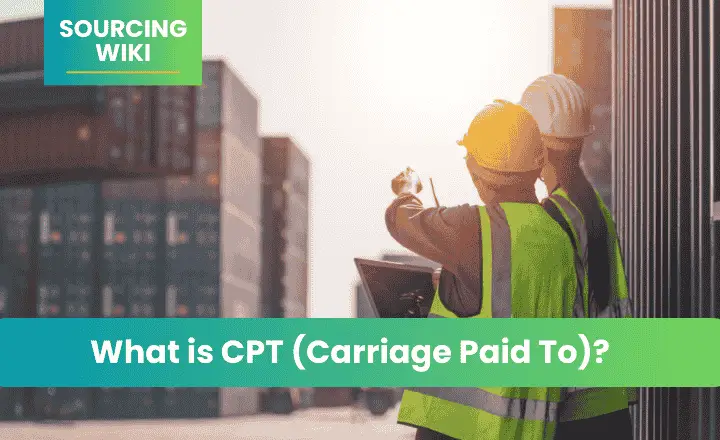
CPT (Carriage Paid To) is an Incoterms® rule where the seller pays for the freight to bring the goods to a named destination. However, there is a critical distinction in CPT that often catches new importers off guard: the risk of loss or damage transfers to the buyer as soon as the goods are handed over to the first carrier, not when they arrive at the destination.
What Is CPT Meaning in Shipping?
CPT is essentially a "logistics service" provided by the seller. The seller arranges and pays for the main carriage, but they are not liable for the goods once the journey begins.
Example Scenario: Suppose you are buying a large shipment of industrial components from a factory in Dongguan, China, and you want them delivered to your warehouse in London, UK via air freight. Under CPT (Named Place: London Airport), here is what happens:
- Export & Transport: The seller is responsible for export clearance in China and pays the air freight costs all the way to London Airport.
- The "Risk Transfer" Moment: As soon as the seller hands your goods to the first carrier (the truck driver picking the goods up from the Dongguan factory), the risk of loss or damage becomes yours.
- The Journey: The goods fly from China to London. If the flight is delayed, the seller might handle it (since they contracted the carrier), but if the goods are damaged in the air, the seller is not liable.
- Importing: Once the goods arrive in London, you (the buyer) are responsible for clearing them through UK customs, paying the import duties and taxes, and arranging the final delivery to your warehouse.
In this scenario, you benefit from the seller’s logistics network and freight expertise, but you bear the financial risk of transit.
Responsibilities: Who Does What?
| Responsibility | Seller (Exporter) | Buyer (Importer) |
|---|---|---|
| Export Clearance | ✅ | ❌ |
| Main Carriage (Freight) | ✅ | ❌ |
| Import Clearance | ❌ | ✅ |
| Duties & Taxes | ❌ | ✅ |
| Unloading at Destination | ❌ | ✅ |
| Risk Transfer | At first carrier's hands | During main carriage |
Why Choose CPT?
CPT is a popular choice for businesses that want to streamline logistics without giving up control over the final import process:
- Seller Expertise: If your seller has a high-volume shipping contract with a major carrier (e.g., DHL, FedEx, or a major airline), they can often secure cheaper freight rates than you can as an individual buyer. CPT leverages that pricing.
- Simplified Accounting: You get one invoice from the seller that includes the product cost and the freight, reducing the number of payments you need to track.
- Customs Control: You still retain total control over your local import procedures, allowing you to reclaim import VAT or manage local compliance exactly how you need to.
Essential Considerations & Warnings
CPT contains a significant "risk trap" that every importer must manage:
- The Risk Gap: Because the risk transfers at the first carrier (the local pickup truck), you are technically liable for the goods while they are being driven to the airport or port. If the goods are damaged in the first truck, you are responsible.
- Lack of Insurance: Unlike CIP (Carriage and Insurance Paid To), the seller is not required to provide insurance under CPT. If the plane crashes or the container is lost, you have no recourse unless you have purchased your own cargo insurance. Always buy your own insurance when using CPT.
- Terminal Handling Charges: Sometimes, "freight to destination" does not include terminal handling charges (THC) at the arrival airport or port. Ensure your agreement clarifies who pays for these unloading and handling fees at the arrival point.
Related Knowledge Base
Sourcing Practices & Insights: CPT (Carriage Paid To)
Latest Sourcing Guides

Comece hoje
Vamos transformar seus objetivos de compras em realidadeWeChat:+86 15157124615
WhatsApp:+86 15157124615
Endereço: Edifício 10 #39 Xiangyuan Road, Hangzhou, China
