

Transshipment in Shipping
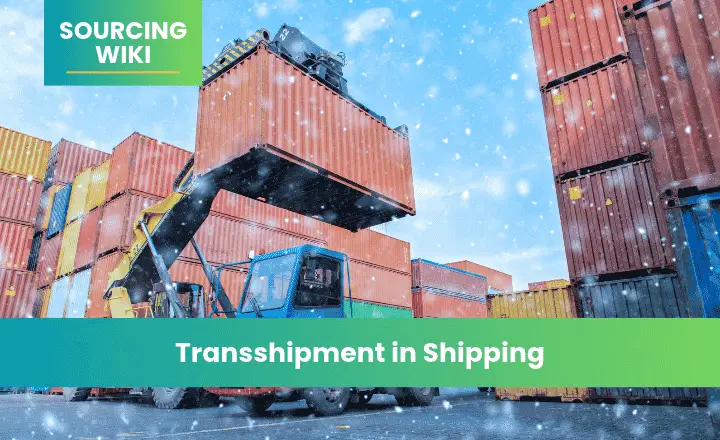
Not every international shipment travels directly from its origin port to its destination port. In many cases, cargo is transported through an intermediate port, where it is transferred from one vessel to another before continuing its journey.
This process is known as transshipment. It is a common feature of international container shipping and helps connect ports that do not have direct shipping services.
For importers, understanding transshipment helps explain why a shipment may pass through several ports, why the vessel shown in a booking confirmation may change during the journey, and why the transportation route may include additional handling stages.
What Is Transshipment in Shipping?
Transshipment refers to the transfer of cargo from one vessel to another at an intermediate location before it reaches its final destination.
In container shipping, the container is usually unloaded from the first vessel at a transshipment port and loaded onto another vessel for the next leg of the journey.[1][2]
For example, goods shipped from Shanghai to a smaller destination port may first travel to Singapore. At Singapore, the container is transferred to another vessel that serves the final destination.
The intermediate port is called a transshipment port or transshipment hub.
Transshipment is not limited to ocean freight. The term can also describe the transfer of goods between different means of transportation, such as ships, trains, trucks and aircraft.[3]
How Does the Transshipment Process Work?
A typical ocean freight transshipment involves several stages:
- Origin loading: The container is loaded onto the first vessel at the Port of Loading.
- First sea leg: The vessel transports the container to an intermediate transshipment port.
- Container discharge: The container is unloaded from the first vessel and moved to the terminal area.
- Connection handling: The container waits for the onward vessel according to the carrier's planned connection.
- Second vessel loading: The container is loaded onto another vessel.
- Final sea leg: The vessel transports the container to the Port of Discharge.
The cargo generally remains inside the same container during a standard container transshipment. The container changes vessels, but the goods are not necessarily unpacked and repacked.
The actual process may vary depending on the carrier's network, port facilities and transportation arrangements.
Why Do Shipping Lines Use Transshipment?
Transshipment allows carriers to connect more ports without operating a direct vessel service between every origin and destination.
Several factors explain why it is widely used.
Connecting Ports Without Direct Services
Not every port has regular direct connections to major international shipping routes.
Smaller ports may receive cargo through regional feeder vessels that connect with larger vessels at major hubs.
This allows buyers to ship goods to destinations that may not be served by direct mainline services.
Improving Vessel Network Efficiency
Large container vessels typically operate on major trade routes, while smaller vessels serve regional ports.
By transferring containers between these services, carriers can organize their networks around major hubs and improve vessel utilization.
Supporting Flexible Shipping Routes
A transshipment network gives carriers more routing options. Cargo can move through different hubs depending on available services, port connections and the carrier's operating arrangements.
For importers, this means the route shown in a booking may involve more than one vessel and port.
Transshipment vs. Direct Shipping
The main difference between transshipment and direct shipping is whether cargo needs to be transferred to another vessel at an intermediate port.
| Comparison | Direct Shipping | Transshipment |
|---|---|---|
| Route | Origin port to destination port without an intermediate vessel transfer | Includes at least one intermediate transfer between vessels |
| Vessel changes | No vessel change during the planned direct sea service | Cargo is transferred to another vessel |
| Intermediate port | No transshipment port required | One or more transshipment ports may be involved |
| Handling stages | Generally fewer vessel-transfer operations | Additional discharge and loading operations |
| Transit time | Often shorter, depending on the service | May take longer because of connection and handling time |
| Route availability | Depends on direct service coverage | Can connect a wider range of ports |
Direct shipping is not automatically the best option for every shipment. The most suitable route depends on the destination, available services, total transportation cost and required delivery timeframe.
What Is a Transshipment Port?
A transshipment port is an intermediate port where cargo is transferred between vessels or transportation services before continuing to its final destination.
Major shipping hubs play an important role in connecting international trade routes. Examples include Singapore, Busan and other major container ports with extensive regional and international connections.
A transshipment hub may handle:
- Containers arriving on large mainline vessels
- Containers transferred to smaller regional feeder vessels
- Cargo moving between different carrier services
- Containers waiting for onward connections
The port's role is not necessarily to serve as the final destination for the cargo. It may function primarily as a connection point within the carrier's shipping network.
Transshipment vs. Transloading
Transshipment and transloading are sometimes confused because both involve cargo movement during transportation. However, they describe different operations.
| Comparison | Transshipment | Transloading |
|---|---|---|
| Meaning | Moving cargo from one vessel or transport service to another | Moving goods from one container or transport unit into another |
| Cargo handling | In standard container transshipment, goods usually remain inside the same container | Goods are physically unloaded and transferred |
| Container | The same container generally continues its journey | A different container or transport unit may be used |
| Main purpose | Connecting different transportation services | Changing the cargo's transport unit or arrangement |
For example, if a container is unloaded from one vessel in Singapore and loaded onto another vessel without opening it, this is transshipment.
If the goods are removed from that container and loaded into a different container for onward transportation, the operation is transloading.
The two processes may sometimes occur within the same overall transportation arrangement, but they are not interchangeable terms.
Frequently Asked Questions
Does transshipment mean my goods will be unloaded from the container?
Not necessarily. In standard container transshipment, the container is transferred between vessels while the goods generally remain inside it. The container itself is unloaded and reloaded, rather than the individual products.
Is transshipment the same as a direct shipment?
No. Direct shipping does not require an intermediate vessel transfer along the planned sea route. Transshipment involves moving cargo through an intermediate port and transferring it to another vessel.
Does transshipment always increase shipping time?
Not always by the same amount. Transshipment involves an additional connection stage, and the total time depends on the vessel schedules, waiting time at the hub and onward service availability. A well-coordinated connection may add relatively little time, while a missed connection can extend the journey.
Does transshipment mean the goods enter the intermediate country's domestic market?
No. A transshipment operation does not automatically mean that goods are imported for domestic consumption in the intermediate country. The customs treatment depends on the port, jurisdiction and applicable transit or customs procedures.
Can a shipment have more than one transshipment port?
Yes. Some routes involve multiple intermediate ports and vessel transfers before reaching the final destination. The number of transfers depends on the carrier's service network and the selected route.
Does transshipment change the country of origin of goods?
No. A change of vessel or transit through an intermediate port does not, by itself, change the goods' country of origin. Origin determination follows the applicable origin rules and the actual production or processing history of the goods.
Conclusion
Transshipment is an important part of international shipping networks. By transferring containers between vessels at intermediate ports, carriers can connect major trade routes with regional and smaller destination ports.
For importers, the key distinction is between direct shipping and a route that involves one or more vessel transfers. Understanding this difference makes it easier to interpret shipping routes and assess the transportation arrangements included in a freight quotation.
NewBuyingAgent helps global buyers source products from China according to their purchasing needs. When coordinating purchases from Chinese manufacturers, buyers may need to consider the intended destination, available shipping routes and expected delivery requirements when planning their orders. NewBuyingAgent helps buyers coordinate product sourcing and supplier-related requirements, while transportation arrangements and route details should be confirmed with the appointed logistics provider.
References
- DHL Logistics of Things – Transshipment: https://lot.dhl.com/glossary/transshipment/
- Maersk – 5 Ways to Boost Ocean Transshipment Reliability: https://www.maersk.com/insights/resilience/2024/05/30/five-ways-to-boost-transshipment-reliability
- United Nations Economic Commission for Europe (UNECE) – Terminology on Combined Transport: https://unece.org/sites/default/files/2022-06/ECE-TRANS-SC3-WP.3-2022-16e.pdf
- Digital Container Shipping Association (DCSA) – Shipping Glossary: https://dcsa.org/standards/shipping-glossary
Related Knowledge Base
Sourcing Practices & Insights: Transshipment in Shipping
Latest Sourcing Guides



Get Started Today
Let's Turn Your Sourcing Goals into RealityWeChat:+86 15157124615
WhatsApp:+86 15157124615
Address:Building 10 #39 Xiangyuan Road, Hangzhou, China
