

Incoterms® 2020 and Import Customs
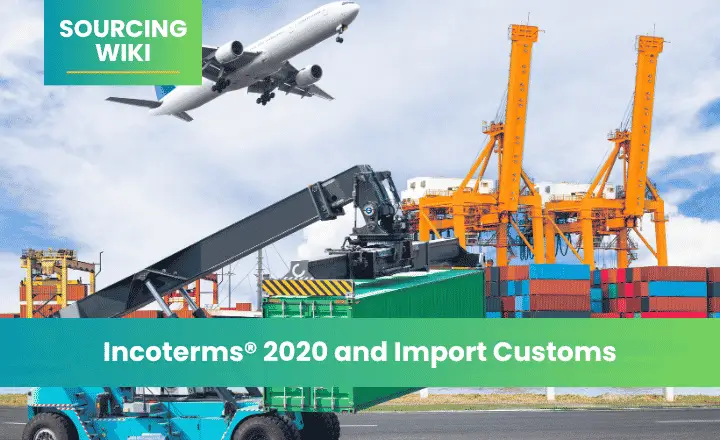
When buying products internationally, agreeing on a product price is only part of the transaction. Buyers and sellers also need to determine who arranges transportation, who handles export and import customs clearance, who pays duties and taxes, and when the risk of loss or damage transfers from one party to the other.
This is where Incoterms® rules become important. They establish standardized responsibilities between buyers and sellers for delivery, transportation, costs, and certain customs formalities. However, they do not replace national customs laws or automatically determine every party's legal obligations to customs authorities. [1][2]
For businesses importing products from China, understanding Incoterms® can help prevent unexpected charges, clarify supplier quotations, and reduce disputes over customs clearance.
What Are Incoterms® 2020?
Incoterms® are internationally recognized trade rules published by the International Chamber of Commerce (ICC). Incoterms® 2020 is the latest edition currently in use as of October 2026.
The rules define key responsibilities between the seller and buyer, including:
- Who arranges and pays for transportation.
- Who handles export and import clearance under the agreed rule.
- Who bears specified costs associated with delivery.
- Where delivery takes place and when the risk of loss or damage transfers.
- Whether the seller must arrange cargo insurance under the selected rule.
Incoterms® do not determine every aspect of a sale. They do not, by themselves, establish ownership transfer, payment terms, product specifications, remedies for breach of contract, or all applicable tax and regulatory obligations. Those matters need to be addressed separately in the sales contract and under applicable law. [1][2]
The chosen rule should be written clearly in the contract or purchase order, together with the named place or port and the applicable edition. For example:
DAP Buyer's Warehouse, Chicago, IL, USA, Incoterms® 2020
Naming the precise destination helps the parties understand where the seller's delivery obligations end.
Who Pays Import Duties Under Different Incoterms®?
The answer depends on the rule agreed by the buyer and seller. The following summary covers five commonly discussed terms.
EXW — Ex Works
Under EXW, the seller generally makes the goods available at the named place, often the seller's premises. The buyer bears most costs and risks from that point, including arranging transportation and handling export and import formalities under the rule.
EXW can create practical difficulties in cross-border transactions because the buyer may have trouble arranging export clearance in the seller's country. The ICC identifies FCA as an alternative worth considering where the buyer intends to arrange carriage but the seller is better placed to complete export clearance. [1][3]
Import customs: The buyer is generally responsible for import clearance and import duties under EXW.
FOB — Free On Board
FOB is intended for sea and inland waterway transport. The seller delivers the goods on board the vessel nominated by the buyer at the named port of shipment and handles export clearance. The buyer generally arranges the main carriage and handles import clearance at destination. Risk transfers when the goods are on board the vessel. [1][3]
Import customs: The buyer is generally responsible for import clearance and import duties under FOB.
FOB is not designed for every mode of transport. For containerized shipments handed over to a carrier before being loaded onto a vessel, FCA may be more appropriate depending on the transaction.
CIF — Cost, Insurance and Freight
CIF is also intended for sea and inland waterway transport. The seller pays the cost of carriage and arranges the required minimum insurance cover to the named destination port. However, the risk of loss or damage generally transfers to the buyer when the goods are loaded on board the vessel at the port of shipment, not when they arrive at the destination port. [1][3]
Import customs: The buyer is generally responsible for import clearance and import duties under CIF.
An important distinction is that the seller pays for the main carriage and insurance under CIF, but that does not mean the seller assumes all transport risks until arrival.
DAP — Delivered at Place
Under DAP, the seller arranges and bears the costs and risks of bringing the goods to the named destination. The goods are delivered when they are placed at the buyer's disposal on the arriving means of transport, ready for unloading.
The buyer generally handles import clearance and pays import duties and applicable import taxes. Unloading is generally the buyer's responsibility unless otherwise agreed. [1][3]
Import customs: The buyer is generally responsible for import clearance and import duties under DAP.
DDP — Delivered Duty Paid
DDP places the broadest delivery obligations on the seller among these five terms. The seller arranges delivery to the named destination and is responsible under the rule for export and import clearance, as well as applicable import duties and taxes.
The buyer generally receives the goods at the named destination ready for unloading. [1][3]
Import customs: The seller is responsible for import clearance and import duties under DDP, subject to the practical and legal requirements of the destination country.
DDP deserves particular attention. In some markets, a foreign seller may face restrictions or administrative barriers when acting as the importer, registering for taxes, or completing local customs formalities. The ICC advises businesses to consider these limitations before selecting DDP. [2]
Incoterms® Comparison: Who Handles Shipping and Customs?
The following table summarizes the typical responsibilities of buyers and sellers under five commonly used Incoterms® 2020 rules. The exact obligations depend on the selected rule and the named place or port.
| Incoterm | Main Transportation | Export Clearance | Import Clearance | Import Duties and Taxes | Delivery and Risk Transfer |
|---|---|---|---|---|---|
| EXW (Ex Works) | Buyer arranges | Buyer generally responsible under the rule | Buyer responsible | Buyer generally pays | Seller makes goods available at the named place; risk transfers when the goods are placed at the buyer's disposal |
| FOB (Free On Board) | Buyer arranges main carriage | Seller responsible | Buyer responsible | Buyer generally pays | Risk transfers when goods are loaded on board the vessel at the named port of shipment |
| CIF (Cost, Insurance and Freight) | Seller pays carriage to the named destination port | Seller responsible | Buyer responsible | Buyer generally pays | Risk transfers when goods are loaded on board the vessel at the port of shipment |
| DAP (Delivered at Place) | Seller arranges carriage to the named destination | Seller responsible | Buyer responsible | Buyer generally pays | Risk transfers when goods are placed at the buyer's disposal on the arriving means of transport, ready for unloading |
| DDP (Delivered Duty Paid) | Seller arranges carriage to the named destination | Seller responsible | Seller responsible under the rule | Seller responsible under the rule | Risk transfers when goods are placed at the buyer's disposal at the named destination, ready for unloading |
Important notes:
- FOB and CIF are intended for sea and inland waterway transport. For containerized or multimodal shipments, FCA may be more appropriate depending on the handover arrangements.
- Under CIF, the seller pays for carriage and arranges the required insurance cover, but risk transfers at the port of shipment when the goods are loaded on board the vessel.
- DAP generally requires the buyer to handle import clearance and pay applicable import duties and taxes. DDP places these responsibilities on the seller under the rule, subject to the destination country's legal and practical requirements.
- Incoterms® allocate responsibilities between buyer and seller; they do not override customs law or automatically determine who is legally liable to customs authorities.
Does the Incoterm Determine Who Is Legally Responsible to Customs?
Not necessarily.
Incoterms® allocate responsibilities between the buyer and seller under their sales contract. Customs authorities, however, apply the laws of the country where goods are imported.
For example, a U.S. importer may hire a customs broker to prepare and submit an entry. CBP explains that the importer remains ultimately responsible for knowing the requirements and ensuring that the import complies with applicable federal rules, even when a broker is used. [4]
This means that agreeing on a delivery term does not automatically remove every statutory obligation from the party that must comply with local law.
Under DDP, the seller agrees to take responsibility for import clearance and duties under the contract. However, the seller must still determine whether it can legally and practically fulfill those obligations in the destination market. The parties may need to address importer-of-record arrangements, local registrations, tax obligations, and broker authorization separately.
Before agreeing on a term, buyers and sellers should confirm:
- Who will be identified as the importer of record, where the destination country's system requires one.
- Whether the party expected to clear the goods can legally complete the required formalities.
- Who will provide customs data, product descriptions, origin information, and supporting documents.
- Who will pay the customs broker and other clearance-related charges.
- What happens if customs delays release, requests additional documents, or reassesses duties.
These details are particularly important when one party promises door-to-door delivery but the contract does not clearly explain how import clearance will be handled.
Why DDP Does Not Always Mean a Risk-Free Import
DDP can be attractive to buyers because the seller takes responsibility for arranging delivery and import clearance under the rule. The buyer may receive a more consolidated quotation instead of coordinating each stage independently.
However, DDP does not guarantee that customs clearance will be straightforward or that no additional charges can arise. The parties should understand exactly what is included in the quotation and how exceptions will be handled.
Before accepting a DDP offer, ask the seller:
- Are import duties and applicable taxes included in the quoted price?
- Who will act as importer of record, where required?
- Which customs broker or service provider will handle the entry?
- Are inspection, storage, demurrage, detention, and other unexpected charges included or excluded?
- What happens if customs requests additional information or determines that additional duties are payable?
- Will the buyer receive the documents needed for its own accounting and tax records?
A low DDP quotation is not necessarily the best option if the responsibilities and exclusions are unclear. The buyer should compare the total commercial terms, not just the headline price.
How to Choose the Right Incoterm When Importing from China
The best term depends on the buyer's logistics capabilities, preferred level of control, destination-country requirements, and the seller's ability to fulfill the agreed obligations.
Choose EXW cautiously if you have the resources to organize pickup and export formalities in China. Consider whether FCA would be more practical when the seller can handle export clearance.
Consider FOB when the shipment is transported by sea and the buyer wants to arrange the main ocean freight and destination-side services. Check whether FOB is appropriate for the actual handover point, especially for containerized cargo.
Consider CIF when the seller will arrange sea freight and the required insurance cover to the named port, while the buyer handles import clearance and destination-side costs.
Consider DAP when the buyer wants the seller to arrange transportation to a named destination but prefers to handle import clearance and duties itself.
Consider DDP when the seller can legally and practically handle import clearance and the parties clearly agree on which duties, taxes, and other costs are included.
Incoterms® should be chosen before the order is finalized. Changing the term after production or shipment begins may affect freight arrangements, pricing, insurance, and clearance responsibilities.
Example: Importing Products from China into the United States
Suppose a U.S. retailer purchases home products from a supplier in China. The seller offers two quotations:
- Option A — FOB Shanghai: The seller handles export clearance and delivers the goods on board the nominated vessel. The buyer arranges ocean freight, import clearance, and payment of applicable import duties.
- Option B — DDP Buyer's Warehouse, Chicago: The seller arranges delivery to the named destination and is responsible under the rule for import clearance and applicable duties and taxes.
The two prices cannot be compared fairly without checking what each includes.
For Option A, the buyer may need to budget for international freight, insurance if desired, customs brokerage, import duties, applicable fees, and domestic delivery.
For Option B, the seller's quotation may incorporate many of these costs. The buyer should still confirm the import-clearance arrangement, the treatment of additional charges, and whether the seller can fulfill the DDP obligations legally in the United States.
The buyer should also verify product classification, origin, customs value, and applicable tariffs independently or with a qualified customs professional. Incoterms® allocate contractual responsibilities; they do not determine the tariff rate or guarantee a particular customs outcome.
Common Mistakes to Avoid
Assuming CIF means the seller bears all risk until arrival
Under CIF, the seller pays for carriage and arranges the required insurance, but risk generally transfers when the goods are loaded on board the vessel at the port of shipment.
Assuming DAP includes import duties
Under DAP, the buyer generally handles import clearance and pays applicable import duties and taxes. DDP is the rule under which the seller assumes those responsibilities under the contract.
Using FOB for every shipment
FOB is designed for sea and inland waterway transport. For containerized or multimodal shipments, FCA may better reflect the point at which the seller hands the goods to the carrier.
Assuming DDP removes all legal obligations from the buyer
The allocation of contractual responsibilities does not override destination-country law. The buyer may still have obligations under local law, and the parties should confirm who will be the importer of record and who will supply required information.
Leaving the named place or port unclear
Terms such as “DAP USA” or “FOB China” may be too vague for practical use. Specify the relevant port, terminal, address, or other named place and the agreed Incoterms® edition.
Failing to define additional charges
The contract should explain how the parties will handle inspection fees, storage, demurrage, detention, customs reassessments, and other costs that may arise outside the ordinary delivery plan.
Frequently Asked Questions
1. Which Incoterm requires the seller to pay import duties?
Under DDP (Delivered Duty Paid), the seller is responsible under the rule for import clearance and applicable import duties and taxes. The seller must confirm that it can fulfill these obligations in the destination country.
2. Under FOB, who pays import duties?
The buyer generally handles import clearance and pays applicable import duties under FOB. The seller handles export clearance and delivers the goods on board the vessel at the named port of shipment.
3. Under CIF, does the seller pay customs duty?
No. Under CIF, the seller pays the cost of carriage and arranges the required insurance cover to the named destination port. The buyer generally handles import clearance and import duties.
4. Under DAP, who is responsible for customs clearance?
The seller arranges delivery to the named destination. The buyer generally handles import clearance and pays applicable import duties and taxes.
5. Can a buyer still hire a customs broker under DDP?
The parties can agree on service arrangements, but they must ensure those arrangements are consistent with the seller's obligations under DDP and the destination country's law. The contract should identify who will authorize the broker, provide the required information, and bear the costs.
6. Do Incoterms® determine who legally owes customs duties?
Incoterms® allocate responsibilities between the buyer and seller under their contract. The legal liability to customs authorities depends on the applicable national law and the facts of the import transaction.
Conclusion
Incoterms® 2020 help buyers and sellers agree on transportation, delivery, risk transfer, and customs-related responsibilities. EXW, FOB, CIF, DAP, and DDP can lead to very different cost and clearance arrangements, so the chosen rule should match the transaction and the parties' practical capabilities.
For businesses sourcing products from China, clarity at the quotation and contract stage can prevent confusion over freight, import duties, customs brokerage, and delivery costs.
NewBuyingAgent helps global buyers source products from China according to their purchasing needs. Buyers should confirm the applicable Incoterm, destination-country customs requirements, and import-cost responsibilities before placing an order.
References
[1] International Chamber of Commerce (ICC). Incoterms® 2020. https://iccwbo.org/business-solutions/incoterms-rules/incoterms-2020/
[2] International Chamber of Commerce (ICC). Incoterms® and Commercial Contracts: Frequently Asked Questions. https://library.iccwbo.org/clp/clp-incoterms-qa-2020.htm
[3] International Trade Administration, U.S. Department of Commerce. Know Your Incoterms. https://www.trade.gov/know-your-incoterms
[4] U.S. Customs and Border Protection (CBP). Do I Need a Customs Broker to Clear My Goods Through U.S. Customs and Border Protection? https://www.help.cbp.gov/s/article/Article-1169?language=en_US
[5] U.S. Customs and Border Protection (CBP). Tips for New Importers and Exporters. https://www.cbp.gov/trade/basic-import-export/importer-exporter-tips
Disclaimer: This article is for general informational reference only and does not constitute legal, customs, tax or shipping advice. Incoterms® responsibilities depend on the selected rule and named place, while customs and tax obligations are subject to applicable local law. Regulations may change. Do not rely solely on this content for business decisions. Verify your contract and destination-country requirements with qualified professionals as needed.
Related Knowledge Base
Sourcing Practices & Insights: Incoterms® 2020 and Import Customs
Latest Sourcing Guides

Get Started Today
Let's Turn Your Sourcing Goals into RealityWeChat:+86 15157124615
WhatsApp:+86 15157124615
Address:Building 10 #39 Xiangyuan Road, Hangzhou, China
