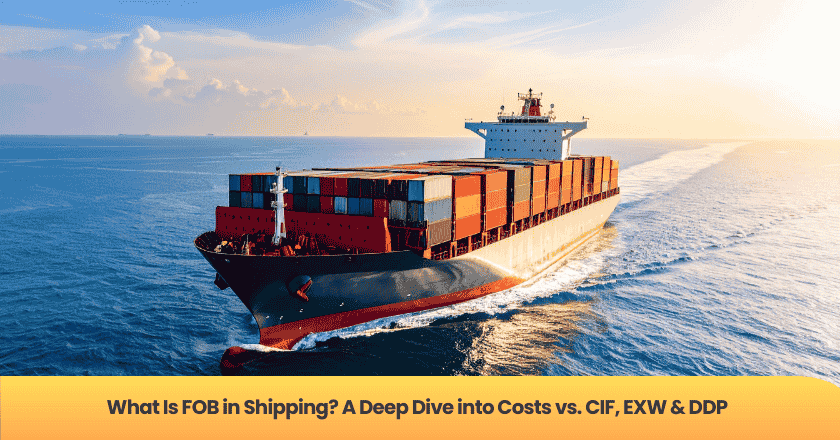
Understanding FOB in shipping is crucial for success in international trade. FOB defines the point where responsibility, cost, and risk move from seller to buyer. FOB (Free On Board) gives buyers control over their goods and allows for effective cost management. Many importers and exporters utilize FOB to clarify payment responsibilities. A clear understanding of FOB helps avoid confusion and unexpected expenses. By mastering FOB terms, businesses can protect their interests and make informed decisions.
Key Takeaways
- FOB stands for 'Free On Board' and defines when responsibility and cost shift from seller to buyer during shipping.
- Understanding FOB terms helps you manage shipping costs and avoid unexpected expenses in international trade.
- Choose between FOB Origin and FOB Destination based on your control needs and ability to manage shipping logistics.
- Always confirm the Incoterms in your contract to ensure clarity on who pays for shipping and when risk transfers.
- Utilize best practices like clear documentation and insurance to minimize risks associated with FOB shipping.
FOB in Shipping : Meaning & Basics
What Is FOB? Definition & Origin
The term FOB is frequently encountered in international trade documents and contracts. FOB stands for free on board. This Incoterms defines the point in the shipping process when the seller’s responsibility ends and the buyer’s responsibility begins. The concept of FOB originated in maritime trade, where goods moved from seller to buyer at a specific location—usually the port of shipment. Today, FOB Incoterms apply to many types of shipping, not just sea freight.FOB is used to set clear boundaries for cost, risk, and control during the movement of goods.
Tip: Always check the Incoterms in your contract. They determine who pays for each part of the shipping process and who takes on the risk at each stage.
How FOB Works in International Trade
When agreeing to FOB terms, both the buyer and the seller must follow a precise process. The seller delivers the goods to the port and loads them onto the vessel. At this moment, the risk and cost transfer from the seller to the buyer. The buyer becomes responsible for the shipping costs, insurance, and any risks that occur after the goods are on board. FOB gives you control over the shipping arrangements and allows you to choose your preferred carrier and insurance options. This Incoterms helps you manage costs and avoid surprises during international transactions.
- The buyer is responsible for ocean freight, insurance, and destination charges.
- The seller covers export duties, local transport to the port, and loading fees.
FOB in shipping provides transparency and reduces disputes between buyers and sellers. You know exactly when your responsibility starts.
FOB Origin vs. FOB Destination
It is essential to understand the difference between FOB Origin and FOB Destination.
With FOB origin, the risk and cost transfer to you as soon as the goods are loaded onto the vessel at the seller's port. he buyer handles all shipping arrangements from that point forward. With FOB destination, the seller remains responsible for the goods until they reach your specified location. The risk and cost transfer only when the goods arrive at your destination.
| Term | Risk Transfer Point | Cost Transfer Point | Who Controls Shipping |
|---|---|---|---|
| FOB Origin | Seller's port (on board) | Seller's port (on board) | Buyer |
| FOB Destination | Buyer’s location | Buyer’s location | Seller |
Choosing the right FOB option depends on specific business needs and the ability to manage logistics. FOB Incoterms offer flexibility and clarity, making them a popular choice in global sourcing.
Note: Always confirm the Incoterms in your contract. The wrong choice can lead to unexpected costs or risks.
FOB Responsibilities & Costs
Seller's Duties Under FOB
The seller handles several key steps under FOB. The seller prepares the goods for export and ensures they meet all regulations. The seller transports the goods to the port and pays for local charges. The seller loads the goods onto the vessel. The seller provides you with the necessary documents for customs clearance. The seller must deliver the goods on time and in good condition. The seller’s duties end once the goods are loaded on board.
Buyer's Duties Under FOB
Responsibility transfers to the buyer as soon as the goods are on the vessel. You arrange and pay for the main shipping from the port of origin. You handle insurance for the goods during transit. Import customs clearance and duties are managed by the buyer. You organize transport from the arrival port to your warehouse. You must track the goods and resolve any issues after loading.
Cost Breakdown: Who Pays What?
You and the seller split costs clearly under FOB. The table below shows who pays for each part of the process:
| Shipping Stage | Seller Pays | Buyer Pays |
|---|---|---|
| Export packaging | ✔ | |
| Inland transport to port | ✔ | |
| Export customs clearance | ✔ | |
| Loading onto vessel | ✔ | |
| Main shipping (ocean freight) | ✔ | |
| Insurance | ✔ | |
| Import customs duties/taxes | ✔ | |
| Inland transport (arrival) | ✔ |
Tip: Always confirm the Incoterms in your contract to avoid confusion about who pays each cost.
Risk Transfer Point in FOB
Knowing exactly when risk shifts is critical. Under FOB, the risk transfers from the seller to you the moment the goods are loaded onto the vessel. If damage or loss occurs after this point, the buyer bears the risk. This clear transfer point makes FOB one of the most popular Incoterms for international shipping. You can manage your risk by arranging proper insurance and tracking the goods closely.
Understanding FOB responsibilities helps you avoid disputes and control your shipping process.
FOB vs. Other Incoterms
FOB vs. EXW (Ex Works)
FOB and EXW are often compared when planning international shipping. Under EXW, the seller makes the goods available at their premises. You, as the buyer, handle all transportation, export duties, and risk from that point. With FOB, the seller delivers the goods to the port and loads them onto the vessel. The risk and cost transfer to you only after the goods are on board. The key differences of the FOB shipping point focus on when responsibility shifts. EXW gives you maximum control but also maximum responsibility. FOB offers a balanced split between seller and buyer duties.
FOB vs. CIF (Cost, Insurance, Freight)
Terms like Cost and Freight (CFR) and Cost, Insurance, and Freight (CIF) appear in many contracts. With CIF, the seller pays for shipping, insurance, and freight until the goods reach your port. You take responsibility after arrival. FOB requires you to arrange shipping and insurance once the goods are loaded. CIF reduces your risk but may increase your cost. FOB lets you choose your own carrier and insurance, which can save money if you have experience.
FOB vs. DDP (Delivered Duty Paid)
DDP is used when the buyer prefers the seller to handle almost everything. Under DDP, the seller manages shipping, import duties, taxes, and delivery to your door. You receive the goods with minimal effort. FOB gives you more control over shipping and customs but requires you to manage import processes. DDP suits buyers who want simplicity. FOB works best for buyers who want to optimize cost and logistics.
Incoterms Comparison Table
| Incoterms | Seller’s Duties | Buyer’s Duties | Risk Transfer Point | Control Over Shipping |
|---|---|---|---|---|
| EXW | Minimal | Maximum | Seller's premises | Buyer |
| FOB | Port delivery | Shipping, import | On board vessel | Buyer |
| CIF | Shipping, insurance | Import, inland | Arrival port | Seller (until port) |
| DDP | All-inclusive | Minimal | Buyer's location | Seller |
When to Use FOB or Other Incoterms
FOB is the preferred choice for those wanting control over shipping and cost management. EXW is suitable for buyers with strong logistics capabilities. CIF works well if you prefer the seller to handle cost and freight. DDP is ideal when you want a hassle-free experience. Always review Incoterms in your contract. FOB vs other Incoterms depends on your business needs, experience, and risk tolerance. You should consult experts to select the best Incoterms for your goods and shipping strategy.
Tip: Understanding Incoterms helps you avoid costly mistakes and ensures smooth delivery of your goods.
Risks, Best Practices
Common FOB Risks
Several risks are associated with using FOB in international trade. The main risk involves the transfer of responsibility for goods. If damage or loss occurs after the goods are loaded onto the vessel, you as the buyer must handle the consequences. Misunderstandings about Incoterms can lead to disputes between buyer and seller. Delays at the port may increase your cost and cause issues with delivery schedules. Incomplete or incorrect documentation can also create customs problems. You must stay alert to these risks to protect your interests.
Best Practices for FOB Shipping
You can reduce FOB risks by following best practices. Always confirm the Incoterms in your contract and make sure both buyer and seller understand their duties. Request clear documentation for all goods before shipping. Arrange insurance to cover the period after the goods are loaded. Track your goods closely during transit. Communicate with the seller to resolve any issues quickly. You should also review Incoterms regularly to stay updated on changes in international trade rules.
Tip: Use a checklist to verify each step in the FOB process. This helps you avoid costly mistakes and ensures smooth shipping.
FOB & Incoterms
Expert support is highly beneficial when managing FOB and other Incoterms. Specialists can help you understand the responsibilities of both buyer and seller. They provide guidance on risk management and quality assurance for your goods. You receive help with logistics, documentation, and compliance with Incoterms rules. This support allows you to focus on your business while experts handle the details of shipping and procurement.
| Step | Buyer Responsibility | Seller Responsibility |
|---|---|---|
| Export clearance | Yes | |
| Loading on vessel | Yes | |
| Main shipping | Yes | |
| Insurance | Yes | |
| Import clearance | Yes |
Note: You should always seek advice from professionals who understand Incoterms and FOB to minimize risk and ensure successful delivery of goods.
You now understand that FOB defines when cost and risk shift from seller to buyer. This knowledge helps you manage expenses and avoid disputes. Comparing FOB with EXW, CIF, and DDP shows how each Incoterms affects your control and responsibility. Choose the right Incoterms to match your business needs. Review your shipping terms regularly. Consult with trade experts to optimize your agreements and reduce risks in global sourcing.
FAQ
What does FOB mean in shipping?
FOB stands for "Free On Board." It defines the point when responsibility and cost for goods transfer from seller to buyer during international shipping.
Who pays for shipping under FOB terms?
The buyer pays for shipping, insurance, and import duties after the goods are loaded onto the vessel. The seller covers costs up to the port and loading charges.
When does risk transfer to the buyer in FOB?
Risk transfers to you once the goods are loaded onto the vessel at the port of origin. You must arrange insurance from this point forward.
Can you use FOB for air freight shipments?
FOB is primarily used for sea freight. Some contracts apply FOB to air shipments, but you should confirm the terms with your supplier.
What documents do you need for FOB shipping?
You need a bill of lading, commercial invoice, packing list, and export clearance documents. These help you clear customs and track your shipment.
NewBuyingAgent
Related Resources
Get Started Today
Let's Turn Your Sourcing Goals into RealityWeChat:+86 15157124615
WhatsApp:+86 15157124615
Address:Building 10 #39 Xiangyuan Road, Hangzhou, China