

General Average in Shipping
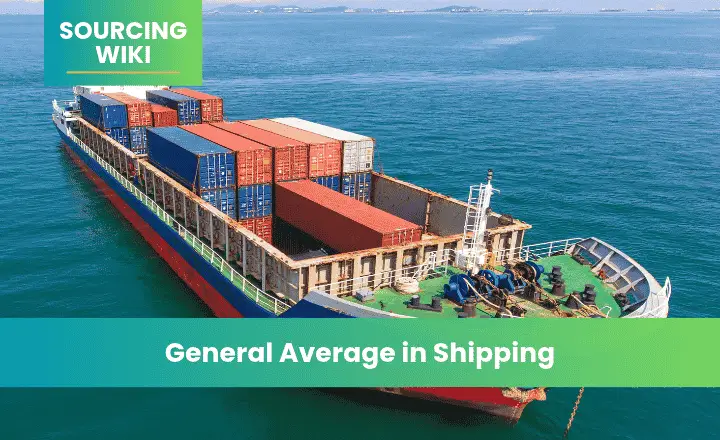
Imagine that a container ship encounters a serious emergency during an ocean voyage. To prevent the vessel and the remaining cargo from being lost, the captain orders part of the cargo to be jettisoned or arranges emergency salvage services.
The vessel survives, and most of the cargo reaches safety. However, the cost of the extraordinary measures does not necessarily fall only on the shipowner or the owner of the sacrificed cargo.
Under a maritime principle known as General Average, the parties whose property and interests have been saved may be required to share certain extraordinary losses and expenses.
For importers, this can create an unexpected financial obligation. Even if their own goods are undamaged, they may still be asked to provide security or contribute to the costs before the cargo is released.
Understanding General Average is therefore important for businesses involved in international ocean freight, particularly when importing high-value goods or shipping large quantities of products from overseas suppliers.
What Is General Average in Shipping?
General Average (GA) is a long-established maritime principle under which extraordinary sacrifices or expenditures, intentionally and reasonably made for the common safety of a maritime adventure, are shared among the interests involved.
The concept is commonly associated with the York-Antwerp Rules, which provide an internationally recognized framework for adjusting General Average when incorporated into the relevant contract of carriage or other applicable agreement.[1][2]
In practical terms, General Average may arise when:
- A vessel faces a serious danger during a voyage.
- An extraordinary action is taken to protect the vessel, cargo, and other interests involved.
- The action results in a sacrifice or additional expense.
- The loss or expenditure qualifies for General Average treatment under the applicable rules.
For example, if a vessel is in danger of sinking and part of its cargo is deliberately jettisoned to save the ship and the remaining goods, the value of the sacrificed cargo may be shared among the contributing interests.
Similarly, extraordinary salvage or emergency expenses may qualify for contribution if the relevant requirements are met.
Why Do Cargo Owners Have to Contribute?
The principle is based on the idea of shared safety.
When an extraordinary sacrifice or expenditure is made to protect the common maritime adventure, the resulting burden is not necessarily assigned only to the party whose property was sacrificed or who initially paid the expense.
Instead, the qualifying loss or expenditure is allocated among the contributing interests according to their respective contributory values.
This means a cargo owner may have to contribute even when their own goods were not physically damaged.
Common Examples of General Average
General Average does not apply to every accident, delay, or transportation expense. The event must meet the requirements of the applicable rules and contract.
The following examples illustrate situations that may give rise to General Average.
| Situation | Possible General Average action | Why it matters |
|---|---|---|
| Vessel in danger of sinking | Jettisoning part of the cargo | Cargo is sacrificed to protect the vessel and remaining property |
| Vessel grounded | Extraordinary salvage or refloating operations | Additional expenditure may be incurred to save the maritime adventure |
| Onboard fire | Emergency measures to control the fire, including certain water damage | The action may involve extraordinary sacrifices or expenses for common safety |
| Serious machinery or vessel damage | Emergency diversion and qualifying extraordinary expenses | Additional measures may be needed to protect the vessel and cargo |
| Emergency port of refuge | Certain extraordinary port and handling expenses | Costs may be incurred to preserve the common maritime adventure |
Whether a particular expense or loss qualifies depends on the facts, the applicable York-Antwerp Rules edition, and the contract of carriage.
Ordinary operating expenses, routine repairs, and every cost arising from a shipping accident do not automatically become General Average.
General Average vs. Particular Average
Importers may also encounter the term Particular Average, which refers to a different type of maritime loss.
The distinction is important because a damaged shipment does not automatically create a General Average contribution.
| Item | General Average | Particular Average |
|---|---|---|
| Meaning | Shared allocation of qualifying extraordinary sacrifice or expenditure | Partial loss or damage affecting a particular insured interest |
| Main purpose | Protecting the common maritime adventure | Loss or damage affecting specific property |
| Who bears the loss? | Contributing interests share the qualifying amount | The owner of the affected property generally bears the loss, subject to insurance or other recovery |
| Example | Cargo is deliberately jettisoned to save the vessel and remaining cargo | One buyer's cartons are damaged by seawater during transportation |
| Insurance treatment | May be covered under marine cargo insurance, subject to policy terms | May be covered if the cause of damage is insured and no exclusion applies |
For example, if a container belonging to one importer is damaged by seawater while other containers remain unaffected, this may be a particular cargo loss rather than General Average.
If cargo is deliberately sacrificed to protect the vessel and the remaining cargo, the sacrificed goods may be included in a General Average adjustment.
The final classification depends on the circumstances and applicable rules.
How Is General Average Calculated?
General Average contributions are generally calculated by comparing the total allowable General Average amount with the contributory values of the interests involved.
The interests may include the vessel, cargo, and freight at risk, depending on the applicable rules and circumstances.
Each contributing interest pays a proportion based on its contributory value.
A Simplified General Average Calculation Example
Assume a vessel and its cargo are involved in an incident. The total allowable General Average amount is determined to be $2 million, while the total contributory value of all relevant interests is $100 million.
The contribution rate is calculated as follows:
Contribution Rate = General Average Amount ÷ Total Contributory Value × 100%
= $2,000,000 ÷ $100,000,000 × 100% = 2%
If an importer's cargo has a contributory value of $100,000, its estimated contribution would be:
$100,000 × 2% = $2,000
This is a simplified illustration, not a method for calculating an actual claim. The final adjustment depends on allowable losses and expenses, contributory values, applicable rules, and the facts of the incident.
What Determines the Contribution Amount?
A General Average adjustment may consider:
- The value of the vessel at the relevant stage of the voyage
- The value of cargo saved
- Freight at risk, where applicable
- The value of property sacrificed
- Allowable salvage and other extraordinary expenses
- Applicable deductions and adjustments
The average adjuster evaluates the relevant information and prepares the General Average adjustment.
Cargo owners should not assume that the contribution rate will be the same for every shipment or incident.
What Happens When a Shipping Line Declares General Average?
When General Average is declared, the shipowner or carrier typically appoints an average adjuster to manage the adjustment process.
The adjuster communicates with the relevant cargo interests and requests information and security before the goods are released.
A typical process is as follows.
Step 1: General Average Declaration
After a qualifying maritime incident, the shipowner may declare General Average in accordance with the contract of carriage and applicable rules.
The carrier or its appointed representative then issues a General Average Notice or related communication to the relevant parties.
Step 2: Appointment of an Average Adjuster
An average adjuster is appointed to collect information, evaluate allowable losses and expenses, identify contributing interests, and prepare the final adjustment.
The adjuster may request documents from cargo owners or their representatives to establish the identity and value of the goods.
Step 3: Cargo Owners Receive a Security Request
Before releasing the cargo, the carrier or relevant representative may require the cargo owner to provide security for its potential General Average contribution.
Two commonly used documents are:
- General Average Bond: A document signed by the cargo owner or cargo interest, undertaking to pay the contribution ultimately determined to be due.
- General Average Guarantee: A guarantee usually issued by the cargo insurer to support the cargo owner's obligation, subject to the guarantee's wording and conditions.
If the cargo is uninsured, the cargo owner may be asked to provide a cash deposit or another acceptable form of security.
The exact requirements depend on the circumstances, contract, and instructions from the adjuster.[3][4]
Step 4: Cargo Release
Once the required security has been accepted and other applicable release requirements have been satisfied, the cargo may be released.
Providing security does not necessarily mean the final contribution has already been calculated or paid. It provides assurance for the potential obligation while the adjustment continues.
Step 5: Final General Average Adjustment
The average adjuster completes the adjustment after reviewing the relevant information.
The final contribution is determined according to the applicable rules and contributory values. Any difference between the security already provided and the final amount may need to be settled or refunded according to the arrangement.
What Should Importers Do After Receiving a General Average Notice?
A General Average Notice can be unexpected, especially when the goods are still in transit or approaching the destination port.
Importers should respond promptly rather than waiting until the cargo arrives.
Step 1: Verify the Notice
Check the vessel name, voyage number, shipment reference, Bill of Lading number, and the appointed average adjuster's contact details.
If the notice comes through a freight forwarder or another intermediary, confirm that it corresponds to the actual shipment.
Step 2: Contact the Cargo Insurer Immediately
If the shipment is insured, notify the insurer or insurance broker as soon as possible.
Provide the General Average Notice and ask what documents are needed to arrange the relevant security.
Do not assume that the insurer has already been notified by the shipping line or freight forwarder.
Step 3: Prepare the Required Documents
Commonly requested documents include:
| Document | Purpose |
|---|---|
| General Average Notice | Identifies the incident and security requirements |
| Bill of Lading | Confirms the shipment and carriage details |
| Commercial Invoice | Provides the transaction value of the goods |
| Packing List | Identifies the cargo packages and quantities |
| Insurance Policy or Certificate | Confirms the cargo insurance arrangement |
| General Average Bond | Records the cargo owner's undertaking |
| Additional cargo information | Supports the adjuster's assessment |
The exact document list depends on the incident and the adjuster's instructions.
Step 4: Confirm the Security Requirements
Ask the adjuster or carrier to clarify:
- The estimated General Average security amount
- The required bond or guarantee format
- Whether an insurer's guarantee is acceptable
- Whether a separate salvage guarantee is required
- The deadline for providing the documents
- The process for releasing the cargo
General Average and salvage security may be separate requirements. Importers should carefully review the notice instead of assuming that one document covers every obligation.[3]
Step 5: Keep Records and Monitor the Shipment
Retain all notices, signed documents, correspondence, and proof of security.
Follow up with the insurer, adjuster, and freight forwarder regarding cargo release and the progress of the final adjustment.
If the goods have been damaged, notify the insurer and the adjuster promptly and preserve supporting evidence. Cargo damage may affect the assessment of the shipment's contributory value or give rise to a separate insurance claim.
Does Marine Cargo Insurance Cover General Average?
Marine cargo insurance commonly includes cover for General Average contributions, subject to the policy wording, insured interest, and applicable conditions.
This is one reason why cargo insurance is important even when the goods are not directly damaged.
However, the exact scope of protection should be confirmed with the insurer.
If the Cargo Is Insured
When General Average is declared, the cargo owner should notify the insurer promptly.
If the policy covers the relevant contribution, the insurer may arrange a General Average Guarantee or other acceptable security, subject to its terms and the adjuster's requirements.
This can help avoid the need for the importer to provide the full security amount in cash.
If the Cargo Is Not Insured
An uninsured cargo owner may need to arrange a cash deposit, bank guarantee, or another form of security acceptable to the carrier or average adjuster.
This can create a significant cash-flow burden, especially when the cargo value is high or the final adjustment takes a long time.
The importer should also understand that providing security and paying the final contribution are separate stages.
What Should Buyers Check in Their Insurance Policy?
Before shipment, confirm whether the policy covers:
- General Average contributions
- Salvage charges
- The full transportation route
- Inland transit to and from the port, where required
- Storage or transshipment during the insured journey
- Any relevant exclusions or special conditions
Do not rely only on the policy title or the quoted insurance premium. Review the actual coverage wording with the insurer or broker.
How Can Importers Reduce General Average Exposure?
General Average cannot always be predicted or prevented. A serious maritime incident may occur regardless of the importer's purchasing arrangements.
However, buyers can take several steps to reduce the financial and administrative impact.
Purchase Appropriate Marine Cargo Insurance
Insurance is one of the most important safeguards.
Compare coverage levels, insured values, exclusions, and the treatment of General Average and salvage contributions before the goods leave the supplier.
Understand the Bill of Lading Terms
The Bill of Lading may incorporate the York-Antwerp Rules or contain other contractual provisions relating to General Average.
Buyers should understand the applicable terms and identify which party is responsible for responding to a General Average declaration.
Maintain Accurate Cargo Documentation
Keep commercial invoices, packing lists, cargo descriptions, and shipment values accurate and consistent.
These records may be needed by insurers and average adjusters to establish the cargo's identity and contributory value.
Respond Quickly to Security Requests
Delays in providing the required documents or guarantees can affect cargo release.
Importers should forward notices to their insurers and relevant service providers as soon as they receive them.
Avoid Assuming That Undamaged Cargo Is Exempt
A common misunderstanding is that only damaged or sacrificed goods are subject to General Average.
In fact, cargo that has been saved may still be required to contribute if the relevant requirements are met.
General Average Checklist for Importers
Before shipping and when handling a General Average incident, buyers can use the following checklist.
Before shipment:
- Confirm who is responsible for arranging marine cargo insurance.
- Review General Average and salvage coverage.
- Check the insured value and transportation route.
- Retain the insurance policy or certificate.
- Review relevant Bill of Lading terms.
- Keep commercial invoices and packing lists accurate.
After receiving a General Average Notice:
- Verify the vessel, voyage, and shipment references.
- Contact the cargo insurer or broker immediately.
- Obtain the appointed average adjuster's contact details.
- Prepare the Bill of Lading, invoice, and packing list.
- Review the required General Average Bond and Guarantee.
- Confirm whether separate salvage security is required.
- Follow the cargo release instructions.
- Retain all documents and monitor the final adjustment.
Frequently Asked Questions
Does General Average mean every cargo owner must pay?
Not necessarily every party connected with the shipment. Contributions are assessed against the interests that qualify under the applicable rules and contract. The relevant contributing interests may include the vessel, cargo, and freight at risk.
Do I have to pay General Average if my cargo is undamaged?
Potentially, yes. If your cargo is among the property saved by the extraordinary action, it may be required to contribute even if it arrives without physical damage.
Who declares General Average?
The shipowner or the party entitled to do so under the applicable contract and circumstances generally declares General Average. An appointed average adjuster then manages the adjustment process.
What is the difference between a General Average Bond and a General Average Guarantee?
A General Average Bond is generally signed by the cargo owner or cargo interest as an undertaking to pay the contribution ultimately due. A General Average Guarantee is generally provided by the cargo insurer to support that obligation, subject to its terms.
Can the shipping line hold my cargo because of General Average?
The carrier may have contractual or legal rights to require acceptable security before releasing cargo. The specific rights and procedures depend on the Bill of Lading, applicable law, and relevant circumstances.
How long does a General Average adjustment take?
There is no universal completion period. The adjustment can take months or longer, depending on the complexity of the incident, the number of contributing interests, the availability of documents, and the time needed to establish the relevant values and expenses.
Is General Average included in all cargo insurance policies?
Coverage depends on the policy wording and applicable conditions. Many marine cargo policies provide protection for General Average contributions, but buyers should confirm the actual terms with their insurer.
Conclusion
General Average is an important principle in ocean shipping because it allows qualifying extraordinary sacrifices and expenses made for common safety to be shared among the relevant maritime interests.
For importers, the practical implication is significant: even if their goods are not damaged, they may still face a contribution or be required to provide security before cargo release.
Understanding the Bill of Lading terms, maintaining accurate shipment documents, and arranging appropriate marine cargo insurance can help buyers respond more effectively when a General Average incident occurs.
For businesses sourcing products from multiple suppliers in China, NewBuyingAgent helps buyers connect with manufacturing resources and coordinate product sourcing according to their purchasing needs. Buyers should also confirm suitable shipping and insurance arrangements with their appointed logistics and insurance providers.
References
- Comité Maritime International (CMI) – General Average Guidelines and Security Forms: https://comitemaritime.org/work/cmi-general-average-guidelines-and-security-forms/
- HM Revenue & Customs – Background Material: General Average: https://www.gov.uk/hmrc-internal-manuals/tonnage-tax-manual/ttm15230
- International Union of Marine Insurance (IUMI) – CMI Guidelines Relating to General Average (2022): https://iumi.com/document/view/CMI_GA_Guidelines_and_Security_Forms__6422a6b569b3d.pdf
- Maersk – What Is a General Average?: https://www.maersk.com/support/faqs/2025/08/18/what-is-a-general-average
- Gard – Risks Covered: Rule 41, General Average: https://www.gard.no/rules-statutes-and-guidances/document/risks-covered-rule-41-general-average/
- BIMCO – General Average Clause: https://www.bimco.org/contractual-affairs/bimco-clauses/current-clauses/general_average_clause/
- OOCL – General Average: https://www.oocl.com/eng/resourcecenter/blterms/pages/generalaverage.aspx
Related Knowledge Base
Sourcing Practices & Insights: General Average in Shipping
Latest Sourcing Guides




Get Started Today
Let's Turn Your Sourcing Goals into RealityWeChat:+86 15157124615
WhatsApp:+86 15157124615
Address:Building 10 #39 Xiangyuan Road, Hangzhou, China
