Dropshipping from China
Definition and Scope
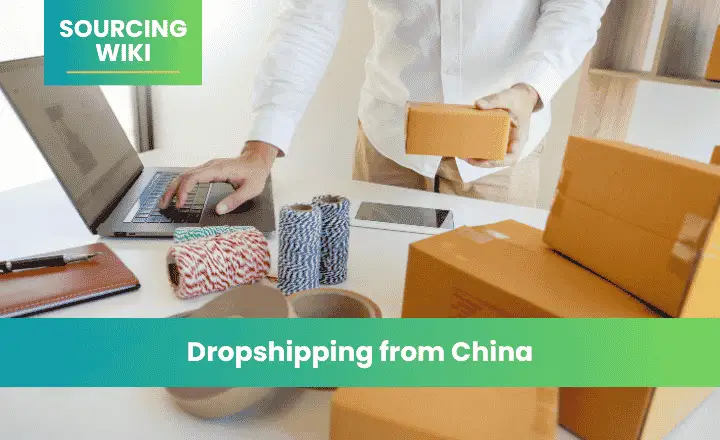
Dropshipping from China is an e-commerce fulfillment model in which a seller lists and sells products online without purchasing, storing, or shipping any inventory themselves. When a customer places an order, the seller forwards the order details to a Chinese supplier, who picks, packs, and ships the product directly to the end customer. The seller never touches the physical product; their role is limited to marketing, storefront management, and customer service, while the supplier handles fulfillment. This is a fundamentally different arrangement from wholesale or bulk import, where a buyer purchases inventory upfront and takes on storage, shipping, and quality control directly.
What the Model Is Good For
Dropshipping's main appeal is the low barrier to entry: a seller can list a product and test whether it sells before committing any capital to inventory. This makes it a reasonable way to validate demand for a new product idea, experiment across a wide range of SKUs without warehousing cost, or launch a store with limited startup capital. For a seller still deciding which products or niches are worth pursuing, this kind of low-risk testing has genuine value, and many successful import businesses started by using dropshipping to identify which products were worth sourcing at scale.
Where the Model Runs Into Structural Limits
As a store grows past the testing phase, several features of dropshipping that seemed like advantages early on tend to become the constraints that cap further growth. Because orders are fulfilled one unit at a time rather than through bulk purchasing, a dropshipper has no volume leverage to negotiate a lower unit price, so per-unit margin stays thin regardless of sales volume — a structurally different position from a buyer who can access tiered wholesale pricing. Quality is also harder to control: since the seller never inspects the product before it reaches the customer, a supplier can quietly change materials or components between orders, and the seller typically only learns about it from customer complaints after the fact. Shipping speed is a further constraint, since most dropshipped orders ship as individual small parcels directly from China rather than through a pre-positioned bulk shipment, which tends to mean longer and less predictable delivery windows than customers expect from an established brand. Regulatory changes have sharpened this last point: the United States suspended duty-free de minimis treatment for low-value imports globally as of August 29, 2025, meaning shipments that previously entered without formal customs processing or duties are now generally subject to standard duties and entry procedures[1], which raises landed cost and adds friction precisely at the small-parcel, direct-from-China scale that dropshipping depends on. Finally, dropshipping offers little room for product customization or private branding, since the seller is working from a supplier's existing catalog rather than a production run made to their own specification — which makes it difficult to build the kind of differentiated, defensible brand that supports pricing power over time.
When It Makes Sense to Move Beyond Dropshipping
These limits tend to surface in a predictable order as a store's sales stabilize. Once a handful of products show consistent, repeatable demand, the thin per-unit margin of one-at-a-time fulfillment starts to noticeably cap profitability compared to what tiered wholesale pricing could offer on the same SKUs. Once order volume is high enough that a single bad batch affects many customers at once, the absence of any pre-shipment quality check becomes a real business risk rather than a theoretical one. And once a seller wants to build a brand customers will return to — rather than compete purely on price and ad spend — the lack of customization options in a dropshipping catalog becomes a ceiling on differentiation. At that point, the logical next step is not a better dropshipping supplier, but a shift toward bulk purchasing or private-label production: buying inventory at volume-tiered pricing, inspecting goods before they ship, and consolidating orders from one or more factories into efficient bulk shipments. This is the point at which the work shifts from what a dropshipping supplier is set up to do, toward the kind of supplier vetting, quality control, and shipment consolidation that a buying agent or sourcing partner handles.
FAQ
Is dropshipping from China still viable in 2026?
It remains a workable way to test products and launch a store with low upfront capital, though rising customer expectations around shipping speed and the end of duty-free treatment for low-value US imports have made the "low-cost, ship-direct" version of the model less reliable than it was a few years ago
Why is my dropshipping margin so thin even with strong sales?
Because fulfillment happens one order at a time, a dropshipper generally cannot access the volume-tiered pricing available to a bulk buyer, so the per-unit cost stays roughly constant no matter how many units sell in total.
Can I control product quality when dropshipping?
Only indirectly. Since the seller never handles or inspects the product before it reaches the customer, quality control depends entirely on the supplier's own consistency — there is no equivalent to a pre-shipment inspection step that a bulk buyer would typically use.
Why do US customers now see extra fees or delays on dropshipped orders from China?
The United States suspended duty-free de minimis treatment for low-value shipments globally, effective August 29, 2025, so small parcels that previously moved with minimal customs processing are now generally subject to duties and formal entry requirements, which can add cost and time.
When should a dropshipping seller consider switching to bulk sourcing?
Generally once a product shows stable, repeatable demand — at that point, the thinner margin and lack of quality control in one-at-a-time fulfillment tend to outweigh the convenience of not holding inventory, and moving to volume-tiered purchasing with proper quality checks becomes the better economics.
Can I get private-label or custom packaging through a dropshipping supplier?
Rarely, and even where offered it's usually limited. Dropshipping suppliers work from an existing catalog meant to serve many sellers at once, so meaningful customization — packaging, branding, product specification changes — typically requires moving to a direct manufacturing or bulk-order relationship instead.
Sources & References
- The White House —Suspending Duty-Free De Minimis Treatment for All Countries, Executive Order 14324, effective August 29, 2025:whitehouse.gov. Accessed August 17, 2026.
Related Knowledge Base
Sourcing Practices & Insights: Dropshipping from China
Latest Sourcing Guides

Get Started Today
Let's Turn Your Sourcing Goals into RealityWeChat:+86 15157124615
WhatsApp:+86 15157124615
Address:Building 10 #39 Xiangyuan Road, Hangzhou, China