

China Shipping
Definition and Scope
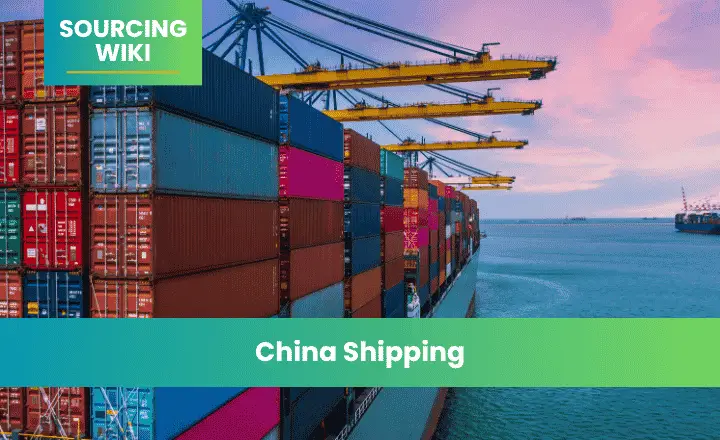
China shipping denotes the transport of goods from the People's Republic of China to buyers in destination markets, and it is one of the largest flows in world trade given China's role as a manufacturing base. The term is broader than ocean freight alone: it encompasses full-container-load (FCL) and less-than-container-load (LCL) sea freight, air cargo, express courier services, and, for some destinations, rail. It also spans two distinct stages that buyers sometimes treat as one — international carriage between ports or airports, and the inland movements and customs procedures at each end.
Where this distinction matters in practice: a buyer might get a quoted "3-week" transit time and plan their inventory around it, only to find the container clears the ocean crossing on schedule but sits for days at destination waiting on customs paperwork or inland trucking capacity. Being precise about this scope matters, because delays and unexpected costs more often arise from documentation, customs, or inland legs than from the ocean crossing itself.
Modes, Routes, and Transit Times
Each mode offers a characteristic balance of cost, speed, and capacity. Ocean freight is the default for most commercial cargo: FCL shipments suit volumes that justify a dedicated container, while LCL allows smaller consignments to share space at the cost of extra handling and somewhat longer door-to-door times. Typical ocean transit from major Chinese ports runs roughly two to three weeks to the US West Coast, four to five weeks to the US East Coast and Northern Europe, before inland delivery is added.
Air freight cuts transit to days rather than weeks but costs several times more per kilogram, reserving it for urgent, high-value, or low-weight goods. Express couriers integrate transport and customs clearance for parcels, and China-Europe rail offers an intermediate option where geography permits.
Cost Drivers and Documentation
Freight cost is driven by far more than the headline rate, and understanding the components protects a buyer's budget. Ocean quotes may exclude surcharges for fuel, peak seasons, port congestion, and terminal handling, while origin and destination charges — trucking, warehousing, customs brokerage, and delivery — often rival the international leg on smaller shipments.
Documentation underpins all of it: the bill of lading serves as contract, receipt, and document of title; the commercial invoice and packing list drive customs valuation; and certificates of origin or product compliance may be required depending on the goods. The Incoterms agreed with the supplier determine where cost and risk transfer at each stage of the journey, so a buyer comparing quotes must compare them at identical terms to compare them at all.[1]
Planning Around Seasonality and Disruption
Because this lane is vast but cyclical, planning around seasonality separates reliable importers from chronically delayed ones. Rates and space tighten predictably before Chinese New Year, when factories close and cargo rushes out beforehand, and again in the pre-Christmas peak; blank sailings and rolled bookings are common at these times. Weather, port congestion, and capacity adjustments add less predictable variation.
Experienced buyers therefore book space early in peak periods, hold buffer stock for selling seasons, and treat quoted transit times as estimates rather than guarantees. Viewed as a whole, China shipping rewards those who manage it as a planning discipline — aligning production completion, booking, and customs preparation — rather than as a commodity purchased at the last moment.
A final practical point concerns visibility: most carriers and forwarders now provide tracking at the container or airwaybill level, and importers who monitor milestones — departure, transshipment, arrival, customs release — can react to exceptions days earlier than those who wait for a delivery that fails to appear.
FAQ
Why did my shipment arrive late even though the ocean transit time was accurate?
Total delivery time includes production completion, booking, the ocean or air leg, customs clearance, and inland trucking — a delay at any one of these stages, not just the crossing itself, extends the overall timeline.
Is LCL or FCL cheaper for a small order?
LCL avoids paying for unused container space on small volumes, but per-unit cost and handling time are usually higher than FCL once a shipment is large enough to justify a full container — the crossover point depends on your specific volume and route.
When should I book shipping to avoid Chinese New Year delays?
Space and rates tighten in the weeks before factories close for the holiday, so booking well ahead of that period — and confirming your factory's specific shutdown dates — reduces the risk of being caught in the pre-holiday rush.
Who decides which Incoterm applies to my shipment?
It's negotiated between buyer and supplier and should be stated explicitly in the sales contract — the choice determines who arranges and pays for freight, insurance, and customs clearance at each stage, so comparing quotes only makes sense when they're quoted on the same Incoterm.[1]
Where can I find US-specific details like transit times to US ports and customs rules?
See our Shipping from China to US entry for lane-specific details, including typical transit times to major US ports, the Importer Security Filing requirement, and current de minimis and tariff treatment.
Sources & References
[1] International Chamber of Commerce — Incoterms® Rules. Accessed August 27, 2026.
Related Knowledge Base
Sourcing Practices & Insights: China Shipping
Latest Sourcing Guides



Get Started Today
Let's Turn Your Sourcing Goals into RealityWeChat:+86 15157124615
WhatsApp:+86 15157124615
Address:Building 10 #39 Xiangyuan Road, Hangzhou, China
