

Order Fulfillment
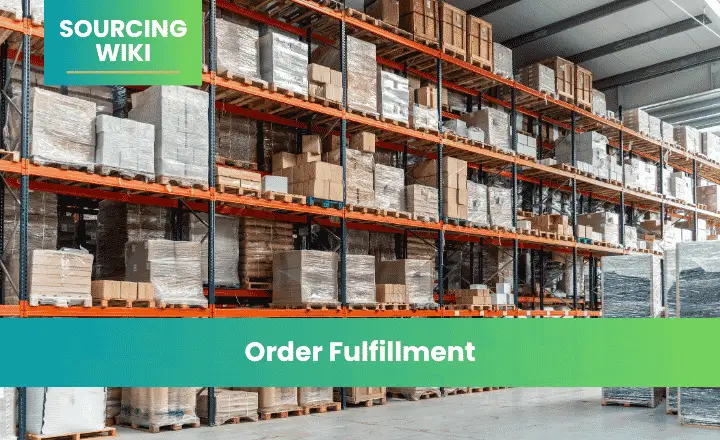
Order fulfillment is the process of receiving, processing, preparing, and completing a customer order through delivery or another agreed method of fulfillment.
The fulfillment process begins when an order is received and generally continues through order confirmation, inventory or production preparation, picking or production, packing, and shipment or delivery.
A simplified order fulfillment flow is: Order Received → Order Processed → Inventory / Production Prepared → Picked or Produced → Packed → Shipped → Delivered
The exact stages depend on the type of business and whether products are already in inventory or need to be manufactured.
What Are the Main Stages of Order Fulfillment?
1. Order Receipt
The buyer's order is received and the required product, quantity, specifications, and delivery information are recorded.
2. Order Verification
The order is checked for:
- Product information
- Quantity
- Price
- Customer details
- Delivery requirements
- Payment or credit status
- Special instructions
3. Inventory or Production Check
The business determines whether the required products are already available.
If inventory is available, the order can move toward picking and packing.
If products need to be manufactured, production must be completed before final fulfillment.
4. Picking or Production
For stocked products, the required items are picked from inventory.
For made-to-order products, the manufacturing process may take place at this stage before the products become available for fulfillment.
5. Packing
Products are packed according to the agreed packaging requirements.
Packaging may include:
- Product packaging
- Protective materials
- Shipping cartons
- Labels
- Documentation
6. Shipping
The completed order is handed over for transportation to the customer's destination or the next fulfillment location.
7. Delivery and Completion
The order reaches the intended destination and the fulfillment process is completed according to the agreed delivery terms.
Types of Order Fulfillment
In-House Fulfillment
The company manages inventory, picking, packing, and shipping using its own facilities and employees.
This provides direct control but requires investment in facilities, labor, inventory management, and fulfillment operations.
Third-Party Fulfillment
A specialized fulfillment provider stores inventory and handles some or all fulfillment activities on behalf of the seller.
This can allow a business to outsource operational activities while maintaining responsibility for customer orders and inventory decisions.
Supplier-Direct Fulfillment
The supplier ships products directly to the final customer or another designated destination.
This can reduce the need for the buyer to physically handle inventory, although the buyer still needs to coordinate product, order, and delivery requirements.
Hybrid Fulfillment
A business uses more than one fulfillment model.
For example, some products may be fulfilled from its own warehouse while other products are handled by a third-party provider or shipped directly from a supplier.
Order Fulfillment vs. Order Processing
These terms are related but not identical.
Order processing generally refers to the administrative and operational activities required to receive, verify, and prepare an order for execution.
Order fulfillment covers the broader process of actually completing the order, including inventory preparation, picking or production, packing, shipping, and delivery.
Order processing is therefore typically one part of the broader fulfillment process.
Order Fulfillment vs. Manufacturing
Manufacturing and fulfillment are also different.
Manufacturing creates the product.
Order fulfillment completes the process of getting the required product to the intended destination.
For a made-to-order product, manufacturing may occur as part of the overall fulfillment timeline. For an in-stock product, fulfillment may begin without any new manufacturing.
What Factors Affect Order Fulfillment?
Product Availability
Orders can generally be fulfilled faster when the required products are already available.
Manufacturing Time
Made-to-order products require production before they can be shipped.
Order Volume
Large orders may require additional picking, production, packing, or handling time.
Product Complexity
Products with multiple components, configurations, or packaging requirements may require more fulfillment work.
Packaging Requirements
Special packaging, labeling, or documentation can increase processing time.
Inventory Accuracy
Incorrect inventory records can cause delays, substitutions, or order cancellations.
Delivery Requirements
The destination, shipping method, and required delivery date can affect the fulfillment schedule.
Key Order Fulfillment Metrics
Businesses commonly evaluate fulfillment performance using several measures.
Order Cycle Time
The time required to complete an order from a defined starting point to fulfillment completion.
Order Accuracy
The percentage of orders fulfilled with the correct products, quantities, and specifications.
On-Time Fulfillment
The percentage of orders completed within the agreed or required timeframe.
Fill Rate
The proportion of customer demand that can be fulfilled from available inventory or supply.
Perfect Order Rate
A broader measure that may consider whether an order was delivered correctly, completely, on time, and without damage or other defined exceptions.
The exact definitions and calculation methods can vary between companies.
Order Fulfillment for Made-to-Order Products
When products are manufactured after an order is received, fulfillment involves more than warehouse operations.
A typical flow may be:
Order Confirmation → Material Preparation → Manufacturing → Quality Check → Packing → Shipment → Delivery
In this model, manufacturing lead time becomes an important component of the overall fulfillment timeline.
This is why buyers should distinguish between manufacturing lead time, fulfillment time, and transportation time when establishing delivery expectations.
Example of Order Fulfillment
A buyer places an order for 5,000 customized products. The products are not held in finished-goods inventory. The fulfillment sequence may therefore be:
- Order confirmed
- Materials prepared
- Production completed
- Quality inspection completed
- Products packed
- Shipment arranged
- Products delivered
In this case, the order fulfillment period includes both manufacturing activities and post-production fulfillment activities.
Why Order Fulfillment Matters
Effective order fulfillment helps businesses:
- Complete orders on schedule
- Maintain order accuracy
- Reduce avoidable delays
- Improve inventory utilization
- Coordinate manufacturing and delivery
- Provide more predictable customer service
For buyers working with manufacturing sources, fulfillment performance also provides visibility into whether an order is progressing according to the original quantity and delivery requirements.
Frequently Asked Questions
What does order fulfillment mean?
Order fulfillment is the process of receiving, processing, preparing, and completing an order through shipment or delivery.
What are the main steps of order fulfillment?
The typical stages are order receipt, verification, inventory or production preparation, picking or production, packing, shipping, and delivery.
Is order fulfillment the same as shipping?
No. Shipping is one stage of order fulfillment. Fulfillment covers the broader process of completing an order.
Is manufacturing part of order fulfillment?
It can be. For made-to-order products, manufacturing may be included within the overall fulfillment timeline. For stocked products, fulfillment may begin without new manufacturing.
What is the difference between order fulfillment and order processing?
Order processing mainly concerns receiving and preparing the order, while order fulfillment covers the broader process of completing and delivering it.
How NewBuyingAgent Supports Order Fulfillment
NewBuyingAgent supports buyers that need products supplied from manufacturing sources across different product categories.
For made-to-order purchases, the process may involve coordinating product requirements, production schedules, order quantities, factory execution, and delivery arrangements.
For buyers managing multiple products or factories, this coordination can help connect purchasing requirements with the production and fulfillment stages of each order. Contact now.
Key Takeaway
Order fulfillment is the complete process of turning an accepted order into a completed delivery or fulfillment outcome.
It may involve inventory management, manufacturing, picking, packing, shipping, and delivery depending on the business model.
For manufactured products, understanding the relationship between order fulfillment and manufacturing lead time is especially important when planning realistic delivery schedules.
Related Knowledge Base
Sourcing Practices & Insights: Order Fulfillment
Latest Sourcing Guides

Get Started Today
Let's Turn Your Sourcing Goals into RealityWeChat:+86 15157124615
WhatsApp:+86 15157124615
Address:Building 10 #39 Xiangyuan Road, Hangzhou, China
