

Introduction
You found a warehouse in Shenzhen that quotes $1.80 per order, picked, packed and handed to a courier. The number looks unbeatable against your domestic warehouse rate. Then the first customer asks where the parcel is on day nine, and the answer is a tracking page that has not updated since Guangzhou.
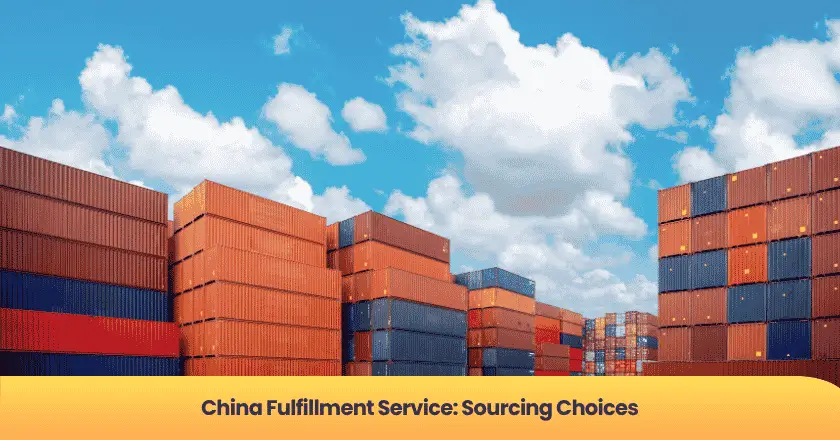
A china fulfillment service is not one product. It covers warehouses that ship single parcels worldwide, consolidation centres that load containers for overseas stock, and hybrid setups that run both. Which one suits you is decided upstream, by your order quantity, your packaging spec and how long your cash can sit in stock. Pick the fulfillment model first and you end up rebuilding the sourcing plan around it.
Key Takeaways
• Direct parcel shipping protects cash but costs the most per order and gives you the least control over transit time.
• Bulk shipping into an overseas warehouse cuts per-order cost sharply and ties up cash for six to ten weeks.
• Packaging, barcodes and carton specs are settled at the factory, so fulfillment requirements belong in the first purchase order.
• Returns almost never travel back to China, which means your local return plan is part of the fulfillment decision.
• Test any provider with fifty real orders before moving a category, since quoted rates rarely match invoiced rates.
What a China Fulfillment Service Actually Handles
The phrase covers three jobs that get bundled into one quote. Separating them tells you what you are buying and what you are still responsible for.
Storage, pick and pack, and the outbound leg
Storage is charged by pallet, shelf or cubic metre, usually monthly. Pick and pack is charged per order, with an extra fee for each additional unit. The outbound leg is where the money actually sits, since the courier or freight cost normally dwarfs the handling fee. A quote that mentions only picking is a partial quote.
Where the provider stops and your supplier starts
A 3PL (third-party logistics provider — a company that stores and ships goods it does not own) receives what the factory sends and works with it. It will not fix a carton that fails a drop test or a barcode printed at the wrong size. Some providers offer relabelling and rework as a paid service, which quietly becomes a permanent line item when the upstream spec was wrong.
Liability sits in the same gap. Most providers cap what they owe on a lost parcel at a low fixed amount, which is standard practice and rarely negotiable below serious volume. Check that cap against your average order value before assuming a missing shipment is covered.
Expert Tip: Ask for a sample invoice from a live account, with the client name removed, rather than a rate card. Rate cards show handling fees. Invoices show storage overage, fuel surcharges, remote area fees, oversize penalties and the rework lines nobody quotes. Compare two invoices from two providers and the real cost gap usually appears in charges that never featured in either proposal.
The Three Fulfillment Models You Choose Between
Every setup is a version of one of three arrangements. Each trades cash against speed in a different direction.
Direct parcel from China
Stock stays at the factory or a Chinese warehouse, and single parcels go out as orders arrive. No inventory sits overseas and no capital is locked up. The cost per order is the highest of the three, and transit typically runs seven to eighteen days depending on the service and destination. This model suits testing, long-tail SKUs (stock keeping unit — one distinct product variant in your catalogue) and low daily volume.
Bulk in, overseas warehouse out
You ship a container or pallet load into a local warehouse or FBA (Fulfilment by Amazon — Amazon stores and ships your stock), then fulfil domestically in one or two days. Per-order cost drops sharply. In exchange your cash sits in stock through production, ocean transit and clearance, which commonly runs six to ten weeks before the first sale.
Hybrid, and why most sellers land here
Fast movers sit overseas, slow movers ship direct from China, and a China-side buffer covers stockouts by air. Here's the thing: the hybrid only works if one team sees both inventory pools. Running two providers with two dashboards usually produces double safety stock and a reorder point nobody trusts.
Common Mistake to Avoid: Choosing the model on per-order cost alone. Direct parcel at $6.50 against domestic fulfillment at $4.20 looks like a clear loss until you price ten weeks of tied-up cash, the container, the customs entry and the units that never sell. For a product still finding demand, the expensive per-order model is frequently the cheaper business decision. Run both numbers against a realistic sell-through rate, not a hopeful one.
How Sourcing Choices Lock In Your Fulfillment Options
Most fulfillment problems are sourcing decisions arriving late. Three of them do the damage.
MOQ and cash cycle decide the model for you
A factory MOQ (minimum order quantity — the smallest production run it will accept) of 3,000 units on a product selling twenty a day means ready stock for five months. That inventory has to live somewhere, and China-side storage is usually cheaper than overseas storage. Negotiating a first run of 800 units changes which fulfillment model is even available to you.
Packaging is a fulfillment decision made at the factory
Polybag or box, barcode placement, carton dimensions, units per carton, drop-test rating. Each one is set on the production line and each one shows up later as a handling fee or a rejected delivery. Marketplace warehouses check carton labels on receipt, and a rejected inbound shipment costs weeks rather than dollars.
Production lead time belongs in the same calculation. A factory quoting thirty-five days in March often quotes sixty in September, and a fulfillment plan built on the March figure runs dry in the fourth quarter. Ask for peak-season lead times during your first negotiation, while you still have something to trade.
Send your fulfillment provider's inbound requirements to the factory before sampling, not after the first container ships. Providers publish these as a short document and most buyers request it once the goods are already at sea.
Expert Tip: Ask the factory to photograph one sealed carton against a tape measure and a scale before the run finishes. Volumetric weight drives your freight cost, and a carton two centimetres taller than specified can push a whole shipment into the next pricing band. Catching it on the line costs one email. Catching it at the forwarder costs the difference on every carton in the container.
Lanes, Speed and What the Quoted Days Mean
Transit quotes are among the least reliable numbers in the industry, because different providers measure different segments of the same journey.
Air, sea, rail and express compared
Express courier is fastest and priciest, and suits samples and urgent restocks. Air freight sits in the middle and works for high-value, low-weight goods. Sea freight is the default for bulk, slow but cheap per unit. Rail to Europe sits between air and sea on both counts. Most sellers end up using three of the four in a single year.
What a delivery promise actually counts
A quoted transit time usually starts when the parcel is scanned by the carrier, not when your customer clicks buy. Four gaps hide in between, and each one is worth asking about directly.
• Order cut-off time determines whether an afternoon order ships today or tomorrow, including across Chinese public holidays.
• Handover lag covers the hours between the pick being completed and the carrier collecting the bag.
• Customs clearance at the destination adds a variable day or two that no provider controls.
• Final-mile delivery in rural postcodes routinely adds days that the headline lane time excludes.
Expert Tip: Ask a prospective provider for the on-time percentage on your exact lane over the last ninety days, not an average across all destinations. Providers with real data answer with a figure and a caveat about a specific week. Providers without it answer with a range. Through 2026 most China 3PLs pull this straight from carrier APIs, so the information genuinely exists if they choose to share it.
Returns and the Leg Nobody Prices
Outbound gets all the attention in a proposal. The reverse leg decides whether the margin survives contact with real customers.
Returns rarely go back to China
Shipping a $14 item back across the Pacific costs more than the item. Sellers on the direct parcel model normally refund without collection, or use a local return address that consolidates and disposes. Let's be honest: an unstated return policy is a budget line you have simply not calculated yet.
Local addresses, consolidation and disposal
Most China fulfillment providers offer a destination-country return address, holding returns for a fee and consolidating them for resale, disposal or return to stock. Ask what happens to a returned unit in practice and who inspects it. Ask which party pays the destination storage while a return sits unresolved.
Common Mistake to Avoid: Treating the return rate as a fixed feature of your category. A large share of returns trace back to packaging failure, a size chart that does not match the production spec, or a colour that photographs differently from the sample. Those are sourcing problems wearing a fulfillment costume. Fix them at the factory and the reverse-leg cost falls without changing provider, price or shipping lane.
Choosing and Testing a Provider
Selection is quick. Testing is the part buyers compress, and it is the part that surfaces everything a proposal hides.
Questions that reveal real capacity
Four questions do most of the filtering, and how fast the answer comes matters as much as the answer itself.
• Ask how many orders the site shipped on its busiest day last quarter and what the error rate was.
• Ask which marketplace and cart integrations are native rather than handled by a spreadsheet upload.
• Ask who pays for a mis-pick and whether that remedy appears anywhere in the written agreement.
• Ask for the storage rate after ninety days, since long-tail stock is where overage fees accumulate.
Run a small live test first
Send fifty real orders through the provider before moving a category across. You are checking three things: whether the invoice matches the quote, whether tracking updates within twenty-four hours, and how the team responds to one deliberately awkward request. A provider that handles a lost parcel cleanly is worth more than one quoting fifteen cents less per pick. Run two returns through the same test and time how long a refund decision takes.
Expert Tip: Put a two-week exit clause in the first agreement instead of negotiating hard on rates. Fulfillment relationships fail on execution rather than pricing, and the cost of being stuck is far higher than a few cents per order. Providers confident in their operation agree to short notice periods without much discussion. Hesitation on that clause tells you something the reference calls will not.
Getting the Upstream Half Right With NewBuyingAgent
Every fulfillment model above assumes the goods arrive correct, on time and packed to spec. That assumption is bought upstream. NewBuyingAgent is your perfect partner for global sourcing from China, backed by 30 years of expertise in trade, manufacturing and quality control.
Whether packaging, carton specs and MOQ are negotiable at all depends on how far your factory reach extends. 100% Access to China's Factories. Use its 50,000+ cooperated partner factories—no language/region/time zone barriers. Its local reputation gets you full factory cooperation.
Landed cost is the number a fulfillment quote gets compared against, and part of it is decided before anything is packed. Its wide factory network lets it pick low-cost, high-cooperation suppliers. Even with its margin included, NewBuyingAgent cuts your costs by 5%-10%. The hours spent holding that upstream half together are rarely counted honestly. NewBuyingAgent handles all factory communication—perfect for multi-category buyers. Free up your time to focus on expanding your local market sales.
Frequently Asked Questions
What does a china fulfillment service usually cost per order?
Handling commonly lands between one and three dollars per order for a single-unit pick, with extra units charged at a lower rate. Shipping is the larger number and swings widely by weight, destination and service level. Storage is billed monthly by volume, with overage rates that rise after ninety days. Compare total cost per delivered order rather than the pick fee, since a low handling rate paired with an expensive courier contract leaves you worse off.
Is shipping direct from China too slow for my customers?
Seven to eighteen days is normal for economy parcel services, and shorter lanes exist at higher cost. The complaint volume depends on what you promised rather than the transit itself. Sellers who state a realistic window at checkout see far fewer tickets than sellers who quote an optimistic one and hope. Speed matters most in categories where a local competitor can deliver tomorrow.
Can one provider handle both my sourcing and my fulfillment?
Some do offer both, and the appeal is a single point of contact. The trade-off is that a provider holding your supplier relationships and your stock is harder to replace when service slips. Splitting the two keeps your options open, particularly while volumes are still small and your category mix is changing.
Where does NewBuyingAgent sit in a fulfillment decision?
Its work sits upstream of the warehouse, on the part that determines what the warehouse receives. 20,000+ product development & QC experts ensure your products match market needs and stay high-quality. For buyers running several categories at once, that scope is broader than a single product line, since it can supply products from China across all categories to you at better price, quality and service.
Conclusion
Fulfillment looks like a logistics decision and behaves like a sourcing one. Settle MOQ, packaging and carton specs first, then choose the model your cash cycle can support, then test it with fifty real orders before committing a category. If the upstream half is the part costing you sleep, NewBuyingAgent is worth a look.
Partial Sources
1. Basic Importing and Exporting – U.S. Customs and Border Protection —https://www.cbp.gov/trade/basic-import-export Accessed 14 September 2026
2. Incoterms 2020 – International Chamber of Commerce —https://iccwbo.org/business-solutions/incoterms-rules/incoterms-2020/ Accessed 14 September 2026
3. We Manage Your Factories | NewBuyingAgent —https://www.newbuyingagent.com/what-we-do/we-manage-your-supply-chain Accessed 14 September 2026
4. We Supply Products To You | NewBuyingAgent —https://www.newbuyingagent.com/what-we-do/we-supply Accessed 14 September 2026
NewBuyingAgent
Related Resources
Get Started Today
Let's Turn Your Sourcing Goals into RealityWeChat:+86 15157124615
WhatsApp:+86 15157124615
Address:Building 10 #39 Xiangyuan Road, Hangzhou, China
