

Manufacturing Lead Time
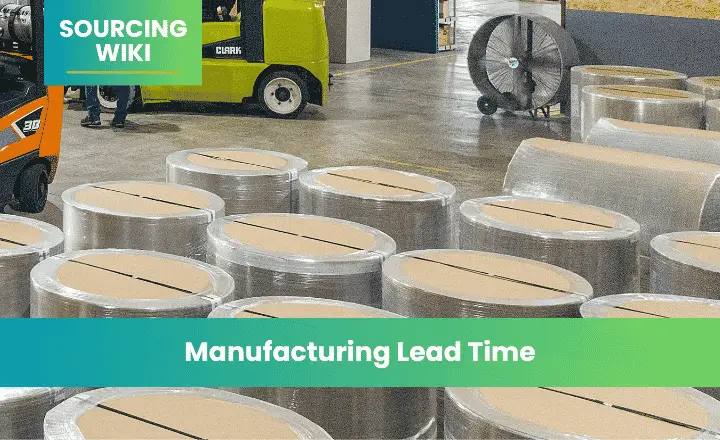
Manufacturing lead time is the total time required to turn production inputs into completed products through a defined manufacturing process.
It measures the time associated with manufacturing an order or product, rather than the entire purchasing or delivery process.
Manufacturing lead time can include activities such as material preparation, production setup, processing, assembly, finishing, and other manufacturing steps required to complete the product.
For buyers, understanding manufacturing lead time helps distinguish how long a product takes to manufacture from the broader time required to place an order and receive the goods.
What Is Manufacturing Lead Time?
Manufacturing lead time refers to the elapsed time required to manufacture a product from the defined production starting point to the defined completion point.
A simplified manufacturing sequence is:
Materials Ready → Production Setup → Processing → Assembly → Finishing → Manufacturing Complete
The exact stages vary by product.
For example:
- Garments may involve cutting, sewing, finishing, and pressing.
- Furniture may involve cutting, machining, assembly, sanding, and finishing.
- Injection-molded products may involve molding, trimming, assembly, and finishing.
- Electronics may involve component preparation, assembly, testing, and final processing.
Manufacturing lead time is therefore product-specific and process-specific.
What Does Manufacturing Lead Time Include?
The exact definition depends on the manufacturing process and how the manufacturer measures its production schedule.
It may include:
Material Preparation
Materials and components need to be available and prepared before manufacturing can begin.
If materials are already in stock, this stage may be short. Custom or specialized materials can require additional preparation time.
Production Setup
Production may require:
- Machine setup
- Tooling or mold preparation
- Production line setup
- Printing setup
- Color matching
- Equipment adjustment
Setup time can be particularly important for customized products or products requiring dedicated tooling.
Processing and Manufacturing
This is the main production stage in which raw materials or components are transformed into the finished product.
The required time depends on:
- Product design
- Production method
- Order quantity
- Number of production steps
- Equipment
- Labor requirements
Assembly
Products containing multiple components may require manual or automated assembly after individual components have been produced.
Finishing
Depending on the product, manufacturing may include:
- Surface treatment
- Painting
- Polishing
- Printing
- Coating
- Washing
- Final finishing
In-Process or Final Testing
Some products require functional testing or other manufacturing-stage checks before they are considered complete.
Whether testing is included in the quoted manufacturing lead time should be confirmed with the manufacturer.
Manufacturing Lead Time vs. Factory Lead Time
These terms are closely related but should not automatically be treated as identical.
| Term | Main Focus |
|---|---|
| Manufacturing Lead Time | Time required to manufacture the product |
| Factory Lead Time | Time associated with the factory's handling and completion of an order |
| Shipping Time | Time required to transport completed goods |
| Total Lead Time | Overall time from the defined purchasing starting point to the final delivery point |
For example:
Order Confirmation → Material Preparation → Manufacturing → Inspection/Packing → Goods Ready → Shipping → Delivery
Manufacturing lead time generally focuses on the manufacturing portion of this sequence.
Factory lead time may include additional factory-side activities before or after manufacturing, depending on the supplier's definition.
Manufacturing Lead Time vs. Production Cycle Time
These terms are also related but describe different concepts.
Manufacturing lead time measures the elapsed time required to complete the manufacturing process.
Production cycle time generally refers to the time required to produce a unit or complete a particular production cycle.
For example, a factory might have a cycle time of 2 minutes per unit, while the manufacturing lead time for a 5,000-unit order may be several days.
A simplified example:
Cycle Time: 2 minutes per unit Order Quantity: 5,000 units Manufacturing Lead Time: includes production plus the relevant setup and manufacturing stages
Therefore, cycle time alone cannot be used to determine the complete manufacturing lead time of an order.
What Factors Affect Manufacturing Lead Time?
Product Complexity
A product requiring more manufacturing stages generally takes longer to produce than a relatively simple product.
Order Quantity
Larger orders normally require more production time, although the relationship between quantity and lead time depends on production capacity and process structure.
Production Method
Automation, manual production, batch processing, continuous production, and other manufacturing methods can result in very different lead times.
Tooling and Mold Requirements
Products requiring new tooling or molds may have additional preparation time before regular manufacturing begins.
Material Availability
Manufacturing cannot proceed normally if critical materials or components are unavailable.
Production Capacity
Available production capacity affects when an order can enter production and how quickly it can be completed.
A factory may have the technical capability to manufacture a product but still need additional time because its production resources are committed to other orders.
Changeovers and Setup
When a production line switches between products, materials, colors, or specifications, setup and changeover activities can add to the manufacturing schedule.
Quality Requirements
Products requiring additional manufacturing-stage testing, rework, or more complex quality requirements may require additional time.
Manufacturing Lead Time for Standard vs. Customized Products
Manufacturing lead time can differ substantially between standard and customized products.
Standard Products
A standard product may already have:
- Established production processes
- Existing tooling
- Known materials
- Standard packaging
- Established production parameters
This can make manufacturing more predictable.
Customized Products
Customized products may require:
- Design confirmation
- New tooling
- Sample development
- Material approval
- Artwork confirmation
- Production setup
These additional stages can increase the overall manufacturing lead time.
Why Does Manufacturing Lead Time Matter?
Manufacturing lead time affects how buyers plan their purchasing and inventory.
It can influence:
- Order placement timing
- Product launch schedules
- Inventory replenishment
- Seasonal purchasing
- Production planning
- Expected delivery dates
- Ability to respond to changes in demand
For businesses with recurring orders, understanding normal manufacturing lead time can also help determine when the next order should be initiated.
How Should Buyers Use Manufacturing Lead Time?
Buyers should avoid treating manufacturing lead time as an isolated number.
A more complete timeline is:
Order Requirements Confirmed → Supplier Confirmation → Materials / Production Preparation → Manufacturing Lead Time → Inspection & Packing → Goods Ready for Shipment → Shipping & Delivery
This helps buyers distinguish the time spent manufacturing the product from the additional time required to prepare, transport, and receive it.
When discussing lead time with a manufacturer, buyers should confirm:
- When manufacturing starts
- What triggers the start date
- Whether material preparation is included
- Whether setup or tooling is included
- Whether testing is included
- When manufacturing is considered complete
Manufacturing Lead Time and Repeat Orders
Repeat orders can have a different manufacturing lead time from first-time orders.
Once a product has an established production process, the manufacturer may already have:
- Approved specifications
- Existing tooling
- Production parameters
- Established materials
- Familiar production procedures
This can reduce preparation work.
However, repeat orders can still experience longer lead times when factory capacity is constrained, materials are unavailable, or the order quantity changes significantly.
Manufacturing Lead Time and New Product Development
New product development generally involves more than manufacturing itself.
A typical sequence may be:
Product Concept → Design → Prototype → Sample → Specification Confirmation → Tooling → Production
Manufacturing lead time normally relates to the production stage rather than the entire product-development timeline.
This distinction is important because a buyer asking for a “production lead time” may actually be referring to a much broader project timeline.
Manufacturing Lead Time Example
Suppose a buyer places an order for a customized furniture product.
The manufacturing process might include:
| Stage | Example |
|---|---|
| Material preparation | Wood and hardware prepared |
| Cutting | Components cut to specification |
| Machining | Required holes and profiles processed |
| Assembly | Components assembled |
| Finishing | Surface treatment completed |
| Final manufacturing checks | Product completed |
If these manufacturing activities take 20 calendar days, the manufacturing lead time may be 20 days under the defined measurement method.
The buyer may still need additional time for inspection, packing, transportation, customs clearance, and final delivery.
Therefore:
Manufacturing Lead Time ≠ Total Delivery Time
FAQs
What does manufacturing lead time mean?
Manufacturing lead time is the elapsed time required to manufacture a product through the defined production process, from the specified production starting point to manufacturing completion.
Is manufacturing lead time the same as production time?
The terms are often used similarly, but their exact definitions depend on the manufacturer and context. Buyers should confirm what activities are included in the quoted lead time.
What is the difference between manufacturing lead time and factory lead time?
Manufacturing lead time focuses on the manufacturing process itself. Factory lead time may cover a broader set of factory-side activities related to completing an order.
Is manufacturing lead time the same as cycle time?
No. Cycle time generally measures the time required for a production cycle or unit, while manufacturing lead time measures the elapsed time needed to complete the manufacturing process for an order or production run.
Does a larger order always have a longer manufacturing lead time?
Not necessarily. The relationship depends on production capacity, batch size, production lines, automation, and other manufacturing conditions.
Does manufacturing lead time include shipping?
Normally, manufacturing lead time refers to the manufacturing process and does not represent international transportation or final delivery time. The supplier's definition should always be confirmed.
NewBuyingAgent and Manufacturing Lead Time
For buyers purchasing products from Chinese manufacturers, manufacturing lead time is one of the factors that needs to be considered when planning an order.
NewBuyingAgent works with manufacturing sources across product categories and coordinates purchasing activities based on the buyer's product requirements, quantity, specifications, and expected schedule.
For customized or new products, understanding the distinction between product development time, manufacturing lead time, factory lead time, and shipping time helps buyers establish a more realistic purchasing timeline.
Key Takeaway
Manufacturing lead time is the time required to manufacture a product through a defined production process.
It should be distinguished from factory lead time, cycle time, shipping time, and total delivery time.
For buyers, the most useful manufacturing lead time is one that has a clearly defined starting point, completion point, production scope, product specification, and order quantity. This makes production schedules easier to understand and purchasing timelines more predictable.
Related Knowledge Base
Sourcing Practices & Insights: Manufacturing Lead Time
Latest Sourcing Guides

Get Started Today
Let's Turn Your Sourcing Goals into RealityWeChat:+86 15157124615
WhatsApp:+86 15157124615
Address:Building 10 #39 Xiangyuan Road, Hangzhou, China
