
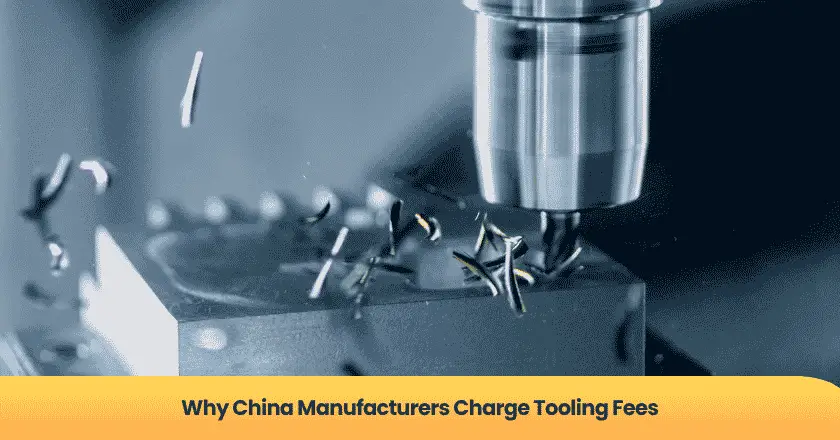
A buyer receives two quotes for an injection-moulded housing. One asks $6,400 for tooling and $1.85 a unit. The other waives tooling entirely and quotes $2.40. He takes the free one, orders 8,000 units over two years, and pays roughly $4,400 more in unit cost than the tooling would have cost him. When he later asks to move production, he discovers the mould was never his to move, which is the part the free quote was really about.
Tooling is not an administrative fee and not a supplier trying its luck. It is a physical asset that has to be designed, machined and proved before a single saleable unit exists, and understanding how it is priced tells you what you are actually buying.
Key Takeaways
• Tooling is a manufactured asset with its own design, materials and trial cycle, produced before your first unit.
• Cavity count, steel grade and part complexity drive the quote far more than part size does.
• Paying the tooling invoice does not automatically make the mould yours, and the tool physically stays at the factory.
• Free tooling is usually amortised into unit price and normally comes with a commitment you cannot easily leave.
• A mould supplied to a factory free of charge can affect the customs value of the goods it produces.
What Tooling Is and Why It Costs
The word covers more than injection moulds, and knowing what sits behind it explains why the number is what it is.
A Manufactured Asset in Its Own Right
Tooling includes injection moulds, die-casting dies, stamping and progressive dies, extrusion profiles, blow moulds, and the jigs and fixtures that hold parts during assembly or welding. Each is a precision object, designed for your specific part, cut from hardened steel or aluminium on machines that cost more than most factories' production lines.
A mould is designed before it is made: gate positions, cooling channels, ejection, draft angles and shrinkage allowances all have to be calculated for your geometry and your material. That engineering time is real and it happens whether or not you ever place a second order.
Why It Cannot Sit Inside the Unit Price
Tooling is a fixed cost incurred before production. Burying it in the unit price means the factory carries the whole investment on a promise, and if your order stops after one run the tool is a loss. Factories that do this compensate with a higher unit price and a commitment period, which is why free tooling is a financing arrangement rather than a gift.
Separating the two also serves you. A visible tooling figure lets you compare unit prices across suppliers on equal terms and see what quantity actually justifies the investment. Amortised tooling hides both, and the effect only becomes clear once you have paid it several times over.
Low-volume alternatives exist and are worth knowing before committing to steel. Aluminium tooling costs less and produces fewer cycles, which suits a few thousand units. Additive manufacturing can produce functional parts in small quantities without any tool at all. Neither replaces production tooling at scale, and both let you test demand before spending on a mould specified for years of output.
Expert Tip:Ask for the tooling quote and the unit price separately even when a supplier prefers to bundle them, then calculate the crossover quantity yourself. Divide the tooling cost by the per-unit difference between the two offers and you have the volume at which paying upfront wins. I've had that number come out at 3,000 units on one project and 40,000 on another with similar tooling costs, entirely because the unit price gaps differed. One line of arithmetic settles a decision buyers otherwise make on instinct.
What Drives the Number
Tooling quotes vary enormously for parts that look similar, and three variables explain most of the spread.
Cavities, Steel and Complexity
Cavity count is the biggest lever. A single-cavity mould produces one part per cycle, a four-cavity mould produces four, and the tool costs more while cutting your cycle time per unit dramatically. High volumes justify more cavities, and the right number is an output of your forecast rather than a preference.
Steel grade determines how many cycles the tool survives. Hardened tool steel costs more and lasts far longer than pre-hardened or aluminium alternatives, which are viable for low volumes or market testing. Complexity does the rest: undercuts, side actions, threads and tight tolerances all add machining hours, and each one is visible in the quote if you ask for a breakdown.
Trials, Revisions and Lead Time
A new tool is not finished when it is cut. It goes through trial shots, conventionally labelled T1, T2 and so on, with the first samples revealing warpage, flash, short shots or dimensional drift that need correction. Two or three rounds is normal on a moderately complex part.
Ask how many trial rounds the quote includes and what further rounds cost. This is one of the commonest sources of unexpected charges, because buyers assume revisions are part of the price and factories assume a defined number is. Fix it in writing before the tool is cut.
Lead time is the constraint buyers underestimate most. Designing, machining and proving a moderately complex tool commonly takes several weeks before any production run begins, and each trial round adds to that. Ask for the tooling schedule as a separate timeline from the production schedule, because a launch plan built on production lead time alone will be wrong by a month or more.
Common Mistake to Avoid:Choosing the cheapest tooling quote without asking about steel grade and cavity count is the error that produces a tool needing replacement after one good year. Cheap tooling is usually cheap because it uses softer steel, fewer cavities or simpler cooling, all of which are reasonable choices for a market test and expensive ones for a product that succeeds. Ask what annual volume the quoted tool is specified for, and match that specification to your actual forecast rather than to the lowest number on the table.
What Payment Actually Buys
The commercial questions around tooling are more important than the price, and they are the ones buyers skip.
Paying Is Not Owning
A tooling invoice buys the output of the mould. Whether it buys the mould itself depends entirely on your agreement, and the tool physically lives at the factory regardless of who owns it. Ownership, storage, maintenance, retention period and transfer rights all need to be written down, ideally in the first purchase order rather than in a later negotiation.
Standard provisions for this exist, and buyers without legal support can start from themodel contractspublished by the International Chamber of Commerce rather than drafting from scratch. Where the tool embodies a design you own, registering that design separately is a different protection worth considering, with filings in China made through theChina National Intellectual Property Administration.
Life, Wear and Maintenance
Moulds wear. A tool is specified for an expected number of cycles, and as it approaches that figure parts drift dimensionally, flash appears at parting lines and cosmetic surfaces degrade. Ask what the tool is rated for and ask for the shot count to be recorded, since without it nobody can tell whether a quality drift is a process problem or simple wear.
Maintenance is a real cost that somebody carries. Cleaning, polishing and periodic repair keep a tool producing to specification, and a mould sitting unused for a year without protection can corrode. Ask who maintains it, how often, and what happens if it is damaged in the factory's care.
Expert Tip:Ask for photographs of the tool with your part number stamped on it, taken at the factory, plus the shot counter reading at the end of each production run. Both requests are ordinary and both are quietly powerful. The stamp makes the asset identifiable if you ever need to move it, and the running shot count tells you how much life remains and whether the factory has been using your tool for other customers, which is rare and not unheard of.
Handling Tooling Commercially
Once the technical questions are settled, three commercial decisions remain, and one of them has a consequence most buyers never anticipate.
Upfront, Amortised or Shared
Paying upfront gives the cleanest ownership position and the lowest unit price. Amortisation spreads the cost across an agreed quantity, which helps cash flow and typically ties you to that quantity. Shared arrangements, where the factory contributes on the expectation of volume, sit between the two and usually mean the factory keeps the tool.
Whichever you choose, define what happens if the projected volume does not arrive. An amortised tool with an unmet quantity is a dispute waiting to happen, and the terms are far easier to agree while both sides are optimistic.
Whichever structure applies, get the tooling deliverable defined alongside it: a signed drawing set for the tool, the specification it was built to, and confirmation of the trial rounds completed. These cost nothing to request during the build and are close to impossible to obtain afterwards, particularly if the relationship has cooled by the time you need them.
The Customs Consequence Buyers Miss
If you own a mould and supply it to your manufacturer free of charge, its value may need to be added to the customs value of the goods it produces. TheWTO Customs Valuation Agreementlists tools, dies, moulds and similar items used in production of the imported goods, supplied directly or indirectly by the buyer free of charge or at reduced cost, among the additions to the price actually paid, apportioned as appropriate.
These are commonly called assists, and the obligation sits with the importer. Buyers who ship a mould they own to a second factory, or who pay for tooling separately and treat it as unrelated to the goods, sometimes discover this at audit. Raise it with your customs broker before the first shipment rather than afterwards.
Expert Tip:Decide the exit terms at the same time as the tooling terms. Where the tool is stored after production ends, how long the factory keeps it, what notice is needed to collect it, and who pays for removal and shipping. Factories rarely refuse these clauses at the outset and rarely welcome them two years later when a relationship is ending. The cost of collecting a mould is trivial next to the cost of rebuilding one, and buyers without transfer rights routinely find rebuilding is the cheaper option.
Tooling Decisions With a Wider Supply Base: NewBuyingAgent
Tooling is a longer-term investment, so choosing a supplier should involve more than comparing the price of the first production order. The factory’s capabilities, production costs, quality performance, and ability to support future orders can all affect the value of the tooling over its useful life.
NewBuyingAgent combines access to 50,000+ partner factories with 20,000+ product development and quality control experts, helping buyers identify suitable suppliers and evaluate sourcing options based on product requirements, target costs, and quality expectations.
A wider supplier base can also create more room for price comparison before tooling is committed. By matching products with suitable factories and negotiating sourcing terms, NewBuyingAgent can help buyers reduce FOB purchase costs by 5%–10%, depending on the product and sourcing conditions.
Backed by 30 years of expertise in trade, manufacturing, and quality control, NewBuyingAgent gives buyers a broader supplier base to consider before making a tooling investment—helping turn a one-time tooling decision into a more informed long-term sourcing choice.
Frequently Asked Questions
Should I accept free tooling from a Chinese factory?
It suits low volumes and market tests, and it is a financing arrangement rather than a gift. The cost is recovered through a higher unit price, and the factory normally keeps the tool, which limits your ability to move production. Calculate the crossover quantity before deciding, since above it paying upfront is usually cheaper.
Who owns the mould after I pay for it?
Whoever your contract says owns it, and possession stays with the factory either way. Payment alone does not transfer ownership in the absence of a clause. Settle ownership, storage, maintenance, retention period and transfer rights in the first purchase order, when factories accept such terms far more readily than later.
How long does a mould last?
It depends on steel grade, part complexity and material abrasiveness, and tools are specified for an expected cycle count rather than a period of time. Ask what the quoted tool is rated for and have the shot counter reading recorded at the end of each run, so wear can be distinguished from process problems.
Can I move my mould to another factory?
Only if you own it and your agreement provides for transfer, and even then it needs the current factory's cooperation to release. Moulds are heavy, need proper packing and may require rework to suit a different machine. Buyers without transfer rights frequently find building a new tool cheaper than negotiating for the old one.
Is tooling cost negotiable?
Often, and usually through structure rather than through the headline figure. Factories may reduce or waive tooling against a committed quantity, split it across the first orders, or credit part of it once volumes are reached. Ask what quantity would change the tooling terms, since that question produces better answers than pushing on the number itself.
Conclusion
Treat tooling as an asset purchase with a lifespan, an owner and an exit rather than as a fee to negotiate away. Ask what steel and how many cavities, how many trial rounds are included, who owns the tool and how it leaves. Free tooling is a loan against your unit price, and it is sometimes the right choice, but only once you have worked out the quantity at which it stops being one. For buyers deciding where to place tooling in the first place, NewBuyingAgent handles factory selection, quality control and delivery from China.
Partial Sources
1. World Trade Organization — Agreement on Implementation of Article VII of GATT 1994 (Customs Valuation Agreement), Article 8 on additions to the price actually paid, including tools, dies and moulds —https://www.wto.org/english/docs_e/legal_e/20-val_01_e.htm— accessed 27 August 2026
2. International Chamber of Commerce — ICC Model Contracts and Clauses, standard provisions for international commercial agreements —https://iccwbo.org/business-solutions/model-contracts-clauses/— accessed 27 August 2026
3. China National Intellectual Property Administration — official portal for patent and design filings in China —https://www.cnipa.gov.cn/— accessed 27 August 2026
NewBuyingAgent
Related Resources
Get Started Today
Let's Turn Your Sourcing Goals into RealityWeChat:+86 15157124615
WhatsApp:+86 15157124615
Address:Building 10 #39 Xiangyuan Road, Hangzhou, China