

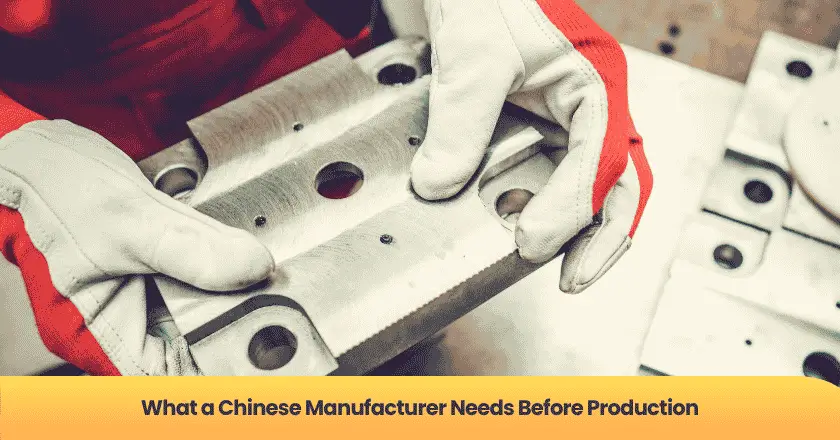
A buyer pays his deposit on a Monday and asks why nothing has started by Friday. The factory has been waiting all week for three things: a confirmation of which Pantone reference applies to the second colourway, a print-ready artwork file rather than a JPEG pulled from a website, and a decision on whether the barcode goes on the inner box or the outer carton. None of these were refused. None were ever sent, because nobody told the buyer they were the reason.
A deposit does not start production. A complete information package does, and factories rarely chase the missing pieces as urgently as buyers would like, partly because they assume anything unstated will be decided later and partly because it usually is, in the factory's favour.
Key Takeaways
• Production starts when the information package is complete, not when the deposit clears.
• Anything left unspecified gets decided by the factory, which is entirely within its rights.
• Artwork must be print-ready with colour references, and barcodes need to be correct before packaging is printed.
• The sampling standard and defect classes have to be agreed before production rather than at inspection.
• Destination market labelling requirements belong in the specification, since a factory cannot know them.
The Product Package
The first group defines what is being made, and gaps here produce the most expensive corrections.
Specification and Drawings
A factory needs dimensions with tolerances, material grade, surface finish, colour by reference rather than by name, and any test standard the product must meet. A specification that says durable plastic and dark grey is not a specification, and the factory will resolve both terms itself.
Tolerances matter more than buyers expect. A dimension given without one invites the factory to work to its own normal range, which may be tighter or looser than your product needs. Stating the tolerance also affects price, since tighter ranges reduce yield, so it is a commercial decision as much as a technical one.
The Signed Sample and Acceptable Variance
A physical reference both sides have signed, dated and sealed, with one held at each end. Ask whether the sample came from production tooling or from the sample room, since a hand-finished piece will sit above what a line delivers, and record an acceptable variance rather than treating the sample as absolute.
Where tooling is involved, the trial sample sign-off is a separate gate from the sample approval. Confirm which one you are approving, because approving a hand-made appearance model is not the same as approving the first part off a mould.
Where you supply components or materials yourself, the factory needs those too, along with a delivery date and a stated allowance for damage during assembly. Buyer-supplied parts are a common source of delay, since the factory cannot start and cannot be blamed, and the responsibility for shortfalls needs settling before the line is scheduled rather than after it stops.
Expert Tip: Send one document, not a thread. I assemble everything into a single specification file with a version number and a date, and update the version rather than sending corrections in separate messages. Factories work from whatever they have on the floor, and the piece of paper that reaches the production line is rarely the twelfth email in a chain. One versioned file removes an entire category of misunderstanding, and it costs an hour to build the first time.
The Packaging Package
Packaging is where preparation most often fails, because it involves files and standards buyers do not routinely handle.
Artwork, Colour and File Format
Factories need print-ready artwork: vector files rather than images pulled from a website, with fonts outlined, bleed included and colours specified by reference. A logo supplied as a low-resolution image will be reproduced as a low-resolution image, and nobody at the factory will judge it against your brand standards.
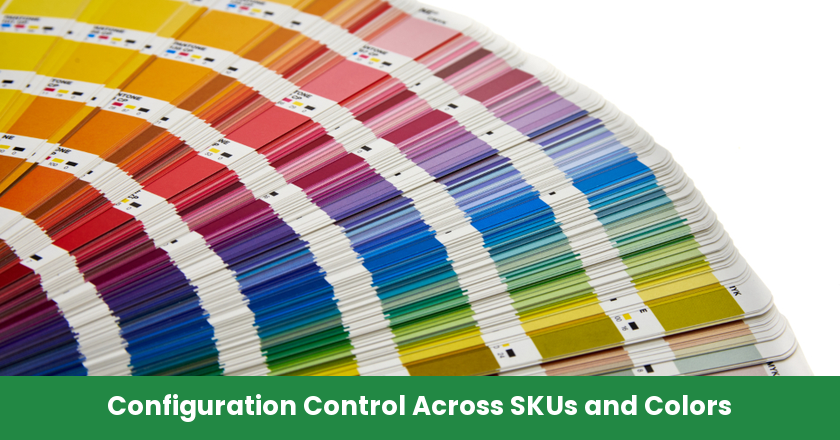
Colour needs a reference number rather than a description, and it needs to be stated for each surface and material, since the same reference prints differently on coated card, uncoated card and a plastic component. Ask for a printed proof before the full run where the packaging matters commercially.
Barcodes and Carton Markings
Barcodes get printed and then discovered. GS1 is the authorised source of Global Trade Item Numbers, and a separate GTIN is required for each product variation such as size, colour, style or pack count, as well as for higher packaging levels including cases and inner packs. Buyers who assign one number across a range find retailers and marketplaces rejecting the listing.
Carton markings need specifying too: what appears on the outer carton, in what position, and whether shipping marks are added at the factory or later. Destination requirements belong here as well, since the EU's General Product Safety Regulation requires consumer products to carry the manufacturer's name and contact details and an economic operator responsible for them within the EU.
Packing standards belong in the same package as the artwork. How many units per inner box, how many inner boxes per carton, what protection sits around fragile surfaces, what carton strength is required and how pallets are configured. These decisions determine both how many pieces arrive saleable and how many units fit a container, which makes them commercial choices rather than logistics details.
Common Mistake to Avoid: Leaving packaging until production is underway is the error that turns a small omission into a scheduling problem, because print runs have their own lead times and plate setup costs. A factory ready to ship and waiting for cartons is a factory whose line has moved on to another customer, and re-entry into the schedule can cost more time than the printing itself. Settle artwork, barcodes and carton markings at the same moment as the product specification rather than treating them as a later task.
The Commercial and Quality Package
The third group governs how the order will be judged and paid for, and it has to exist before the first unit is made.
The Order Document Itself
The purchase order should carry the specification as an attachment rather than a reference, the confirmed quantity and any variant breakdown, the agreed price and trade term, the payment trigger, the required cargo ready date, and the manufacturing entity where a trading company is your counterparty.
Where variants exist, state the split explicitly. A 3,000-piece order across three colours is not the same production plan as 3,000 of one, and factories occasionally assume an even split where none was specified. That assumption is reasonable and it may not match what you intend to sell.
Where certification is needed for your market, the factory needs to know before it buys materials rather than after. Test standards affect which components can be used, and a product built and then submitted for testing is a product that may need rebuilding. State the standard, name who arranges the testing, and confirm whether the cost sits inside the quoted price.
The Quality Standard, Agreed in Advance
Inspection only produces an enforceable result where the standard was fixed beforehand. The sampling schemes in ISO 2859-1 need an inspection level and acceptance limits chosen and agreed, along with defect classes defined for your specific product.
Put these in the order rather than in an email to an inspection company. The supplier has to have accepted the standard it will be judged against, otherwise a failed inspection becomes a discussion about whether the standard was ever agreed, which is a discussion nobody wins.
Expert Tip: Write your defect classes in the factory's language of production rather than in marketing terms. Not the finish must look premium, but no scratches over 2mm on visible surfaces, no colour variation beyond the approved swatch, no burrs on handled edges. Inspectors and production staff can act on the second and can only guess at the first. Ten specific lines are worth more than a paragraph of adjectives, and they take about twenty minutes to write once.
Timing, Payment and What Happens to Gaps
The final consideration is sequencing, since several of these items have their own lead times that run in parallel rather than after each other.
What Runs in Parallel
Artwork approval, plate preparation and carton production can run alongside material purchasing, and they should. Buyers who complete the product package first and then start on packaging add weeks that were available for free. Ask the factory which items sit on the critical path and which do not, since it knows and rarely volunteers the answer.
The deposit belongs in the sequence too. Material purchasing usually waits for it, so a deposit sent late delays the start regardless of how complete everything else is. Sending it before the package is complete is the opposite error, since money in the factory's account does not create urgency about missing information.
The Cost of an Incomplete Package
Factories handle gaps in one of two ways. Either they wait, and your schedule slips silently while both sides assume the other is acting, or they decide, and you receive a reasonable interpretation that is not what you wanted. Neither is bad faith, and both are avoidable.
The practical protection is a written confirmation from the factory that the package is complete and production is scheduled to start on a named date. That single message converts an assumption into a commitment and reveals any missing item while there is still time to supply it.
Expert Tip: Ask the factory directly what it is still waiting for, in those words, at the point you pay the deposit. It is a question factories answer plainly because it helps them, and it surfaces the small items nobody thought to mention. I have had answers ranging from a missing font file to a question about whether two components should be packed together, each of which would have cost several days had it emerged a fortnight later.
Preparing Orders Properly at Scale
NewBuyingAgent is your perfect partner for global sourcing from China, backed by 30 years of expertise in trade, manufacturing and quality control. Its mission is to make China sourcing effortless and profitable for global buyers.
A complete package also protects the price, since factories that have to interpret a specification price the risk of interpreting it wrongly.
NewBuyingAgent's wide factory network lets it pick low-cost, high-cooperation suppliers. Even with its margin included, it cuts your costs by 5%-10%.
Assembling that package for one product is an afternoon. Doing it for a dozen, in parallel, is the work that quietly fills a buyer's month.
NewBuyingAgent handles all factory communication—perfect for multi-category buyers. Free up your time to focus on expanding your local market sales.
Frequently Asked Questions
Why has my factory not started after I paid the deposit?
Most often because something in the information package is missing: a colour confirmation, a print-ready artwork file, a variant split or a signed specification. Factories wait rather than chase, since the gap is not theirs. Ask directly what they are still waiting for, which usually produces a short and immediately actionable list.
What file formats do Chinese factories need for packaging artwork?
Print-ready vector files with fonts outlined, bleed included and colours specified by reference number rather than by description. Images taken from a website reproduce as low-resolution images. Ask for a printed proof before the full run wherever packaging carries commercial weight.
Do I need a barcode before production starts?
If the barcode is printed on packaging, yes, because packaging is produced ahead of or alongside the goods. GS1 is the authorised source of GTINs, and a distinct number is needed for each product variation and for case and inner-pack levels. Getting this wrong means reprinting rather than relabelling.
Should the quality standard be in the purchase order or arranged separately?
In the order. A supplier must have accepted the sampling level, acceptance limits and defect classes it will be judged against before production begins. A standard sent only to an inspection company gives you a report the factory can decline to recognise, which is the weakest position available to you.
How long does it take to prepare a complete package?
For a first order, commonly one to three weeks of your own time spread across specification, artwork and standards, and longer where certification or barcodes have to be obtained. Repeat orders take an afternoon because the package already exists and only quantities and dates change, which is one reason second orders run so much faster than first ones.
Conclusion
Production begins when the package is complete. Send a versioned specification with tolerances, a signed sample with a stated variance, print-ready artwork with colour references, correct barcodes, carton markings, the order document with quality standards attached, and then ask what is still outstanding. Gaps do not stay gaps in a factory. They get filled by somebody else's judgement. For buyers preparing several orders at once, NewBuyingAgent handles factory selection, quality control and delivery from China.
Partial Sources
1. GS1 — Global Trade Item Numbers and barcodes, the authorised source of GTINs and guidance on when a distinct number is required — https://www.gs1.org/standards/get-barcodes — accessed 31 August 2026
2. International Organization for Standardization — ISO 2859-1:2026, Sampling procedures for inspection by attributes, Part 1 — https://www.iso.org/standard/85464.html — accessed 31 August 2026
3. EUR-Lex, Publications Office of the European Union — summary of Regulation (EU) 2023/988 on general product safety, including manufacturer identification and responsible person requirements — https://eur-lex.europa.eu/EN/legal-content/summary/general-product-safety-regulation-2023.html — accessed 31 August 2026
NewBuyingAgent
Related Resources

Get Started Today
Let's Turn Your Sourcing Goals into RealityWeChat:+86 15157124615
WhatsApp:+86 15157124615
Address:Building 10 #39 Xiangyuan Road, Hangzhou, China
