

China Supplier Consolidation
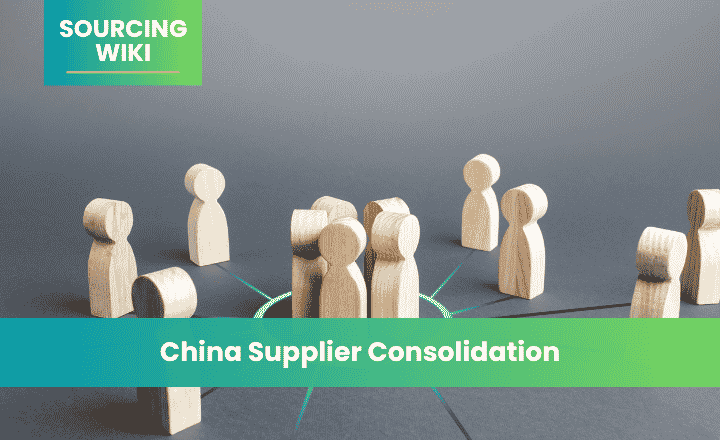
China supplier consolidation is the process of coordinating purchases from multiple Chinese factories or suppliers through a more centralized sourcing and order management structure. Instead of managing every supplier independently, buyers can consolidate supplier communication, product sourcing, production follow-up, quality control, and order coordination through one sourcing partner or procurement process.
For buyers purchasing multiple products or SKUs from China, supplier consolidation can reduce administrative work, improve purchasing visibility, and make supplier management more manageable. However, consolidation does not always mean replacing multiple factories with one supplier. In many cases, keeping different specialized factories while centralizing procurement management is the more practical approach.
What Is China Supplier Consolidation?
China supplier consolidation means reducing the complexity of working with multiple Chinese suppliers by coordinating them through a centralized sourcing structure.
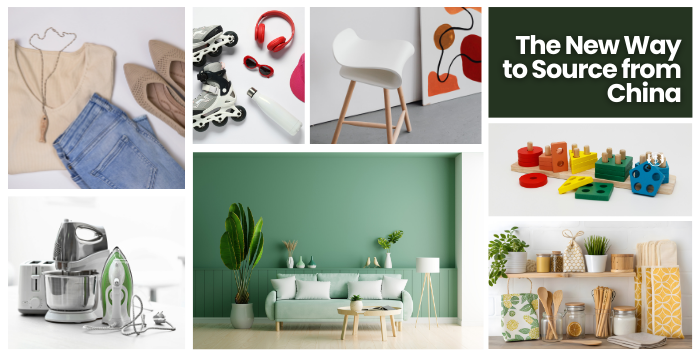
A buyer may purchase furniture from one factory, kitchen products from another, pet supplies from a third, and packaging from a fourth. Managing each supplier separately creates multiple quotation processes, communication channels, production schedules, quality checks, and payment arrangements.
A consolidated sourcing model keeps the supplier base where it makes commercial sense while centralizing the activities around it.
The objective is not simply to have fewer suppliers. The objective is to make a multi-supplier purchasing program easier to manage.
Supplier consolidation can involve:
- Consolidating supplier communication
- Comparing quotations across factories
- Coordinating product development
- Managing samples and specifications
- Following production schedules
- Coordinating quality control
- Managing multiple purchase orders
- Consolidating order information
- Coordinating shipment preparation
- Managing supplier performance
This distinction is important because supplier reduction and supplier consolidation are not the same thing.
Why Do Buyers Work With Multiple Suppliers in China?
Using multiple Chinese suppliers is often necessary.
Different factories may have different manufacturing capabilities, equipment, materials, production capacity, and cost structures. A factory that is highly competitive for furniture may not be the right supplier for electronics accessories or textile products.
Buyers may therefore intentionally maintain several suppliers to obtain:
- Better product specialization
- More competitive pricing
- Greater product variety
- Access to different production capabilities
- Additional production capacity
- Alternative supply options
The problem begins when every supplier has to be managed independently.
For example, a buyer with 20 SKUs from six factories may need to handle six separate quotation discussions, six production schedules, multiple sample approvals, different quality standards, and repeated communication about delivery status.
At that point, the number of suppliers becomes an operational issue rather than simply a sourcing decision.
Supplier Consolidation vs. Buying From One Factory
Supplier consolidation should not be confused with moving all purchases to one factory.
| Approach | How It Works | Main Advantage | Main Limitation |
|---|---|---|---|
| One factory | One supplier produces most or all products | Simple supplier management | Limited product and manufacturing capabilities |
| Multiple suppliers | Buyer manages each supplier independently | Greater sourcing flexibility | High coordination workload |
| Supplier consolidation | Multiple suppliers remain, but purchasing activities are coordinated centrally | Flexibility with simpler management | Requires effective coordination |
For many multi-category buyers, the third approach can provide a better balance.
The buyer does not have to force unrelated products into one factory simply to reduce the number of suppliers. Instead, specialized suppliers can remain in place while procurement and production management become more centralized.
When Does China Supplier Consolidation Make Sense?
Supplier consolidation is particularly useful when a buyer has one or more of the following characteristics.
1. Multiple Product Categories
Buyers sourcing different product categories from China often need different types of factories.
For example, an e-commerce business may purchase:
- Home organization products
- Kitchen accessories
- Pet products
- Furniture
- Outdoor products
Finding a single factory capable of producing all these products is usually less practical than working with specialized suppliers.
A centralized sourcing partner can coordinate these different factories while allowing each product category to remain with an appropriate supplier.
2. A Large Number of SKUs
Managing five suppliers for five products may be relatively simple.
Managing five suppliers for 100 SKUs is a different situation.
As SKU numbers increase, buyers spend more time tracking:
- Specifications
- Quotations
- Samples
- Purchase quantities
- Production status
- Packaging requirements
- Quality issues
- Delivery dates
The value of consolidation increases as the number of supplier-product relationships grows.
3. Frequent Repeat Orders
Repeat orders create another layer of supplier management.
A buyer may need to confirm whether the supplier is using the same material, packaging, specifications, and production standards as the previous order.
Centralized order management can make it easier to maintain consistent purchasing requirements across repeat orders.
4. Cross-Category Purchasing
A buyer may not need a different sourcing process every time a new product category is added.
A sourcing partner with access to factories across different industries can help buyers expand their product range without creating an entirely new supplier-management structure for every category.
5. Limited Local Procurement Resources
International buyers often face practical difficulties when managing suppliers in China directly, including language differences, time-zone gaps, factory communication, and limited visibility into local supplier capabilities.
Centralizing communication and supplier coordination can reduce the amount of day-to-day work required from the buyer.
How Does China Supplier Consolidation Work?
A practical supplier consolidation process can be divided into several stages.
Step 1: Map Current Suppliers and Products
Start by identifying:
- Existing suppliers
- Products supplied by each factory
- Annual or recurring purchase volumes
- Product specifications
- Current prices
- MOQ requirements
- Lead times
- Quality performance
- Delivery performance
This creates a baseline for deciding which supplier relationships should be maintained, changed, or expanded.
Step 2: Group Products by Manufacturing Capability
Products should be grouped according to actual manufacturing requirements rather than simply by purchase volume.
For example:
Furniture
→ Wooden furniture supplier
→ Metal furniture supplier
Home & Kitchen
→ Plastic products supplier
→ Stainless-steel products supplier
Textiles
→ Apparel supplier
→ Home textile supplier
This helps prevent an overly aggressive consolidation strategy in which unrelated products are forced into the same factory.
Step 3: Compare Suppliers on More Than Price
The cheapest factory is not necessarily the best supplier for consolidation.
Buyers should compare suppliers based on:
- Product quality
- Production capability
- Price
- MOQ
- Capacity
- Lead time
- Communication
- Packaging capability
- Customization capability
- Order consistency
- Response to quality problems
A supplier that offers a slightly higher unit price but consistently meets specifications may create a lower overall procurement burden.
Step 4: Decide What Should Be Consolidated
Not every activity needs to be moved to the same supplier.
A buyer can consolidate:
- Supplier communication
- Quotation collection
- Product development
- Production follow-up
- Quality management
- Order tracking
while keeping multiple factories responsible for manufacturing.
This is often more practical than consolidating all physical production into one factory.
Step 5: Establish Standard Purchasing Requirements
Centralized sourcing becomes much more effective when suppliers receive consistent requirements.
Depending on the product, these may include:
- Product specifications
- Approved samples
- Packaging requirements
- Labeling requirements
- Quality standards
- Inspection requirements
- Delivery requirements
Standardization makes supplier comparison and repeat-order management easier.
Step 6: Monitor Supplier Performance
Consolidation should not be treated as a one-time supplier reduction exercise.
Supplier performance should be reviewed continuously based on:
- Quality consistency
- On-time production
- Price competitiveness
- Responsiveness
- Problem-solving
- Capacity
- Repeat-order performance
Poor-performing suppliers can then be replaced without disrupting the entire sourcing program.
What Are the Benefits of China Supplier Consolidation?
Lower Procurement Complexity
Instead of repeatedly communicating with many factories about similar issues, buyers can centralize purchasing information and follow-up.
Better Supplier Visibility
A consolidated procurement process makes it easier to compare supplier prices, capabilities, production progress, and performance.
More Efficient Multi-Category Sourcing
Buyers can continue purchasing different products from specialized factories without having to independently manage every sourcing relationship.
Better Use of Purchasing Volume
When purchasing information and demand are viewed across suppliers and product categories, buyers may identify opportunities for better pricing, standardized specifications, or more efficient order planning.
Easier Quality Management
A centralized quality process can help ensure that product specifications and inspection requirements are consistently communicated and followed across different suppliers.
Less Time Spent on Supplier Communication
For overseas buyers, this can be one of the most important benefits. Instead of spending time coordinating every factory directly, buyers can focus more on product strategy, sales, and market development.
Does Supplier Consolidation Always Reduce Costs?
No.
Supplier consolidation can reduce procurement and administrative costs, but simply reducing the number of suppliers does not guarantee lower product prices.
For example, replacing three specialized factories with one general supplier may increase costs if the new supplier has to subcontract production or cannot manufacture certain products efficiently.
The better question is:
Can the buyer reduce the total cost and management burden without reducing sourcing flexibility?
This is why supplier consolidation should be evaluated against the total sourcing process rather than supplier count alone.
How Can Buyers Consolidate Chinese Suppliers Without Losing Flexibility?
A strong consolidation strategy does not necessarily aim for the fewest possible suppliers.
Instead, buyers can use acentralized management + specialized manufacturingmodel.
For example:
Buyer
↓
Centralized sourcing partner
↓
Furniture Factory|Kitchenware Factory|Pet Products Factory|Outdoor Products Factory
Each factory continues producing what it specializes in, while the buyer has a more centralized point for sourcing coordination, production follow-up, and quality management.
This model is particularly useful for buyers with multiple product categories or a growing number of SKUs.
China Supplier Consolidation vs. Supplier Switching
Supplier consolidation and supplier switching solve different problems.
Supplier switchingasks:
Should I replace this supplier?
Supplier consolidationasks:
How can I manage my supplier portfolio more effectively?
A buyer may consolidate suppliers without replacing all existing factories. In other cases, consolidation may reveal that certain suppliers are redundant, uncompetitive, or unsuitable for long-term cooperation.
The two strategies can therefore be used together.
When Should Buyers Not Consolidate Suppliers?
Supplier consolidation is not appropriate in every situation.
Keeping multiple independent suppliers may be preferable when:
- Products require highly specialized manufacturing
- A single supplier cannot provide sufficient capacity
- The buyer needs supply redundancy
- Different factories have significant cost advantages
- Products require different production technologies
- Supplier concentration would create excessive dependency
The goal should be better supplier management, not supplier reduction at any cost.
How NewBuyingAgent Helps With Multi-Supplier Sourcing in China
For buyers purchasing multiple products from China, the challenge is often not simply finding a factory. It is coordinating the entire purchasing process across different factories and product categories.
NewBuyingAgent provides a centralized sourcing solution for buyers that need products from China across categories. Buyers provide their purchasing requirements, and NewBuyingAgent uses its network of more than 50,000 cooperating factories across industries to identify suitable suppliers and coordinate sourcing activities.
The service can also help manage supplier communication, production follow-up, and product quality, allowing buyers to work with specialized Chinese factories without having to manage every supplier relationship independently.
For buyers with existing Chinese suppliers, NewBuyingAgent also offers a "We Manage Your Factories" service, which supports production and quality management while allowing the buyer to retain existing supplier relationships.
This makes the model different from simply replacing multiple factories with one trading supplier.
The objective is to give buyers one coordinated sourcing process while maintaining access to multiple specialized manufacturers.
Frequently Asked Questions
What is China supplier consolidation?
China supplier consolidation is the process of coordinating multiple Chinese suppliers through a centralized sourcing or procurement structure. It can simplify supplier communication, production follow-up, quality management, and order coordination without necessarily replacing every supplier.
Is it better to use one supplier in China?
Not always. One supplier can simplify management, but multiple specialized suppliers may provide better product quality, pricing, capacity, or manufacturing capabilities. The right choice depends on the products and sourcing requirements.
Can I use multiple Chinese factories through one sourcing agent?
Yes. A sourcing agent with access to multiple factories can coordinate different suppliers while acting as a centralized point of communication and order management.
Does supplier consolidation reduce product prices?
It can create opportunities for better pricing through supplier comparison, purchasing leverage, and more efficient procurement, but consolidation itself does not guarantee lower unit prices.
Is supplier consolidation suitable for e-commerce businesses?
Yes. E-commerce sellers often manage many SKUs and product categories, making centralized supplier coordination particularly useful as their sourcing volume grows.
What is the difference between supplier consolidation and supplier switching?
Supplier switching means replacing one supplier with another. Supplier consolidation focuses on simplifying and improving the management of multiple supplier relationships. A consolidation strategy may involve supplier switching, but it does not require replacing every supplier.
Key Takeaway
China supplier consolidation is not about forcing every product into one factory.
It is about creating a more efficient way to manage multiple Chinese suppliers.
For buyers with multiple categories, many SKUs, or growing order volumes, the most practical model may be tokeep specialized factories while centralizing sourcing, communication, production follow-up, and quality management.
This approach allows buyers to benefit from China's specialized manufacturing base without taking on the full operational burden of managing every supplier independently.
Partial Sources
The following authoritative sources provide additional guidance on supplier management, procurement, international trade terms, and supply chain risk management:
1. United Nations Conference on Trade and Development (UNCTAD) — Best Practices to Reduce Import Costs Through Better Procurement
UNCTAD identifies supply planning, supplier sourcing and management, offer and contract evaluation, and logistics management as important areas for improving import procurement. It also discusses supplier consolidation as a way to improve purchasing leverage and reduce logistics and inventory costs.UNCTAD — Best Practices to Reduce Import Costs Through Better Procurement
2. International Chamber of Commerce (ICC) — Incoterms® 2020
ICC's Incoterms® rules define the responsibilities, costs, and risks allocated between buyers and sellers in the delivery of goods. They are particularly relevant when coordinating purchases from multiple suppliers under different commercial terms. ICC — Incoterms® Rules
3. International Chamber of Commerce (ICC) — Incoterms® 2020 Introduction
This official ICC resource explains the roles and responsibilities of buyers and sellers, delivery, risk transfer, and the appropriate use of Incoterms® in international sales contracts.ICC — Incoterms® 2020 Introduction
4. OECD — Due Diligence for Responsible Business Conduct
OECD guidance emphasizes the importance of identifying and addressing risks across supply chains and business relationships. This provides useful context for evaluating and monitoring supplier performance beyond price alone.OECD — Due Diligence for Responsible Business Conduct
Related Knowledge Base
Sourcing Practices & Insights: China Supplier Consolidation
Latest Sourcing Guides
Get Started Today
Let's Turn Your Sourcing Goals into RealityWeChat:+86 15157124615
WhatsApp:+86 15157124615
Address:Building 10 #39 Xiangyuan Road, Hangzhou, China
