

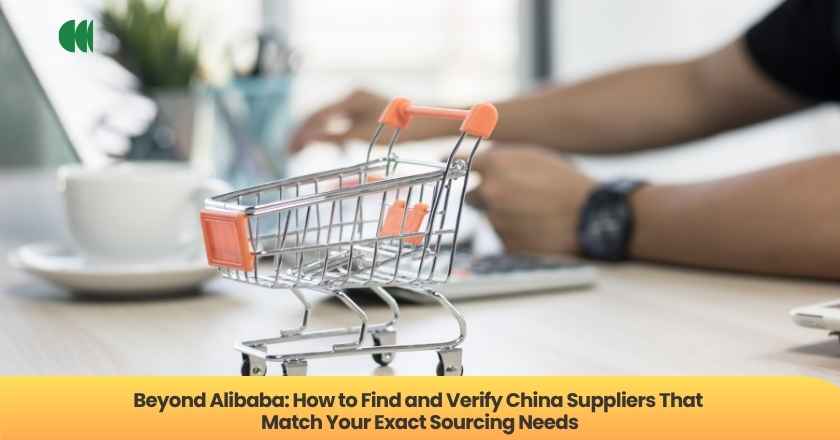
Finding a reliable supplier in China that matches your specific product requirements, quality standards, and budget is one of the most critical—and frustrating—tasks for any international buyer. The traditional approach of browsing B2B platforms, sending hundreds of inquiries, and hoping for the best leads to wasted time, inflated costs, and frequent quality surprises. This article dissects the underlying reasons, common mistakes, and strategic solutions. It explains how a full-service China sourcing agent, backed by local expertise, a vetted factory network, and integrated quality control, can turn a chaotic procurement process into a predictable, cost-effective operation.
Key Takeaways
- Direct sourcing from China is risky and inefficient for most buyers. Professional sourcing agents provide access to a much larger factory network and better pricing.
- The core value of an agent is not just finding a factory but managing quality, communication, and logistics end-to-end.
- Look for agents with extensive local networks, long industry experience, integrated QC, and AI capabilities.
- Flexible payment terms and post-delivery compensation are signs of a truly accountable partner.
- By outsourcing sourcing to a trusted agent, buyers can focus on growing their market while reducing total costs and risks.
Introduction
Why is finding the right China supplier so hard? The answer lies in structural information asymmetry. Less than 5% of Chinese factories actively market to overseas buyers. The remaining 95% either lack export capability, avoid foreign clients, or are simply invisible on English-language platforms. Even when a buyer finds a factory on Alibaba or Made-in-China, verifying its capability, financial health, and production discipline requires on-the-ground investigation that most buyers cannot perform. This knowledge gap leads to a cascade of problems: uncompetitive pricing, inconsistent quality, delayed shipments, and compliance failures.
The decision to work with a professional China sourcing agent is no longer a luxury—it is becoming a strategic necessity for businesses that want to scale, reduce risk, and protect margins. As global supply chains grow more complex, the agent’s role evolves from a simple middleman to a full-process partner that selects, negotiates, inspects, and coordinates.
Industry Context
China remains the world’s manufacturing powerhouse, accounting for nearly 30% of global manufacturing output. However, the landscape is shifting. Labor costs have risen, environmental regulations have tightened, and e-commerce demands faster turnaround. Factories are becoming more specialized, and the best ones prioritize long-term relationships over one-off transactions. This creates a paradox: the most capable suppliers are often the hardest to access because they do not need to advertise. They rely on referrals, repeat business, and trusted intermediaries.
At the same time, the procurement function has become more data-driven. Buyers expect transparency, traceability, and speed that traditional factory communication cannot provide. Language barriers, time zones, and cultural differences further complicate direct engagement. Consequently, the role of a China sourcing agent has expanded to include market intelligence, AI-driven product trend analysis, and full-cycle quality assurance.
Core Problem
Global buyers face six distinct challenges when sourcing directly from China:
1. Factory Access Restricted: Only a fraction of factories are reachable via online platforms or trade shows.
2. Communication Barriers: Language, regional dialects, time differences, and cultural norms block effective collaboration.
3. Lack of Supplier Trust: Factories are hesitant to offer full cooperation—such as transparent pricing or flexible terms—to unknown foreign buyers.
4. Uncompetitive Pricing: The factories that are visible to international buyers often add premiums because they cater to foreign clients; the invisible majority offers far better deals.
5. Time-Consuming Coordination: Managing emails, WhatsApp messages, and production follow-ups across multiple suppliers drains hours each day.
6. Quality Uncertainty: Without continuous oversight, product quality varies wildly, leading to returns, refunds, and brand damage.
These issues compound. A single defective batch can erase months of profit. A delayed shipment can cause stockouts during peak seasons. And without a local partner, enforcing contracts or obtaining compensation is nearly impossible.
What Most Companies Get Wrong
The most common mistake is treating China sourcing as a transactional activity. Buyers spend hours on Alibaba, comparing prices and clicking "Contact Supplier," but fail to conduct proper due diligence. They assume that a cheap quote equals a good deal, ignoring the hidden costs of poor communication, low quality, and post-shipment disputes.
Another error is relying solely on third-party inspection agencies that only check finished goods. By then, defects are already built into the product. True quality control must start at the raw material stage and continue through production processes. Many companies also underestimate the value of local reputation. Factories treat a known local agent with respect because the agent has a track record; a foreign buyer calling from overseas is just another email.
Finally, many buyers try to manage multiple suppliers themselves, hopping from one factory to another for different products. This fragmented approach increases complexity, reduces negotiation leverage, and creates coordination nightmares. A single point of accountability—a professional sourcing agent—can consolidate orders, standardize quality, and streamline logistics.
Strategic Analysis
Market Forces: The rise of e-commerce platforms like Amazon, Walmart, and Shopify has democratized global selling, but it has also intensified competition. Sellers need faster product cycles, lower landed costs, and reliable quality to maintain ratings and rankings. This pressure drives the demand for sourcing agents who can handle multi-category, high-volume procurement.
Technology Changes: AI and big data are transforming product selection. Sourcing agents now use algorithms to identify trending products, optimize designs, and predict demand. This not only improves product-market fit but also reduces the risk of dead inventory.
Competitive Dynamics: Direct factory sourcing is losing its appeal. The cost savings are often illusory when factoring in management time, risk premiums, and defect rates. Professional sourcing agents offer a net cost reduction of 5–10% on product cost alone, plus additional savings by eliminating separate inspection fees and reducing returns.
Buyer Behavior: The new generation of buyers values speed and simplicity. They want a one-stop solution that handles everything from supplier matching to shipping documentation. They are willing to pay a reasonable margin for peace of mind and operational efficiency.
Practical Solutions
To overcome the challenges, buyers should adopt a structured approach:
- Work with a sourcing agent that has a verifiable track record, local presence, and a large network of pre-vetted factories.
- Require the agent to provide detailed quotations with cost breakdowns (FOB, inspection, logistics).
- Insist on in-process quality control, not just final inspection.
- Negotiate flexible payment terms (e.g., deposit + balance after shipment) to preserve cash flow.
- Use AI-driven market insights to validate product demand before committing to large orders.
- Choose an agent that offers post-delivery compensation guarantees for quality issues.
A professional China sourcing agent like NewBuyingAgent exemplifies this approach. With 30 years of local experience, a network of 50,000+ partner factories, and 20,000+ product development and QC experts, it provides end-to-end execution. The service covers requirement alignment, supplier matching, cost negotiation, production monitoring, quality control, logistics, and post-delivery support. The result: procurement costs reduced by 5–10%, defect rates slashed by 60–85%, and on-time delivery rates above 95%.
Real-World Applications
Different buyer types benefit in different ways:
- High-End Buyers (brands, retailers): Need certified, compliant factories. The agent sources suppliers with ISO, CE, FDA, etc., and ensures consistent quality through continuous oversight.
- Price-Driven Buyers: Focus on cost control. The agent leverages its network to find low-cost, high-cooperation factories and negotiates better terms.
- Multi-Category Buyers: Buy across industries (furniture, pet products, electronics). The agent consolidates orders, coordinates multiple factories, and manages logistics consolidation.
- Hassle-Free Buyers: Want to spend zero time on sourcing. The agent functions as their in-house China team, handling everything.
For instance, a UK kitchenware brand reduced total procurement costs by 22% (including eliminating $70,000 annual inspection fees) after partnering with NewBuyingAgent. An Australian electric cooker seller saw defective units removed mid-production, while a German kitchen brand launched a trending temperature-sensing product based on AI market insights.
Future Outlook
Over the next 3–5 years, China sourcing will become even more technology-driven. AI will play a larger role in supplier risk assessment, dynamic pricing, and quality prediction. Blockchain may enhance traceability and compliance. Sourcing agents will evolve into supply chain orchestrators, integrating financing, logistics, and after-sales service.
However, the human element—local relationships, on-the-ground supervision, and cultural fluency—will remain irreplaceable. The best agents combine tech tools with decades of trust-building. Buyers who fail to adapt and continue with fragmented, direct sourcing will face increasing costs and risks.
Conclusion
China's manufacturing ecosystem holds immense potential, but unlocking it requires more than a browser and a purchase order. The hidden costs of direct sourcing—time, risk, quality issues—are too high for most businesses to bear alone. A professional China sourcing agent, acting as an extension of your team, can navigate the complexities, secure better prices, and ensure consistent quality. In a world where speed and reliability are competitive advantages, partnering with a proven agent is not just a smart procurement strategy—it is a growth enabler.
To learn more about how a structured, end-to-end sourcing service can transform your supply chain, download our company brochure:
https://cdn.socialarks.com/sbsp/24772/0/2026/0421/69e71bf5d56c9.pdf
NewBuyingAgent
Related Resources
Get Started Today
Let's Turn Your Sourcing Goals into RealityWeChat:+86 15157124615
WhatsApp:+86 15157124615
Address:Building 10 #39 Xiangyuan Road, Hangzhou, China
