

Clothing Manufacturing Companies in China
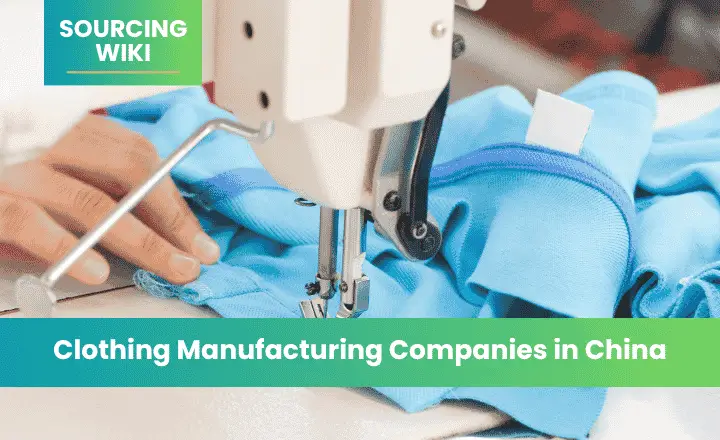
Definition
Clothing manufacturing companies in China are enterprises that produce apparel within the People's Republic of China, supplying domestic brands and international buyers. The term emphasises the company as a business entity, encompassing privately owned firms, larger corporations, and operations of varying scale and capability. Viewing a supplier as a company rather than only as a factory draws attention to dimensions that matter for an ongoing relationship—its legal standing, financial stability, management, and track record—alongside its physical production ability.
Manufacturing Models and Regional Industrial Base
These companies operate under cut-make-trim (CMT), OEM, and ODM models, and many specialise by category such as knitwear, denim, or activewear. China's integrated textile supply chain—spanning fabric mills, dyeing, accessories, and assembly—supports their production, with major clusters in provinces including Guangdong, Zhejiang, and Fujian. Companies range from those serving niche markets to large exporters with international clients and established compliance systems, and this range means that the right company for a buyer depends heavily on the buyer's own scale and requirements: a large exporter geared to high volumes may be unsuitable for a small brand, and vice versa.
Verification Standards and Financial Stability
When evaluating a clothing manufacturing company, buyers commonly verify business registration and scope, distinguish manufacturers from trading intermediaries, review certifications and quality systems, assess production capacity, and test samples. Verifying registration and scope establishes that garment production is a legitimate part of the company's activities, while assessing capacity against intended volumes confirms that the company can realistically handle the order. For longer-term relationships, financial stability is also worth weighing, since a company under strain may compromise on materials or delivery.
Incremental Relationship Building and Operational Risk
Because garment quality depends on fabric, stitching, and sizing consistency, sample approval and inspections are widely regarded as essential. Buyers also weigh compliance with labour and environmental standards, alongside clear contractual terms covering specifications, lead times, and quality. A practical approach many buyers take is to build the relationship incrementally—beginning with a trial order, observing how the company communicates and handles problems, and expanding only once it has demonstrated reliability—because how a company responds to a defect, a change request, or a disagreement often reveals more about its dependability than its initial quotation or sample. Understood this way, choosing a clothing manufacturing company is as much about assessing the organisation behind the factory as the factory itself.
Long-Term Supply Continuity and Organisational Capacity
The company-level perspective also matters for continuity. A buyer building an ongoing apparel programme depends not only on a single good production run but on the company's ability to repeat that performance reliably across seasons, absorb growth, and remain solvent and compliant over time. This is why assessments of a clothing manufacturing company often extend beyond a one-off sample to its management stability, its handling of previous clients, and its capacity to scale. For buyers whose business depends on consistent supply, evaluating the company as an enterprise—not merely as a source of one acceptable sample—is the more reliable basis for a lasting sourcing relationship.
Related Knowledge Base
Sourcing Practices & Insights: Clothing Manufacturing Companies in China
Latest Sourcing Guides

Get Started Today
Let's Turn Your Sourcing Goals into RealityWeChat:+86 15157124615
WhatsApp:+86 15157124615
Address:Building 10 #39 Xiangyuan Road, Hangzhou, China
