

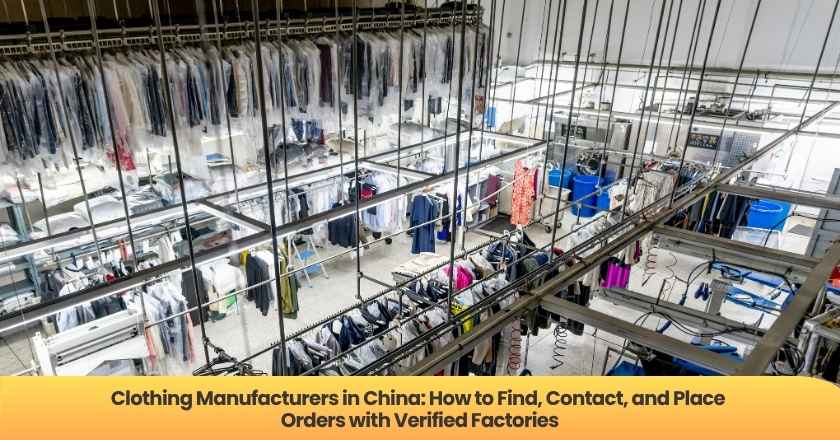
Introduction
Finding reliable clothing manufacturers in China is one of the most important steps in building a successful apparel brand—but it is also one of the most confusing parts of the sourcing process.
Many buyers start their search on platforms like Alibaba, where thousands of suppliers appear to offer similar products at competitive prices. At first glance, most listings look credible: factories claim to support OEM/ODM production, offer flexible MOQs, and promise international shipping. However, what is not always clear is whether these suppliers are actual manufacturers, trading companies, or intermediaries presenting themselves as factories.
The real challenge is not just discovering suppliers on Alibaba or other platforms, but identifying verified clothing manufacturers that can consistently meet your quality, pricing, and production requirements. For beginners, this also includes understanding how to communicate effectively, request samples properly, and avoid costly sourcing mistakes.
This guide explains how to find clothing manufacturers in China, how to verify whether a factory is legitimate, and how to confidently move from initial contact to placing your first order.
Key Takeaways
• Most "manufacturers" you find online are trading companies; confirm production capability before requesting samples.
• A verified factory has a business license matching its claimed products, a real audit report, and references you can contact.
• Expect MOQs of 300–1,000 pieces per style for established factories; lower MOQs usually mean higher per-unit cost or a middleman.
• Never pay more than a 30% deposit, and tie the balance to a pre-shipment quality inspection.
• A sourcing agent gives you access to factories that don't market to foreign buyers at all.
Where Verified Clothing Manufacturers Actually Live
Beyond the obvious platforms
Alibaba, Made-in-China, and Global Sources are the default starting points, and they're fine for building a longlist. The catch is that visibility on these platforms reflects marketing budget, not production quality. The best garment factories often have no English-facing presence because their order books are full with domestic brands and a few long-term export clients.
That's the structural gap. Most international buyers can reach only a thin slice of China's factory base directly — by some estimates under 5% — while the rest operate through introductions, regional clusters, and agents.
Reading a region like a sourcing map
China's apparel production clusters by category. Knitwear and sweaters concentrate around Dongguan and Qingdao; denim around Xintang in Guangdong; fast-fashion woven garments around Hangzhou and Guangzhou. Knowing the cluster tells you whether a quoted price is plausible. A supplier in a region with no history of your product category is a red flag worth a direct question.
These clusters exist because the whole supply chain co-locates — fabric mills, trim suppliers, dye houses, and skilled labor cluster around the factories, which is why a denim factory in a denim town quotes lower and delivers faster than the same factory would somewhere without that ecosystem. When a supplier's pricing looks too good for your category, checking their location against the known cluster is often the fastest sanity test. A factory sourcing fabric and trims from three provinces away carries hidden freight and coordination cost that eventually lands in your price or your lead time.
Expert Tip: When a supplier's address sits outside the known cluster for your product, ask them to name their fabric mill and dye house by city. Real factories answer in seconds because they place those orders weekly. Trading companies hesitate, give vague regional answers, or promise to "check with the workshop." That single question separates makers from middlemen faster than any certificate.
How to Tell a Factory from a Trading Company
The documents that actually matter
A genuine manufacturer holds a business license (营业执照) whose registered scope includes garment production, not just "import and export" or "trade." Ask for it, then check that the company name matches the bank account you're asked to pay. A mismatch between the invoicing entity and the bank-account holder is the single most common sign you're paying a middleman, or worse.
Beyond the license, ask for a recent third-party audit — a BSCI, Sedex, or WRAP report, or a factory profile from an inspection firm.
Capability signals you can check remotely
Request a short factory-floor video on a live call rather than pre-recorded footage. Ask to see the cutting room, sewing lines, and the QC table. Count rough machine numbers against the volume they claim to handle. A factory promising 50,000 pieces a month from twenty machines is quoting someone else's capacity.
Common Mistake to Avoid: Treating a glossy company catalog as proof of capability. Catalogs are cheap to produce and frequently show garments the supplier merely traded, not made. The consequence is finding out at sample stage that your "manufacturer" is subcontracting your order to a workshop you never vetted — with no accountability when quality slips. Always tie capability claims to live, verifiable evidence before you commit.
Checking specialization, not just existence
A factory being real isn't the same as it being right for your product. A knit-focused operation will quote your woven jacket, accept the order, and then struggle, because the machinery and skilled labor for wovens aren't on its floor. Ask what category makes up the bulk of their output, and request photos of recent shipments in your specific product type — not their catalog highlights. The strongest verification is seeing your exact garment type leaving their door regularly, because that proves repeat capability rather than a one-off attempt. This depth of category-matching is where a partner with broad factory access earns its keep: with QC and product development specialists who know which factory does which product well, the matching happens before the sample stage rather than after a failed one.
Contacting Manufacturers Without Wasting Weeks
Write an RFQ that filters for serious factories
Your first message sets the tone. Send a structured RFQ (Request for Quotation — a formal spec sheet asking suppliers to price a defined product) rather than "do you make hoodies?" Include fabric weight in GSM (grams per square meter — the standard measure of fabric density), composition, target MOQ (Minimum Order Quantity — the smallest order a factory will accept), color count, sizing range, and your target landed price. Vague inquiries get vague auto-replies; specific ones get real quotes from factories that can actually serve you.
Managing the language and time-zone gap
Communication breakdowns cause more failed orders than price disputes. A factory's English-speaking sales rep may not relay technical details accurately to the production floor, and a twelve-hour time difference turns one clarification into a two-day delay. Documenting every spec in writing — with annotated photos and a signed tech pack — protects both sides.
Expert Tip: Send your tech pack and a physical reference garment together, then ask the factory to mark up your spec sheet with anything they'd change for manufacturability. A factory that returns notes — "this collar rib needs 5% more elastane to hold shape" — understands construction. One that signs off on everything without comment is either not reading it or planning to improvise. Their markup is free quality intelligence.
Building the shortlist before you commit
Contacting one factory and stopping is how buyers get trapped. Send your RFQ to five or six verified candidates and compare not just price but response quality: how fast they reply, whether they ask clarifying questions, and whether their quote shows a breakdown or just a single number. A factory that asks about your fabric weight, lining, and label placement is engaging with your actual product; one that fires back a price within minutes is quoting a template. The texture of those first exchanges predicts how the whole relationship will run, long before any sample exists.
Keep a simple comparison sheet — supplier name, quoted FOB price, MOQ, lead time, sample cost, and a note on responsiveness. Within a week the field usually narrows to two or three that are worth sampling. This filtering step costs you a few days and saves you the far larger cost of sampling with a supplier that was never going to work out.
Placing Your First Order Safely
Samples before deposits, always
Pay for samples — refusing to pay is a false economy, and free samples often come from a different factory than your bulk order will. Approve a pre-production sample (PPS) that matches your final fabric, trims, and labeling before any deposit moves. Lock the approved sample in a signed sample-approval sheet; it becomes your reference for the pre-shipment inspection.
Payment terms that keep pressure on your side
Standard terms are 30% deposit on order confirmation and 70% balance against a clean pre-shipment inspection report. Resist requests for higher deposits from a first-time supplier. The balance payment is your only real bargaining pressure, and releasing it before inspection surrenders it. Heading into 2026, more buyers are also routing payments through trade-assurance escrow or agent-held accounts rather than direct wires, which adds a recoverable layer if a shipment fails inspection.
Why an agent changes the math
Going direct feels cheaper until you price in failed samples, travel, inspection trips, and the cost of a bad order. Even with a sourcing agent's margin included, total costs typically run 5–10% lower than direct factory sourcing, because the agent's bargaining power and supplier selection offset the fee. For a first order into an unfamiliar category, that margin buys you verified factories and an inspection regime you couldn't assemble alone.
Protecting yourself contractually
A purchase order is more than a price and a quantity. Spell out the approved sample reference, the AQL inspection standard, the production slot with committed dates, the consequences of late delivery, and who owns the patterns and any tooling. Factories rarely volunteer these terms, and a verbal "no problem" carries no weight when a dispute arises six weeks later. The clearer your written agreement, the less room there is for the interpretation gaps that sink first orders. A short, specific contract beats a long vague one — focus the language on the points where money and quality are actually at risk.
Frequently Asked Questions
How do I know if a Chinese clothing manufacturer is legitimate?
Cross-check three things: a business license listing garment production in its scope, a third-party audit report (BSCI, Sedex, or WRAP), and a bank account in the same company name as the invoice. If any of these don't line up, pause until they do.
What's a typical MOQ for clothing manufacturers in China?
Most established factories want 300–1,000 pieces per style and color. Suppliers advertising MOQs of 50–100 pieces are usually trading companies or small workshops, which is fine for testing a market but comes with higher per-unit pricing.
Can I order from a Chinese factory without visiting in person?
Yes, and most buyers now do. Remote factory video tours, third-party on-site audits, and pre-shipment inspections have become standard, especially since 2020. The key is replacing the in-person visit with verifiable inspection, not skipping verification entirely.
Why are some quotes so much lower than others?
A quote well below the cluster's going rate usually means lower fabric grade, a smaller workshop subcontracting the work, or a number that will rise once "extras" appear. Ask for a cost breakdown — fabric, trims, labor, packaging — and the gap usually explains itself.
Should I use a sourcing agent for my first order?
For an unfamiliar category, it's often worth it. An agent handles factory verification, sampling, and inspection, and the consolidated buying power frequently nets a lower landed cost than going direct despite the service fee.
Conclusion
Finding clothing manufacturers in China isn't the hard part — there are tens of thousands of them. The hard part is confirming that the company quoting you is the one that will cut and sew your garments, and that the sample on your desk will match what lands in your warehouse months later. Get the verification sequence right — documents, live evidence, paid samples, inspection-linked payment — and most of the horror stories never start. If you prefer a more guided approach instead of managing every step on your own, NewBuyingAgent can act as your sourcing partner in China and help you move from supplier search to completed production with greater confidence.
NewBuyingAgent
Related Resources
Get Started Today
Let's Turn Your Sourcing Goals into RealityWeChat:+86 15157124615
WhatsApp:+86 15157124615
Address:Building 10 #39 Xiangyuan Road, Hangzhou, China
