

AQL (Acceptable Quality Limit)
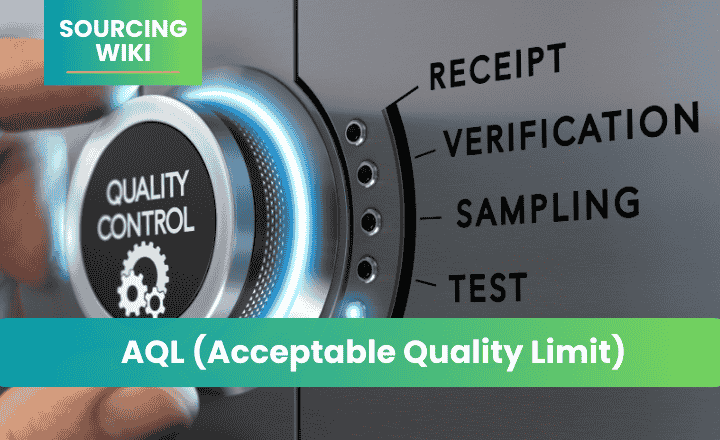
Concept Definition
AQL (Acceptable Quality Limit) is the most widely used statistical standard in international trade for determining whether a product shipment should be accepted or rejected. Based on the ISO 2859-1 standard, AQL defines the maximum number of defective units that can be considered acceptable within a random sample size during a Pre-Shipment Inspection (PSI).
For importers, AQL is a vital tool because it provides a scientifically proven way to monitor quality without the prohibitive cost and time required to inspect every single item in a mass-production run.
How AQL Works: The Two-Step Process
To use AQL, inspectors refer to two main statistical tables (frequently called the "AQL Tables" or "Sampling Tables"):
Step 1: Determine the Sample Size
Based on your total order quantity (the "Lot Size") and the chosen Inspection Level (usually "Level II" for standard consumer goods), the table provides a Sample Size Code Letter. This letter tells the inspector exactly how many units to pull randomly from the cartons.
Step 2: Determine the "Pass/Fail" Threshold
Using the code letter and the chosen AQL Limit (e.g., 2.5 for Major defects), the second table provides two numbers:
- Ac (Accept): The maximum number of defects allowed to pass the inspection.
- Re (Reject): The number of defects that will cause the entire shipment to fail.
Defect Classification in AQL
In an AQL-based inspection, not all defects are treated equally. They are categorized into three levels, each usually assigned a different AQL limit:
- Critical Defects (AQL 0): Defects that could cause harm to the user or violate mandatory regulations (e.g., a sharp needle left in a garment or a fire hazard in electronics). Usually, the limit is 0; one critical defect fails the entire lot.
- Major Defects (AQL 2.5): Defects that make the product unsellable or result in a functional failure (e.g., a suitcase with a broken zipper or a chair with a wobbly leg).
- Minor Defects (AQL 4.0): Small aesthetic issues that do not affect the product's function (e.g., a small scratch on the underside of a table or a slightly crooked label).
Common AQL Standards for Consumer Goods
While buyers can set their own limits, the "Industry Standard" for most consumer products is:
- Critical: 0
- Major: 2.5
- Minor: 4.0
Note: If you are importing high-end luxury goods or medical devices, you might choose stricter limits, such as Major 1.0 / Minor 2.5.
Essential Considerations & Warnings
- Randomness is Mandatory: For AQL to be valid, the inspector must select samples from the top, middle, and bottom of the palletized cartons. If the factory "hand-picks" the samples for the inspector, the AQL result is meaningless.
- "Pass" Doesn't Mean "Perfect": An AQL "Pass" result simply means the number of defects is statistically acceptable. It does not guarantee that the remaining uninspected 90% of the shipment is 100% defect-free.
- Contractual Power: Your Purchase Order (PO) should explicitly state: "Quality standards will be measured against AQL 0/2.5/4.0. If the inspection fails, the supplier is responsible for re-working the goods and the cost of re-inspection."
- AQL is a Snapshot: AQL measures the quality at the moment of inspection. It does not account for damages that might occur during rough sea transit if the packaging is inadequate.
Related Knowledge Base
Sourcing Practices & Insights: AQL (Acceptable Quality Limit)
Latest Sourcing Guides


Get Started Today
Let's Turn Your Sourcing Goals into RealityWeChat:+86 15157124615
WhatsApp:+86 15157124615
Address:Building 10 #39 Xiangyuan Road, Hangzhou, China
