

Purchase Order (PO)
Concept Definition
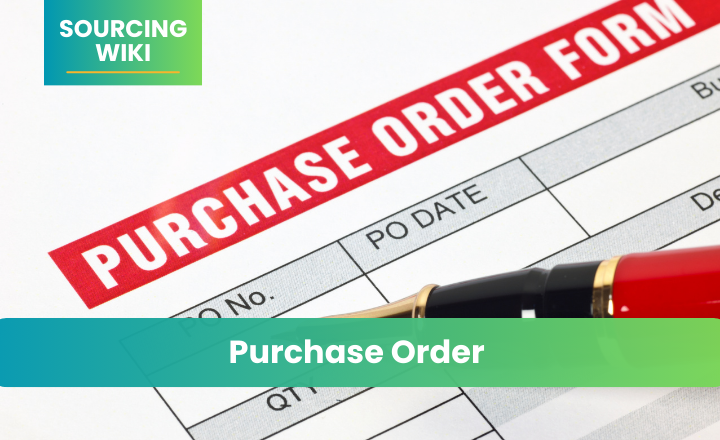
A Purchase Order (PO) is a legally binding commercial document issued by a buyer to a seller, indicating the types, quantities, and agreed-upon prices for products or services. It is the primary instrument used to initiate the procurement process, providing the seller with authorization to fulfill an order and the buyer with a record of the commitment.
In international trade, the PO serves as the foundation for the contract of sale. It bridges the gap between a price quote and a confirmed shipment, ensuring both parties are aligned on terms before production or logistics begin.
Why Is a Purchase Order Essential?
Without a formal PO, transactions are prone to "miscommunication drift"—where details like specifications, delivery dates, or payment terms become unclear as an order progresses.
The Role of a PO:
- Legal Protection: It acts as an offer to purchase, which, once accepted by the seller, creates a legally enforceable contract.
- Inventory Control: It allows the buyer's accounting and warehouse departments to track what has been ordered, what is expected, and what has been received.
- Cost Auditing: It ensures that the price invoiced by the seller matches the price originally agreed upon, preventing "invoice creep" or unexpected price hikes.
What Should a Professional PO Include?
To be effective in global trade, a PO must be comprehensive. Key elements include:
- PO Number: A unique alphanumeric code for tracking (e.g., PO-2026-001).
- Buyer & Seller Details: Full company names, addresses, and contact info for both parties.
- Item Description: SKU numbers, technical specifications, drawings, or detailed descriptions of the goods.
- Quantity & Pricing: Exact unit counts and the currency-denominated price per unit.
- Incoterms®: Explicitly stating the delivery term (e.g., FOB, DAP, EXW) to define risk and logistics responsibilities.
- Delivery Date: The "Required-By" date or shipping window.
- Shipping & Billing Address: Where the goods should go and where the invoice should be sent.
- Terms & Conditions: A reference to your company's standard T&Cs regarding quality standards, return policies, and governing law.
The PO vs. The Proforma Invoice (PI)
Many importers confuse the PO with the Proforma Invoice (PI). Here is the critical distinction:
- Purchase Order (PO): Created by the Buyer. It is a formal "request" or "offer" to buy.
- Proforma Invoice (PI): Created by the Seller. It is a "pre-invoice" that confirms the seller's intent to fulfill the order under the conditions stated.
Best Practice: In international trade, the transaction usually proceeds as follows:
- Buyer sends a PO.
- Seller reviews the PO and sends back a countersigned PI.
- Once both are aligned, the contract is officially "perfected."
Essential Considerations & Warnings
- Clarity on Specifications: Never use vague descriptions (e.g., "high-quality fabric"). Use industry-standard terminology or specific codes. If the goods arrive and aren't what you expected, a detailed PO is your only evidence for a claim.
- The "T&C" Attachment: Never send a PO that lacks an attached or referenced "Terms & Conditions" document. Without this, your PO only defines what you bought, not how it should be handled if the supplier breaches the contract.
- Currency Risks: Always state the currency clearly. If you are operating internationally, ambiguity (e.g., just saying "dollars") can lead to disputes regarding whether you meant USD, CAD, or AUD.
Related Knowledge Base
Sourcing Practices & Insights: Purchase Order (PO)
Latest Sourcing Guides

Get Started Today
Let's Turn Your Sourcing Goals into RealityWeChat:+86 15157124615
WhatsApp:+86 15157124615
Address:Building 10 #39 Xiangyuan Road, Hangzhou, China
