

China Freight Forwarder
Definition and Scope
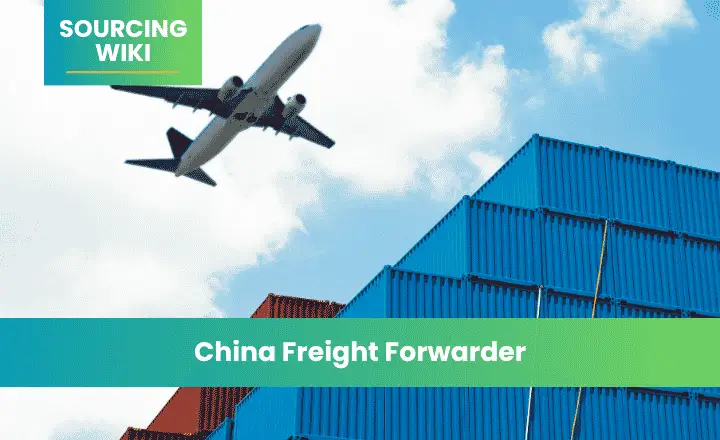
A China freight forwarder is a logistics intermediary that organises the movement of export goods from Chinese suppliers to overseas buyers. The defining feature of the role is that the forwarder arranges transport without performing it: it books space with shipping lines and airlines, consolidates cargo, prepares documentation, and coordinates customs clearance, while the actual carriage is done by carriers. This distinction matters because the forwarder's value lies in coordination and expertise rather than in physical assets. For a buyer dealing with suppliers who lack export experience, or combining goods from several factories, the forwarder effectively becomes the operating manager of the shipment, translating a purchase order into a documented, routed, and cleared delivery.
Services and Specialisations
Forwarders differ considerably in the services and specialisations they offer. Core work includes ocean and air booking, LCL consolidation, export customs declaration, and preparation of the bill of lading, commercial invoice, and packing list. Many extend into door-to-door service, in which the forwarder manages inland trucking at origin and destination as well as import clearance, and into delivered-duty-paid (DDP) arrangements, where it quotes a single price covering duties and taxes[2]. Some specialise further: handling Amazon FBA prep and delivery, managing hazardous or temperature-sensitive cargo, or serving particular trade lanes. Because scope varies so widely, comparing forwarders only makes sense when the services included in each quotation are compared line by line.
Selection and Price Transparency
Selecting a forwarder is largely an exercise in transparency and communication. Legitimate operators hold the relevant registrations—such as NVOCC status for ocean shipments to the United States, which requires licensing by the Federal Maritime Commission[1]—and can name the carriers they book with. Pricing practice is revealing: a trustworthy forwarder itemises the international rate, surcharges, and origin and destination charges, whereas an artificially low headline rate often reappears later as local fees, sometimes charged to the consignee under terms the buyer did not anticipate. Responsiveness is equally diagnostic, since a forwarder that answers questions slowly before a booking will rarely communicate well when a shipment encounters problems. References from other importers on the same lane remain one of the most reliable screens.
Managing Risk Through a Forwarder
Beyond moving cargo, a capable forwarder functions as a layer of risk management. It catches documentation errors before they cause customs holds, advises on packaging and labelling requirements, arranges cargo insurance—which is separate from the carrier's limited liability—and acts for the buyer when shipments are delayed, rolled, or damaged. It also helps the buyer choose sensible Incoterms rather than accepting whatever the supplier proposes: under a term such as CIF, for instance, the seller need only purchase minimum insurance cover, so a buyer relying on the supplier's arrangement may end up under-insured for higher-value cargo[2]. These functions explain why many experienced importers keep a long-term forwarder relationship even when a supplier offers free shipping under CIF or similar terms: the supplier's arranged freight serves the supplier's convenience, while the buyer's own forwarder is accountable to the buyer. In China shipping, that accountability is frequently the difference between a problem and a loss. It is finally worth noting that a forwarder and a customs broker, though often housed in the same firm, perform legally distinct functions; confirming that both sides of the service are covered—transport arrangement and entry filing—prevents the common surprise of cargo arriving in port with nobody appointed to clear it.
FAQ
What is the difference between a freight forwarder and a carrier?
A carrier — a shipping line or airline — physically operates the vessel or aircraft that moves the cargo. A freight forwarder does not own or operate transport equipment; it books space with carriers, consolidates cargo, and manages documentation and customs on the shipper's behalf. In ocean freight, a forwarder acting as an NVOCC issues its own bill of lading and takes on carrier-like responsibilities without owning ships[1].
What is an NVOCC, and why does it matter for a China shipment?
An NVOCC (Non-Vessel-Operating Common Carrier) is a company that performs the functions of an ocean carrier — issuing its own bill of lading and assuming contractual responsibility for the cargo — without operating vessels. In the United States, NVOCCs must be licensed by the Federal Maritime Commission and meet financial responsibility requirements[1]. Confirming a forwarder's NVOCC or OTI status is one of the more reliable ways to check that it is legally authorized to handle ocean shipments to the US.
What is the difference between door-to-door and DDP service?
Door-to-door service means the forwarder manages inland transport at both origin and destination, in addition to the main international leg. DDP (Delivered Duty Paid) is a specific Incoterms® rule under which the seller — or the forwarder acting on the seller's behalf — is responsible for delivering the goods to the buyer's location with import duties and taxes already paid[2]. Not all door-to-door services are DDP, since DDP specifically shifts customs and duty liability to the seller's side.
Why does the Incoterm chosen for a shipment matter?
Incoterms® rules, published by the International Chamber of Commerce, define which party — buyer or seller — is responsible for transport, insurance, export/import clearance, and associated costs at each stage of a shipment[2]. Terms like CIF or CFR place freight arrangement in the supplier's hands, while terms like FOB or EXW put the buyer's own forwarder in control from an earlier point. Choosing the wrong term can leave a buyer with insufficient insurance cover or unclear responsibility if something goes wrong in transit.
Is a low freight quote always the best deal?
Not necessarily. An unusually low headline rate often excludes surcharges and origin/destination charges that are added later, sometimes billed to the consignee under terms the buyer did not anticipate. Comparing forwarders on a fully itemized quote — international freight, surcharges, and local charges together — gives a more reliable picture than comparing headline rates alone.
Is cargo insurance included in a freight forwarder's service?
Not automatically. Cargo insurance is separate from a carrier's limited liability for loss or damage, and under some Incoterms® rules — such as CIF — the seller is only required to buy a minimum level of cover[2]. Buyers who want fuller protection typically need to arrange or request additional cargo insurance explicitly, whether through their forwarder or a separate insurer.
Are a freight forwarder and a customs broker the same thing?
No. A freight forwarder arranges transport, while a customs broker files the import entry with customs authorities — though the two roles are often housed within the same company. Confirming that both functions are actually covered for a given shipment avoids a situation where cargo arrives at port with no party appointed to clear it through customs.
Sources & References
- Federal Maritime Commission — Ocean Transportation Intermediaries, official guidance on NVOCC and Ocean Freight Forwarder licensing and regulation under the Shipping Act of 1984: fmc.gov. Accessed August 14, 2026.
- International Chamber of Commerce (ICC) — Incoterms® 2020, the official rules defining buyer and seller responsibilities for transport, insurance, and customs clearance in international sales contracts: iccwbo.org. Accessed August 14, 2026.
Related Knowledge Base
Sourcing Practices & Insights: China Freight Forwarder
Latest Sourcing Guides

Get Started Today
Let's Turn Your Sourcing Goals into RealityWeChat:+86 15157124615
WhatsApp:+86 15157124615
Address:Building 10 #39 Xiangyuan Road, Hangzhou, China
