

Buyer's Consolidation Services
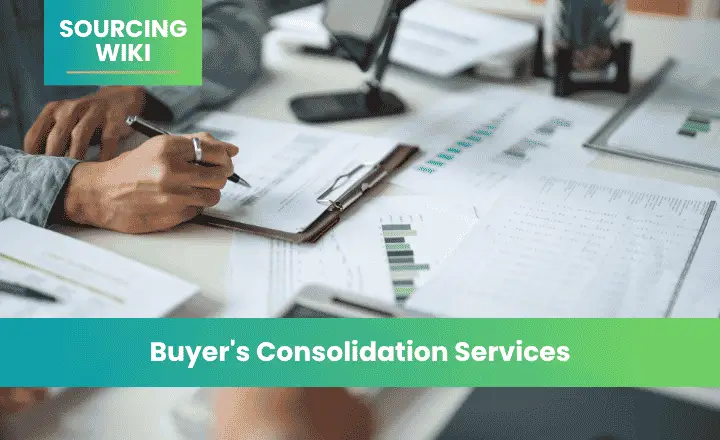
Buyer's consolidation services in China sourcing involve combining individual cargo shipments from multiple factories or suppliers into a single, unified container load at a centralized local warehouse before export. Designed for foreign importers purchasing across diverse regional manufacturers, buyer's consolidation streamlines cross-border logistics, significantly reduces ocean freight and port handling fees, minimizes destination customs clearance charges, and enables comprehensive quality control prior to international dispatch.
Operational Mechanics and Warehouse Hub Management
The buyer's consolidation workflow begins by routing separate production runs from various Chinese suppliers into a central consolidation warehouse located near major container ports, such as Ningbo-Zhoushan, Shenzhen, or Shanghai[1]. Instead of each factory dispatching individual Less-Than-Container-Load (LCL) shipments—which incurs separate local cartage, origin port handling fees, and freight forwarder administrative surcharges—cargo is delivered via local inland trucking to the dedicated consolidation hub. At the hub, warehouse management systems (WMS) log incoming packages, verify carton counts against commercial invoices, and stage the goods for combined loading into full 20-foot, 40-foot, or 40-foot High-Cube (HQ) containers.
Cost Reduction and Logistics Efficiency
Consolidating multiple factory orders into a Full Container Load (FCL) generates substantial cost savings across the international supply chain[2]. LCL shipments carry high volume-based charges at origin Container Freight Stations (CFS) and elevated destination port handling fees upon arrival. By converting multiple small shipments into a single FCL container, buyers secure lower flat-rate ocean freight tariffs per cubic meter and eliminate redundant administrative, Terminal Handling Charges (THC), and bill of lading (B/L) issuance fees. Furthermore, receiving a single consolidated container at the destination port reduces import customs entry fees and simplifies domestic warehouse receiving into a single unloading event.
Quality Control and Value-Added Warehousing
Centralizing cargo at a local consolidation hub creates a critical quality gate prior to international shipping[3]. Before container loading, sourcing agents or warehouse technicians conduct final pre-shipment inspections, box-drop tests, and carton condition checks across all gathered supplier lots. If defects, packaging damage, or incorrect quantity counts are detected, goods can be returned to local factories for correction without incurring international shipping delays or cross-border return logistics costs. Consolidation facilities also perform essential value-added services, including customized re-labeling, Amazon FBA barcoding, palletization, inner-carton bundling, and insert placement.
Customs Declaration and Export Documentation
Managing export declarations for goods sourced from multiple independent factories requires systematic customs handling[4]. Under Chinese customs regulations, each registered factory with an export license can file its own individual export customs declaration under a unified single-container customs entry. Alternatively, if smaller suppliers lack export licenses, a licensed trading agency or sourcing agent can act as the exporter of record to process export clearance on their behalf. The consolidator then issues a single Master Bill of Lading (MBL) or House Bill of Lading (HBL) covering the entire consolidated container, simplifying international trade documentation and destination customs entry for the foreign buyer.
Frequently Asked Questions (FAQ)
How does buyer's consolidation differ from carrier LCL shipping?
In carrier LCL shipping, the freight forwarder mixes your goods with cargo belonging to unrelated companies, exposing your shipment to delays caused by third-party customs holds. In buyer's consolidation, the entire container is exclusively dedicated to your shipments from your chosen suppliers, providing complete control over loading schedule and cargo safety.
What happens if one factory delays delivery to the consolidation warehouse?
If one factory experiences a production delay, the consolidation warehouse holds the ready cargo securely while the sourcing agent coordinates revised delivery schedules. Depending on urgency, the buyer can elect to dispatch the ready goods as a partial FCL shipment and forward the delayed goods via air or a secondary LCL route.
Can a buyer consolidate products from factories across different Chinese provinces?
Yes. Domestic inland trucking routes across China allow suppliers in neighboring provinces (e.g., Zhejiang, Jiangsu, and Anhui) to ship goods efficiently to a central port warehouse in Ningbo or Shanghai. Centralizing cargo at a single port hub reduces total international freight costs compared to shipping separate containers from multiple ports.
Partial Sources
[1] World Shipping Council (WSC) - Container Shipping and Logistics Optimization: https://www.worldshipping.org/
[2] International Trade Administration (ITA) - Global Freight Consolidation and Supply Chain Management: https://www.trade.gov/
[3] International Organization for Standardization - ISO 2859-1 Inspection and Quality Control Guidelines: https://www.iso.org/standard/87281.html
[4] General Administration of Customs of the People's Republic of China (GACC) - Export Customs Declaration Regulations: http://english.customs.gov.cn/
Related Knowledge Base
Sourcing Practices & Insights: Buyer's Consolidation Services
Latest Sourcing Guides

Get Started Today
Let's Turn Your Sourcing Goals into RealityWeChat:+86 15157124615
WhatsApp:+86 15157124615
Address:Building 10 #39 Xiangyuan Road, Hangzhou, China
