

FAS (Free Alongside Ship)
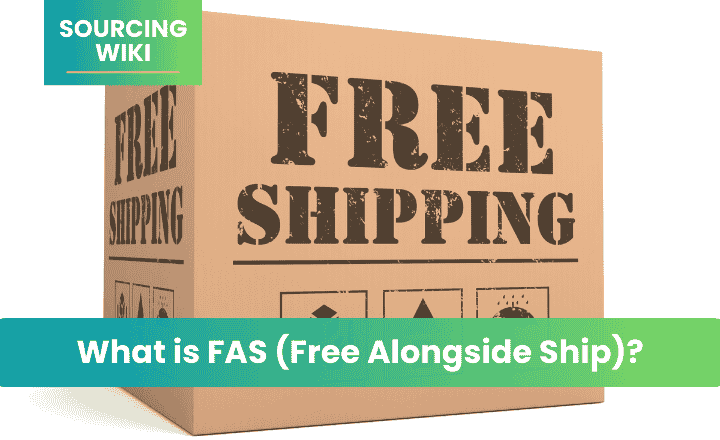
Concept Definition
FAS (Free Alongside Ship) is a specialized Incoterms® 2020 rule used exclusively for sea and inland waterway transport. Under FAS, the seller fulfills their obligation when the goods are placed alongside the ship (e.g., on a quay or a barge) at the named port of shipment.
Unlike most other terms, the seller is not responsible for loading the goods onto the vessel. Once the goods are alongside, all costs and risks transfer to the buyer.
What Is FAS Meaning in Shipping?
FAS is rarely used for standard containerized cargo. Instead, it is predominantly used for bulk commodities (like grain, ore, or oil) or oversized goods that require specialized loading equipment provided by the terminal or the buyer.
Example Scenario: Suppose you are importing a large quantity of steel piping from a port in Busan, South Korea, to be shipped to Seattle, USA. Under FAS (Named Port: Busan), here is how the process flows:
- Transport to Port: The seller is responsible for moving the steel pipes from their factory to the port of Busan and placing them on the quay/dock alongside the vessel.
- Export Clearance: The seller handles the export customs declaration in Korea.
- The "Alongside" Point: As soon as the goods are placed alongside the vessel, the risk transfers to you (the buyer).
- Loading: Because this is FAS, you are responsible for the cost and risk of lifting the pipes from the dock onto the ship.
- Main Carriage: You, the buyer, arrange and pay for the ocean freight, insurance, import clearance, and final delivery to your destination.
Responsibilities: Who Does What?
| Responsibility | Seller (Exporter) | Buyer (Importer) |
|---|---|---|
| Export Clearance | ✅ | ❌ |
| Loading onto Vessel | ❌ | ✅ |
| Main Carriage | ❌ | ✅ |
| Insurance | ❌ | ✅ |
| Import Clearance | ❌ | ✅ |
| Risk Transfer | Alongside the ship | From loading onwards |
When Should You Use FAS?
- Bulk Commodities: If you are dealing with raw materials (minerals, grains) where the cargo is "loose" and not packed in containers, FAS is standard.
- Buyer-Controlled Loading: Use FAS if you have your own stevedoring team or specific loading equipment at the port of shipment and prefer to handle the loading process yourself to ensure it is done to your standards.
Essential Considerations & Warnings
- The "FOB" Confusion: Never confuse FAS with FOB. In FOB, the seller loads the goods onto the ship. In FAS, the seller stops at the dock. If you are shipping containers, do not use FAS. Use FCA instead.
- Terminal Accessibility: Because the seller only needs to place the goods "alongside," ensure that your vessel is actually at the port and ready to receive the cargo. If the ship is delayed, your goods might sit on the dock, potentially incurring "wharfage" or storage fees that could become your responsibility.
- The Loading Risk: Since you are responsible for loading under FAS, any damage caused by the crane or loading equipment is your liability. Make sure your contract with the port or shipping line clearly defines who is responsible for the lift.
Related Knowledge Base
Sourcing Practices & Insights: FAS (Free Alongside Ship)
Latest Sourcing Guides

Get Started Today
Let's Turn Your Sourcing Goals into RealityWeChat:+86 15157124615
WhatsApp:+86 15157124615
Address:Building 10 #39 Xiangyuan Road, Hangzhou, China
