

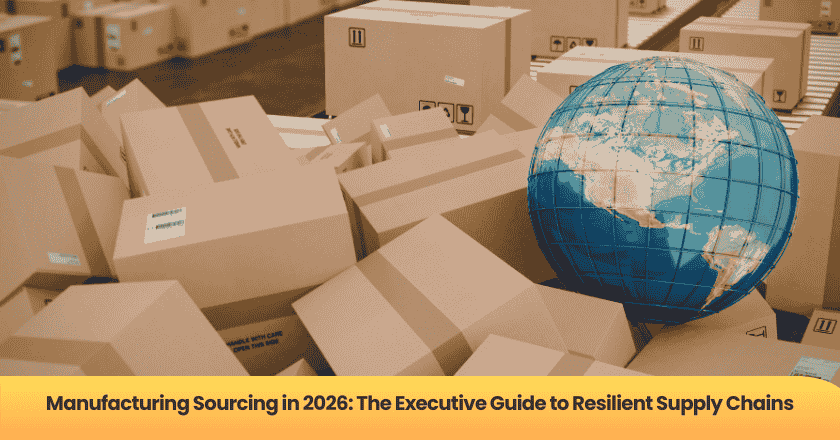
The era of transactional sourcing is over. In 2026, procurement has shifted from a simple search for the lowest price to a high-stakes discipline of geopolitical strategy and ecosystem management. If your business treats sourcing as a back-office administrative task, you are likely one global hiccup away from a total inventory collapse.
Modern manufacturing requires a blend of technological integration and old-school boots-on-the-ground verification. Whether you are scaling a direct-to-consumer brand or managing an enterprise-level supply chain, success now depends on how well you navigate the friction between global efficiency and regional stability.
Strategic Manufacturing Models | OEM, ODM, and CM
Choosing a manufacturing partner begins with defining your legal and operational boundaries. Each model offers different levels of control over your intellectual property and profit margins.
| Model | Ownership of Design | Speed to Market | Best For |
|---|---|---|---|
| ODM (Original Design) | Factory | Very Fast | Rapid scaling with minimal R&D |
| OEM (Original Equipment) | You | Moderate | Proprietary products with unique IP |
| CM (Contract Manufacturing) | You | Slow/Complex | High-precision electronics or medical devices |
Original Design Manufacturing
Often referred to as white labeling, this is the fastest route to market. The factory owns the tooling and the design. You essentially rent their expertise and apply your branding. While efficient, the risk is a lack of exclusivity. In 2026, high-tier ODMs use predictive analytics to design products before you even ask for them, but remember that you own nothing but the logo.
Original Equipment Manufacturing
This is the architect's model. You provide the CAD files and material specifications while the factory provides the labor and machinery. This requires a significant upfront investment in tooling and molds, but it creates a massive barrier to entry for your competitors.
Contract Manufacturing
CMs act as a dedicated extension of your own production line. They source components from your approved vendors and assemble them according to your specific standard operating procedures. This is the gold standard for complex builds where you cannot afford any variance in the bill of materials.
The 7-Step Framework for Secure Sourcing
Successful sourcing is a linear process. Skipping steps to save time almost always results in quality fade or financial loss.
1. Market Feasibility and Intelligence
Never contact a factory without knowing the current market price of your raw materials. If the price of aluminum has spiked 12% and a supplier offers you a discount, they are likely substituting materials or cutting corners on safety. Use customs data to see where your top competitors are actually shipping from.
2. Supplier Filtering
The internet is saturated with trading companies pretending to be factories. These middlemen add significant margins while hiding the true source of your goods. Verify export licenses and look for specific certifications such as ISO 9001 for quality management or ISO 14001 for environmental standards.
3. The Technical Request for Quotation
A vague request results in a vague quote. Your RFQ should be a technical dossier including material codes, estimated annual volumes, and precise packaging requirements. A professional tip is to bury a specific technical question deep in the document. If the supplier gives a generic "yes" without answering the detail, they haven't read your requirements.
4. Physical and Virtual Auditing
In 2026, a live video walkthrough is the bare minimum. Demand to see the factory floor in real-time. Better yet, hire a third-party auditor to check the machinery, worker conditions, and financial health of the entity. If their business license lists "Wholesale" instead of "Manufacturing," you are talking to a middleman.
5. The Golden Sample Protocol
Never start mass production based on a digital file or a single prototype. You must establish a Golden Sample—a physical unit that represents the exact quality expected for the entire run. Sign and date three samples. One stays with you, one with the factory, and one with your inspection team. This prevents the factory from claiming a defect was within the approved range.
6. Localized Legal Protection
Western contracts are often unenforceable in foreign jurisdictions. You need a Non-Disclosure, Non-Use, and Non-Circumvention (NNN) agreement that is written in the local language and enforceable in local courts. Ensure your contract includes penalty clauses for late delivery or high defect rates.
7. Quality Control and Logistics
You get what you inspect, not what you expect. Conduct a Pre-Shipment Inspection before the final payment is wired. If the goods fail the agreed-upon Acceptable Quality Limit (AQL), the factory should bear the cost of the re-inspection.
The Sample Bait and Switch
Be wary of the flawless sample. Factories often use their most skilled engineers to create a perfect prototype in a controlled environment, only to use temporary labor and sub-par materials for the actual production run. Your contract must stipulate that mass production materials will be subject to random lab testing to match the approved sample.
Future-Proofing Strategies | Resilience in 2026
The supply chain landscape is no longer static. To remain competitive, executives are adopting more agile methodologies.
The China Plus One Strategy
While China remains the world’s premier manufacturing hub for infrastructure, geopolitical volatility makes single-country sourcing a liability. Diversifying production into regions like Vietnam, India, or Mexico provides a critical safety net.
Traceability and Compliance
Regulatory bodies in the US and EU now demand transparency. You must be able to prove that your raw materials—especially cotton, lithium, and cobalt—are sourced ethically. Digital ledgers are becoming the standard for maintaining this paper trail.
Regionalization
To combat rising shipping costs and port congestion, many firms are moving production closer to their end consumers. This "near-shoring" reduces lead times and allows for smaller, more frequent inventory refreshes.
Choosing Your Sourcing Channel
| Channel | Pros | Cons |
|---|---|---|
| B2B Marketplaces | Easy access, low barrier to entry | High risk of fraud and middlemen |
| Trade Shows | Face-to-face trust building | Expensive and time-consuming |
| Professional Sourcing Partners | End-to-end security and local leverage | Service fees (usually offset by savings) |
Why Professional Partners Matter
Managing a supply chain from a laptop thousands of miles away is a recipe for disaster. Professional sourcing offices provide a physical presence on the factory floor. They negotiate in the local language to avoid the inflated pricing often given to international buyers and can resolve production bottlenecks in hours rather than weeks of emails.
Common Questions Regarding 2026 Sourcing
What is the difference between a sourcing agent and a trading company?
A trading company is a reseller that buys from a factory and sells to you at a markup, often keeping the factory's identity a secret. A sourcing agent works for you as a service provider, offering transparency into the supply chain and negotiating on your behalf for a flat fee or percentage.
How do I handle payment security?
Never wire money to personal bank accounts or via untraceable methods. Legitimate manufacturers maintain corporate accounts. If a supplier asks for payment to a third-party entity for "tax reasons," it is a major red flag for potential fraud.
Are Incoterms really that important?
Yes. These terms define exactly when the risk and cost of the goods transfer from the seller to you. For example, FOB (Free on Board) means the factory pays until the goods are on the ship, while DDP (Delivered Duty Paid) means the factory handles everything until it reaches your warehouse.
NewBuyingAgent
Related Resources
Get Started Today
Let's Turn Your Sourcing Goals into RealityWeChat:+86 15157124615
WhatsApp:+86 15157124615
Address:Building 10 #39 Xiangyuan Road, Hangzhou, China
