

Introduction
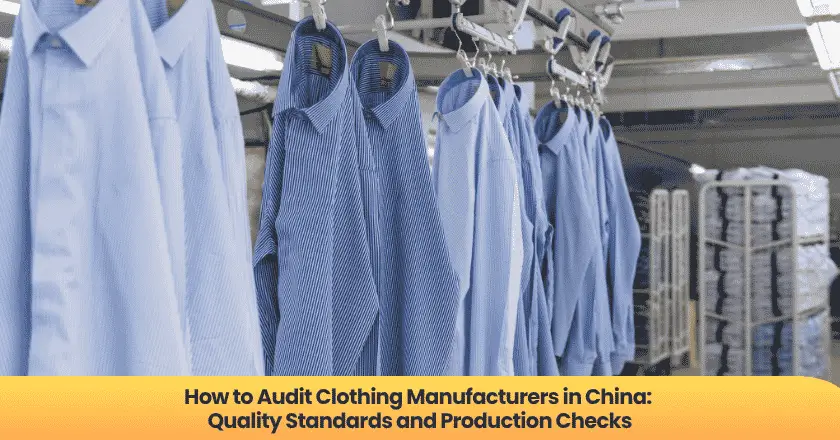
Every clothing factory's sample is beautiful. That is the trap. The sample a manufacturer sends to win your order is hand-made by their best worker with their best materials and unlimited time, and it tells you almost nothing about what a production run of two thousand units will actually look like. The gap between that perfect sample and the real shipment is where apparel buyers lose money, and the only thing that closes it is a disciplined audit of the factory and its production, not faith in a flawless first impression.
Auditing clothing manufacturers in China is a specific skill with apparel-specific concerns. Garments fail in ways electronics and hardware do not, namely fabric that is the wrong weight, stitching that unravels, sizing that drifts across a run, colors that vary between batches, and finishing that looks cheap up close. Catching these requires knowing what to check, how to check it, and at which stage, because a problem caught during production is a fix while a problem caught after shipment is a loss. The audit is what turns a hopeful order into a reliable one.
This guide walks through how to audit a clothing manufacturer properly. How to assess the factory's real capability, what quality checks matter for garments specifically, and how to structure inspections across the production timeline so problems surface while they are still fixable. Whether you are placing a first apparel order or scaling a line, the aim is to give you the checks that keep what arrives as good as what was promised.
Key Takeaways
• A clothing factory's sample is its best possible work, so it predicts little about a production run, which is exactly why a disciplined audit of capability and production matters more than a flawless first sample.
• Apparel fails in category-specific ways, namely fabric weight and composition, stitching strength, sizing consistency, color matching, and finishing, so a clothing audit checks things a generic inspection would miss entirely.
• Auditing the factory itself comes first, since confirming the manufacturer's equipment, capacity, specialization, and track record reveals whether it can actually produce your garment to standard at your volume.
• A detailed tech pack is the foundation of every check, because measurements, materials, tolerances, and construction details give inspectors an objective standard to verify production against rather than a vague impression.
• Inspecting across stages, namely a pre-production sample, an inline check, and a final AQL inspection, catches problems while they are still fixable instead of discovering them after the goods have shipped.
Why Auditing Clothing Manufacturers Matters
Before the how, it helps to understand why apparel demands such careful auditing. Garments carry quality risks that are easy to miss and expensive to discover late, and the sample you fall in love with is the least reliable guide of all.
The Sample-to-Production Gap
The sample is a sales tool, not a promise. A manufacturer's sample is built under ideal conditions to win your business, while production runs at speed, under cost pressure, by many workers of varying skill. The short answer is that the gap between a perfect sample and a real run is where apparel quality lives or dies, and only an audit of the actual production, not the sample, tells you which you are getting. Trusting the sample alone is how buyers end up with a shipment that resembles their approved piece only in spirit.
This is why a signed reference matters. Approve a pre-production sample, often called a PP sample, made on the actual production line with the actual materials, and treat it as the golden sample (the agreed physical standard) every unit is measured against. A sample made in the sampling room means little, while one made on the line that will run your order tells you what the factory can really do at production conditions.
Apparel-Specific Failure Modes
Clothing fails in ways that demand a trained eye. Fabric can arrive at the wrong weight or composition, stitching can be weak or uneven, sizes can drift across a run, dye lots can vary in color, and trims like buttons and zippers can be substandard. Worth knowing: these are not exotic problems but the everyday failure modes of garment production, and an audit built around them catches what a generic once-over never would. Knowing apparel's specific weak points is what makes a clothing audit effective rather than cosmetic.
Common Mistake: Approving a sample from the factory's sampling room and assuming production will match it. The sampling room holds the best workers and conditions, not production reality. Insist on a pre-production sample made on the actual line with the actual bulk materials, since that is the only sample that honestly predicts what your run will look like.
Auditing the Factory's Capability
The first audit happens before production, and even before a sample, namely confirming the factory can actually make your garment well at your volume. A capable factory is the foundation everything else rests on.
Capacity, Equipment, and Specialization
Match the factory to your garment. Apparel factories specialize, since one built for knitwear is wrong for tailored outerwear, and one geared for mass basics may struggle with intricate construction. Confirm the factory regularly makes garments genuinely similar to yours, has the right machinery for your product, and holds the capacity to run your volume without bumping your order for larger clients. A factory making something close to your product already has the skills and equipment your garment needs, which lowers the risk before a stitch is sewn.
Verify the factory is a real producer. Ask about their typical clients and order sizes, request a live video walk through the production floor with machines running, and confirm their workforce and equipment match the volume they claim. A factory that dodges a live look at its floor or cannot speak in detail about garment construction is often not the maker it presents itself as, and that is the cheapest red flag to catch early.
Compliance and Track Record
Beyond capability, consider the factory's standards and history. Many apparel buyers and their customers care about social compliance, so a factory able to show recognized audits of its labor and safety practices is worth favoring. A verifiable track record, namely real clients and consistent past orders, signals reliability. These factors do not appear in a sample but shape whether the factory is one you can build a lasting, dependable apparel supply on rather than a one-time gamble.
Expert Tip: Ask a clothing factory to discuss a construction challenge specific to your garment, such as how it would handle a tricky seam, a stretch fabric, or a precise fit. A capable apparel maker answers with concrete technical detail and may suggest improvements, while a trader or an unsuited factory deflects. The depth of that answer is a fast read on real garment expertise.
The Production Quality Checks
With a capable factory confirmed and a PP sample approved, the audit turns to the garments themselves. These are the apparel-specific checks that separate a quality run from a disappointing one, and they all measure against your documented standard.
The Tech Pack Is the Standard
Every check rests on a detailed tech pack, the document that specifies your garment completely. It lists measurements for each size with tolerances, fabric composition and weight, construction details, stitch types, trims, labels, and finishing. Without it, quality is a matter of opinion, while with it, every inspection becomes an objective comparison against a defined standard. The tech pack is the single most important document in apparel sourcing, because it turns vague expectations into measurable facts a factory can be held to.
Specify tolerances, since no garment is made to exact measurements. A tech pack states how much a measurement may vary and still pass, distinguishing an acceptable difference from a defect. This is what lets an inspector judge fairly rather than rejecting every minor variation or passing every sloppy one. Clear, documented tolerances are what make a clothing audit consistent and enforceable rather than a series of arguments.
Fabric, Construction, Sizing, and Finishing
The core checks cover four areas. Fabric, namely confirming weight, composition, and color match the spec, with wash and shrinkage tests where relevant. Construction, namely seam strength, stitch density, and even, secure stitching that will not unravel. Sizing, namely measuring garments against the tech pack across sizes to confirm consistency throughout the run. And finishing, namely trims, buttons, zippers, labels, loose threads, pressing, and the overall impression a customer gets on opening the package. A garment can pass on three of these and still fail a buyer on the fourth, so all four matter.
Common Mistake: Checking only the finished garment's look and skipping the fabric and wash tests. A top can look perfect on inspection and still shrink, fade, or pill after the customer's first wash, turning a passed order into a wave of returns. Test the fabric's weight, colorfastness, and shrinkage up front, since the worst apparel failures often appear only after laundering.
Inspecting Across the Production Stages
Timing is as important as what you check. The same inspection means very different things depending on when it happens, and a well-structured audit places checks at the points where they can still change the outcome. 2026 makes coordinating them easier than ever.
Pre-Production, Inline, and Final
Apparel inspection works best in stages. A pre-production check confirms materials and the approved PP sample before bulk cutting begins, catching a fabric or component problem when it is cheapest to fix. An inline inspection during production, often after the first portion of units is complete, catches a stitching or sizing problem early enough to correct the rest of the run. A final inspection before shipment verifies the finished goods against your tech pack. Real talk: a buyer who only inspects at the end is not auditing, just confirming a loss, since by then nothing can be changed.
Set your AQL (acceptable quality limit, the maximum defect rate an inspection will pass) in writing, with apparel defects sorted into critical, major, and minor. A broken zipper and a slightly loose thread are not the same failure, and grading them lets an inspection pass a genuinely good run while catching a genuinely bad one. The AQL turns final inspection from a subjective judgment into a defined pass-or-fail both sides agreed to in advance.
Coordinating the Audit in 2026
Running this audit from abroad has gotten easier. Through 2026, live video factory tours let a buyer see the floor and even watch an inspection in real time, digital production tracking gives visibility into where a run stands, and AI-assisted tools help compare production against tech-pack specifications. These make it more practical to audit a clothing manufacturer thoroughly without standing in the factory yourself.
The skilled eye still decides the outcome, though. Reading whether stitching will hold, whether a fit is right, and whether a finish meets a market's expectations remains a human judgment that tools support rather than replace. The strongest apparel buyers in 2026 pair the technology with experienced inspection, whether their own or a partner's, on the ground in China, so the audit catches what a screen alone would miss and what a sample alone would hide.
Auditing Clothing Factories With NewBuyingAgent
A thorough apparel audit needs experienced quality people on the ground in China, which is exactly the depth the right partner brings. NewBuyingAgent is a strong partner for global sourcing from China, backed by 30 years of expertise in trade, manufacturing and quality control. On the quality side, that depth is what turns an audit from a hope into a verified standard, as its 20,000+ product development and QC experts ensure your products match market needs and stay high-quality. And the coordination an audit demands, namely the factory checks, the sample approvals, the staged inspections, is carried for you: NewBuyingAgent handles all factory communication—ideal for multi-category buyers—freeing up your time to focus on expanding your local market sales.
Frequently Asked Questions
Why can't I just trust a clothing factory's sample?
Because the sample is a sales tool built under ideal conditions by the best worker with unlimited time, while production runs at speed under cost pressure by many workers. The gap between a perfect sample and a real run is where apparel quality is decided. Approve a pre-production sample made on the actual line with bulk materials, and audit the production itself rather than trusting the sampling-room piece.
What should I check when auditing a clothing factory's capability?
Confirm it regularly makes garments similar to yours, has the right machinery, and holds capacity for your volume without bumping your order for larger clients. Verify it is a real producer, not a trading company, through a live video floor tour and detailed construction questions. Consider social compliance audits and a verifiable track record, since these shape whether it is a dependable long-term supplier.
What quality checks are specific to clothing?
Four core areas. Fabric, namely weight, composition, color, and wash or shrinkage behavior. Construction, namely seam strength and even, secure stitching. Sizing, namely measuring garments against the tech pack across sizes for consistency. And finishing, namely trims, zippers, buttons, labels, loose threads, and pressing. A garment can pass three and still fail on the fourth, so a clothing audit has to cover all of them.
Why is a tech pack so important?
Because it turns quality from opinion into measurable fact. A tech pack specifies measurements with tolerances, fabric, construction, stitch types, trims, and finishing, giving inspectors an objective standard to verify production against. Without it, every quality discussion is a matter of opinion. The tolerances especially let an inspector judge fairly, distinguishing an acceptable variation from a real defect rather than arguing each one.
When should clothing be inspected during production?
In stages. A pre-production check confirms materials and the PP sample before bulk cutting. An inline inspection during the run catches stitching or sizing problems early enough to fix the rest. A final inspection verifies finished goods against the tech pack using a written AQL. Inspecting only at the end is not auditing but confirming a loss, since by then nothing in the run can be changed.
Can I audit a clothing manufacturer without visiting China?
Yes. Through 2026, live video factory tours let you see the floor and watch inspections in real time, digital production tracking shows where a run stands, and AI-assisted tools help compare production to specifications. Pair these with experienced inspection on the ground, whether your own representative or a partner, so the audit catches what a screen alone would miss and a sample alone would hide.
Conclusion
Auditing clothing manufacturers in China comes down to refusing to trust the beautiful sample and verifying everything that comes after it. A garment can fail in a dozen quiet ways, namely the wrong fabric weight, weak stitching, sizes that drift, colors that vary, finishing that looks cheap, and none of these shows in the perfect piece a factory sends to win your order. The audit is what bridges the gap between that sample and the shipment, by confirming the factory's real capability, documenting your standard in a detailed tech pack, and checking fabric, construction, sizing, and finishing against it at the right moments.
The discipline that separates reliable apparel sourcing from a recurring gamble is timing as much as thoroughness. Inspect before production to catch material problems, during production to fix a run while you still can, and at the end against a written AQL to confirm the result. Approve a real production-line sample as your standard, hold every batch to it, and lean on experienced quality people on the ground where a screen and a sample fall short. Do that, and the clothing that arrives at your door stops being a gamble on a pretty sample and becomes a reliable match for the standard you actually set.
NewBuyingAgent
Related Resources
Get Started Today
Let's Turn Your Sourcing Goals into RealityWeChat:+86 15157124615
WhatsApp:+86 15157124615
Address:Building 10 #39 Xiangyuan Road, Hangzhou, China
