

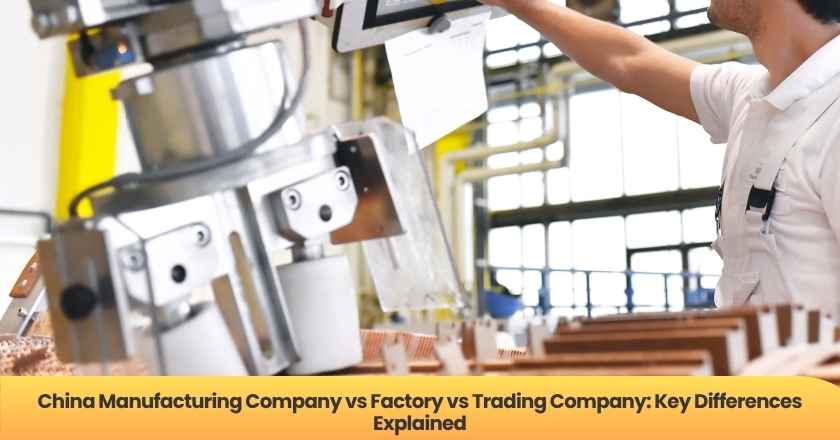
Many buyers sourcing from China assume that a manufacturing company and a factory are the same thing. In some cases, they overlap—but they are not always interchangeable. Add trading companies into the mix, and it becomes even harder to understand who is actually producing your products and who is simply managing the transaction.
This distinction matters more than many buyers realize. The type of company you work with can influence everything from pricing and product customization to communication efficiency, quality control, and supply chain transparency. Choosing the wrong partner doesn't necessarily mean your project will fail, but it can result in higher costs, slower responses, and less visibility into production.
The challenge is that these business models are not always obvious from a company's website or sales presentation. A manufacturing company may own multiple factories, a factory may sell directly to overseas buyers, and a trading company may present itself as a manufacturer while outsourcing production to third-party suppliers.
In this guide, we'll explain the key differences between manufacturing companies, factories, and trading companies in China, along with the advantages, limitations, and best use cases for each.
Key Takeaways
• A factory is a physical production site; a manufacturing company is the business entity that may own one or several.
• A trading company owns no production — it resells other factories' output at a margin you often can't see.
• A manufacturing company isn't automatically better than a single factory; what matters is whether real production sits behind it.
• Buying direct from production usually means better pricing, control, and accountability than going through a reseller.
• The business license, a floor walkthrough, and a technical question reveal which structure you're actually dealing with.
Defining the Three: Entity, Site, and Reseller
Precision starts with seeing that these three words operate at different levels — one is a legal business, one is a physical place, one is a commercial role. Once you separate those layers, the confusion that traders exploit largely dissolves.
The factory
A factory is the physical site where goods are made — the building, the machines, the workers, the line. It’s a place, not a legal abstraction. When you want to know if real production exists, the factory is the concrete thing you’re confirming the existence of.
The manufacturing company
A manufacturing company is the registered business entity that conducts manufacturing. It may own one factory, several, or operate as a group with multiple production sites. The entity is what signs your contract and issues your invoice; the factory is where your goods actually get built. Usually they align, but not always.
The trading company
A trading company is a business that buys from factories and resells to you, owning no production of its own. It’s a commercial intermediary. Some add genuine value through consolidation or service; others simply insert a margin while presenting themselves as makers. The defining trait is the absence of a production site they control.
Expert Tip: When a company describes itself as a “manufacturing company” or a “group,” ask which specific factory will produce your order and request to see that exact site. Larger entities sometimes own one real factory and subcontract overflow, or front for production they don’t control. Confirming the precise site making your goods — and that the contracting entity actually owns or directly operates it — matters more than the impressive-sounding company structure. The grander the corporate name, the more worth it is to pin down where your product is physically made.
Why 'Manufacturing Company' Can Mislead
The term “manufacturing company” feels reassuring — it sounds like a maker. But the entity label doesn’t guarantee that production sits behind your specific order, and savvy intermediaries lean on that ambiguity. Seeing through it protects you from paying for a structure that isn’t what it seems.
Entity name versus reality
A registered name including “manufacturing,” “industrial,” or “group” is marketing until the business license and a floor visit confirm it. Some trading companies register manufacturing-sounding names precisely to blur the line. The name is a claim to verify, never proof of production capability.
Group structures and subcontracting
A genuine manufacturing group may own multiple factories, which is fine — but it may also subcontract your order to a plant it doesn’t control, reintroducing the accountability gap of a trader. Ask specifically which factory makes your product and whether it's owned or subcontracted. The structure matters only insofar as production is real and accountable.
When bigger isn't better
A large manufacturing company isn't automatically a better partner than a focused single factory. A smaller factory that makes your exact product daily often delivers better quality and attention than a sprawling entity for which your order is a minor, unfamiliar one-off. Judge production fit, not corporate scale.
Common Mistake to Avoid: Treating a large, official-sounding “manufacturing company” or “group” as inherently safer than a modest single factory. The impressive entity can be a sales front that subcontracts your goods to a plant it doesn't control, leaving you with the same hidden-accountability problem as a trading company. Meanwhile a small, focused factory that makes your exact product may give you direct control and better quality. Verify where production actually happens and who's accountable for it, rather than being reassured by the size or formality of the company name.
How the Differences Hit Price and Control
The structure you buy through directly shapes your unit cost and your ability to control quality. A margin you can’t see and a production site you can’t reach are both expensive in their own way. This is where the abstract distinctions become money.
Price: direct versus through a reseller
Buying from the entity that owns the production means the factory's price is your price, with no reseller margin layered on top. Through a trading company, an invisible markup sits inside your unit cost. You may pay more than the factory charges without ever seeing the gap, order after order.
Control over production and spec
When you contract directly with the company that owns the factory, your spec and your QC (Quality Control — the inspection steps that catch defects during and after production) requirements reach the people making the goods. Through a reseller or a subcontracting front, instructions pass through hands that don't control the line, and detail erodes at each handoff.
Negotiating FOB terms
Dealing directly with production lets you negotiate FOB price (Free On Board — the cost of goods loaded onto the vessel at the Chinese port, before freight and insurance) and terms at the source. An intermediary negotiates against a margin you can’t see, so squeezing the quote just shifts what they pay the factory or quietly lowers material quality.
Expert Tip: Ask any company that contracts with you whether you can communicate directly with the factory floor on technical questions during production. A manufacturing company that genuinely owns its production connects you to the people running the line without fuss. A trading company or subcontracting front resists, because every technical question has to be relayed to a plant it doesn’t control — introducing delay and the risk of detail lost in translation. Direct line access is both a practical advantage and a reliable test of whether real, owned production sits behind the company.
How to Verify Which Structure You're Dealing With
Telling the three apart comes down to a handful of concrete checks, not intuition. Each is cheap and quick, and together they reliably reveal whether owned production sits behind the company you're talking to. Run them before you commit a deposit.
Read the business license
Request the business license and read the registered scope and capital. A manufacturing entity’s scope names production of your product category; a trading company's names wholesale, trade, or import-export. Confirm the entity name matches the bank account you're asked to pay. The license is the single most reliable first filter.
See the specific factory
Request a live, unedited walkthrough of the exact site making your product, not a generic facility video. You want machines and staff producing your kind of goods. A company that can show the precise floor making your order, on request, is demonstrating owned, accountable production.
Test with a technical question and export records
Pose a specific technical question; a real producer answers from production knowledge while a reseller defers to “the factory.” Cross-reference export records to confirm the entity has shipped goods like yours. Together these confirm the structure behind the company.
Common Mistake to Avoid: Accepting a polished company profile, certificates, and a slick website as proof of owned production. None of these confirm that the entity you’re contracting with actually controls the factory making your goods — a trading company can present all of them. Buyers who skip the license check, the specific-site walkthrough, and the technical question often discover after ordering that their “manufacturing company” was a reseller or a subcontracting front. Documents and presentation verify effort and spend, not production ownership. Confirm the factory itself.
Choosing What's Right for Your Order in 2026
Knowing the structures is only useful if you choose deliberately among them. None is universally right; the best fit depends on your product range, volume, and how much you can manage yourself. The goal is a conscious decision, not a relationship you assumed into being.
When direct production wins
For a single product line at reasonable volume, contracting directly with the company that owns the factory usually gives the best price, control, and accountability. If you can meet the MOQ (Minimum Order Quantity — the smallest batch a factory will produce) and manage the relationship, direct is generally the stronger path.
When an intermediary earns its margin
If you order across many unrelated products, need very small volumes, or can't manage multiple factories, a transparent trading company can be worth its margin for the consolidation it provides. The key is choosing it knowingly for convenience, not mistaking it for direct production.
The sourcing-agent alternative
A sourcing agent offers intermediary convenience while working for you on a transparent commission rather than a hidden markup, so its incentive is your best factory price. For buyers who want direct-production economics without managing factories alone, this aligns incentives in a way a trading company structurally can't. In 2026, remote audits make verifying any of these structures accessible without travel.
Expert Tip: Decide which structure you want before outreach, then screen for it from the first message rather than discovering it after negotiating. If you want direct, owned production, lead with the specific-site walkthrough request and the technical question, and drop companies that can't satisfy them early. Buyers who negotiate first often build a relationship with a subcontracting front or trader before realizing it, then feel committed. Knowing your target structure upfront turns verification from an afterthought into your opening filter, which is where it does the most good.
Frequently Asked Questions
Is a manufacturing company the same as a factory?
Not exactly. A factory is the physical site where goods are made, while a manufacturing company is the registered business entity that may own one factory, several, or operate as a group. Usually they align, but a manufacturing company can also subcontract production to plants it doesn’t control. Confirm which specific factory makes your order and whether the entity owns it.
Does a bigger manufacturing company mean better quality?
Not necessarily. A large entity may treat a small account as a minor, unfamiliar order, while a focused single factory that makes your exact product daily often delivers better quality and attention. Size and an official-sounding name can also mask subcontracting to plants the company doesn’t control. Judge by production fit and accountability for your specific product, not by corporate scale.
How do I tell a trading company from a real manufacturer?
Check the business license scope, request a live walkthrough of the specific site making your product, and ask a hard technical question. A genuine producer's license names production of your goods, it shows the floor on request, and it answers technical detail directly. A trading company has a trade-focused scope, struggles to show owned production, and defers technical questions to “the factory.”
Can a manufacturing company also be a trading company?
Yes — some entities both manufacture their own products and resell others' goods, blurring the line. This is why the entity label alone isn't enough. For your specific order, confirm whether the company actually produces your product in a factory it owns, or is reselling it from another plant. The structure for your order is what matters, not the company's overall mix.
Should I always buy direct from production rather than an intermediary?
Usually for a single product line at reasonable volume, since direct buying means better price, control, and accountability. But a transparent trading company or a sourcing agent can be the better choice when you order across many categories, need tiny volumes, or can't manage multiple factories. What matters most is knowing which structure you're using and choosing it deliberately rather than by accident.
Conclusion
A factory is a place, a manufacturing company is a business entity, and a trading company is a reseller — three different things that shape your price, your control, and who answers when an order fails. An impressive entity name proves nothing without owned production behind your specific order. Verify the structure through the license, the exact site, and a hard question, then choose deliberately among them.
NewBuyingAgent
Related Resources
Get Started Today
Let's Turn Your Sourcing Goals into RealityWeChat:+86 15157124615
WhatsApp:+86 15157124615
Address:Building 10 #39 Xiangyuan Road, Hangzhou, China
