

Full Container Load (FCL)
Concept Definition
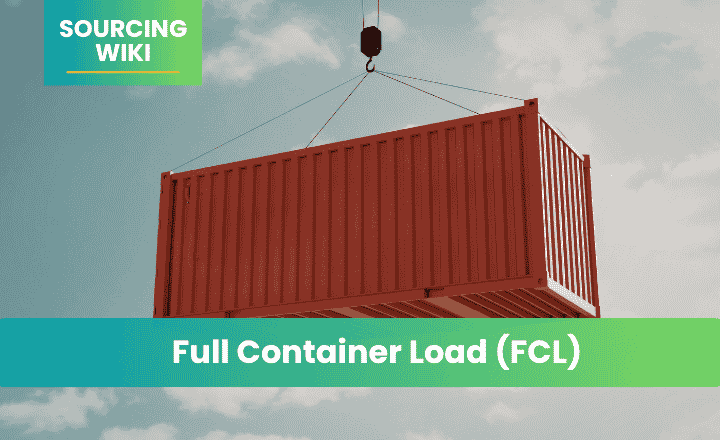
Full Container Load (FCL) is a shipping term used in international ocean freight to describe a shipment where an entire container is dedicated to one single consignee (buyer). In an FCL arrangement, the goods in the container are not shared with other shippers, regardless of whether the container is physically full to its capacity.
As a strategic logistics choice, FCL is preferred by businesses aiming for maximum control over their supply chain. At NewBuyingAgent, we view FCL not just as a volume choice, but as a critical risk-management tool that ensures your goods are handled only at the factory and your own warehouse, eliminating the common damages associated with the multiple loading stages of shared shipments.
Standard Container Sizes & Capacity
When planning an FCL shipment, choosing the right container size is essential for optimizing "Landed Cost." The three most common types are:
| Container Type | Internal Volume (Approx.) | Best For... |
|---|---|---|
| 20' GP (General Purpose) | 28 – 33 CBM | Heavy goods (tiles, metal, machinery). |
| 40' GP (General Purpose) | 65 – 68 CBM | Bulky but lighter goods (furniture, electronics). |
| 40' HC (High Cube) | 75 – 78 CBM | Extra volume; 1 foot taller than standard 40'. |
FCL vs. LCL (Less than Container Load)
The decision to go with FCL usually depends on the total volume of the order and the sensitivity of the products.
- Speed: FCL is generally faster. LCL requires "consolidation" at the port of origin and "de-consolidation" at the destination, adding 5–10 days to the transit time.
- Cost: While FCL has a higher total flat rate, the cost per cubic meter (CBM) is significantly lower once your volume exceeds approximately 15 CBM.
- Security: FCL containers are sealed at the factory. They are not opened until they reach your door (unless flagged for a customs exam). LCL goods are handled multiple times, increasing the risk of scratches or loss.
The FCL Logistics Workflow
- Booking: The buyer or agent books a container with a shipping line for a specific "ETD" (Estimated Time of Departure).
- Drayage (Haulage): An empty container is driven from the port to the factory.
- Loading & Sealing: The factory loads the goods. A high-security bolt seal is applied to the door.
- Vessel Transit: The container is loaded onto the ship.
- Final Delivery: Upon arrival and customs clearance, the container is trucked to the buyer's warehouse for unloading.
Essential Considerations & Warnings
- The "Payload" Limit: Just because a container is large doesn't mean it can carry unlimited weight. Each container has a maximum payload (usually around 26–28 tons). Exceeding this can lead to heavy fines and equipment failure.
- Demurrage & Detention: These are "late fees." Demurrage is charged by the shipping line if you leave your container at the port too long. Detention is charged if you keep the empty container at your warehouse too long after unloading.
- FCL/LCL Mixed Terms: Sometimes a buyer buys from 5 different factories (LCL) but asks a sourcing agent to combine them into one FCL container. This is called Buyer's Consolidation and is a highly effective way to save money.
Related Knowledge Base
Sourcing Practices & Insights: Full Container Load (FCL)
Latest Sourcing Guides


Comece hoje
Vamos transformar seus objetivos de compras em realidadeWeChat:+86 15157124615
WhatsApp:+86 15157124615
Endereço: Edifício 10 #39 Xiangyuan Road, Hangzhou, China
