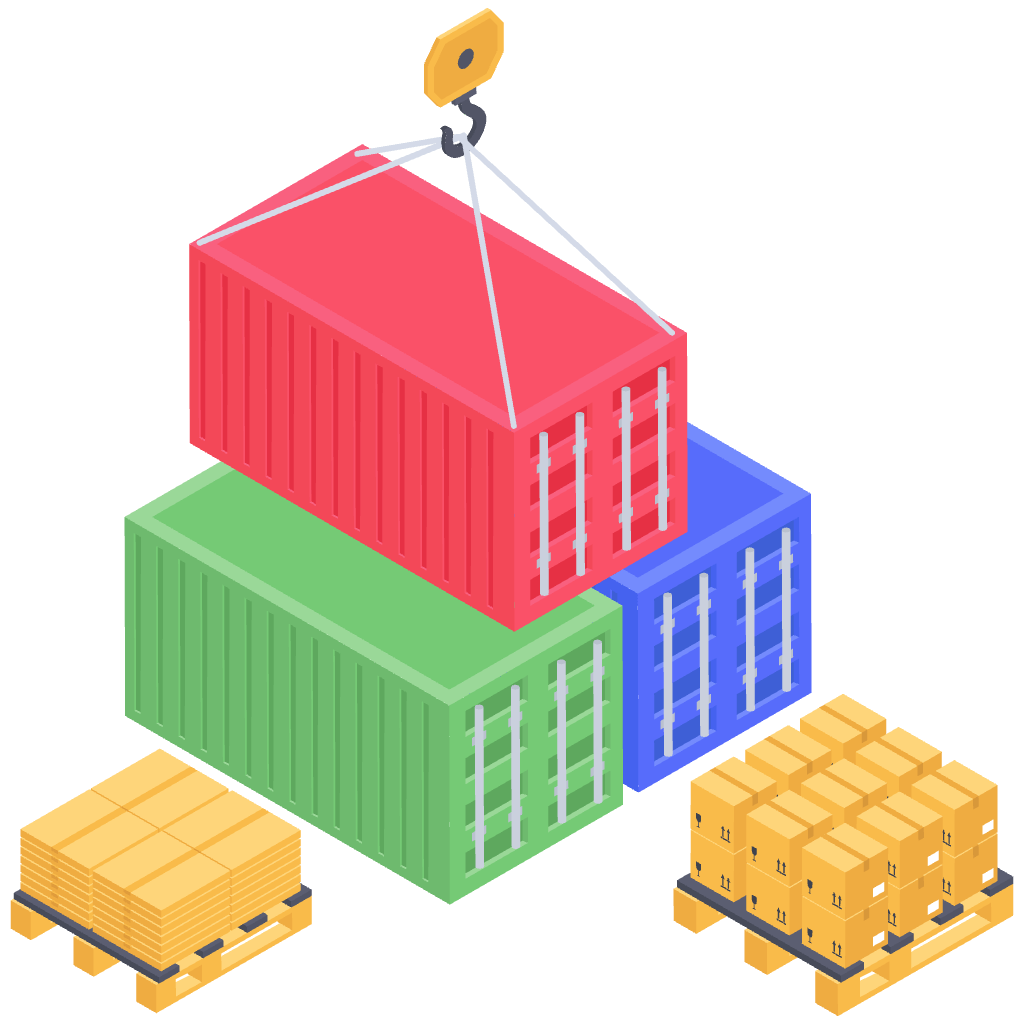
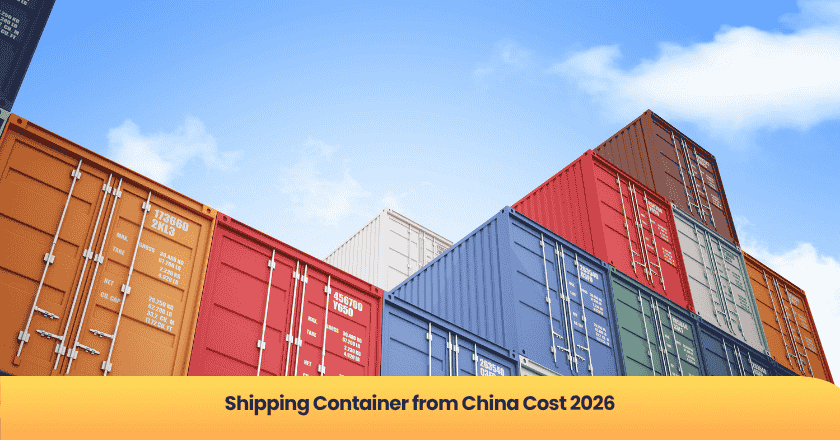
Container shipping from China remains one of the most cost-efficient ways to move goods across international markets — but the process is rarely as straightforward as it sounds. Between selecting the right load type, locking in competitive freight rates, navigating export documentation, and managing the inevitable curveballs at customs, there are enough moving parts to trip up even experienced importers. And in 2026, the landscape has shifted again: new U.S. tariff structures, stricter IMO emissions standards, and the growing role of AI-driven logistics platforms have all changed how businesses plan their supply chains.
This guide cuts through the noise. Whether you're shipping your first FCL or looking to optimize a mature import operation, you'll find practical, field-tested guidance on every stage of the process — from choosing the right container type to understanding which Incoterm actually protects your interests.
Key Takeaways
- A 20-foot container (TEU) holds roughly 33 CBM of cargo; a 40-foot container (FEU) holds around 67 CBM. Match your container size to your actual cargo volume — overpaying for unused space is a common and entirely avoidable mistake.
- FCL (Full Container Load) gives you exclusive use of a container. LCL (Less than Container Load) consolidates your cargo with other shippers' goods, reducing cost but extending transit time.
- Ocean freight from China to major destinations typically ranges from $2,800 to $7,000 per 20-foot container in 2026, but rates fluctuate sharply around peak seasons and geopolitical events.
- The Bill of Lading, Commercial Invoice, and Packing List are non-negotiable core documents. Missing or inaccurate paperwork is the single most common cause of customs delays.
- DDP (Delivered Duty Paid) is beginner-friendly but costlier — the seller handles all duties and last-mile delivery. FOB (Free on Board) transfers risk at the port of origin, giving buyers more control and typically lower unit economics.
- Working with a licensed freight forwarder based in China isn't just convenient — it's often the difference between a smooth clearance and a costly detention fee.
- In 2026, the IMO's Carbon Intensity Indicator (CII) regulations are actively affecting vessel selection and freight pricing on major trade lanes. Eco-conscious shippers can leverage this in carrier negotiations.
FCL vs. LCL: Choosing the Right Container Load Type
The first real decision in any China shipping project isn't which carrier to use — it's how much space you actually need. Get this wrong and you'll either overpay for a half-empty container or end up with LCL surcharges that quietly erode your margins.
Full Container Load (FCL) means you're renting the entire container exclusively for your cargo. You pay a flat rate regardless of how much of the space you actually fill, and because your goods aren't handled at a consolidation warehouse, the risk of damage or mix-ups is lower. FCL makes practical and economic sense once your shipment exceeds roughly 12–15 CBM, or when you're shipping fragile, high-value, or temperature-sensitive goods that shouldn't be co-mingled with other cargo.
Less than Container Load (LCL) is charged per cubic meter (CBM). A consolidator — typically a freight forwarder operating a consolidation warehouse near a major Chinese port such as Shanghai, Shenzhen, or Ningbo — combines your cargo with shipments from other buyers. At the destination port, the container is deconsolidated (broken down) and each shipper's goods are separated and forwarded independently. LCL is financially sensible for smaller volumes, but it adds handling steps and typically extends door-to-door transit time by 5–10 days compared to FCL.
One nuance worth understanding: LCL pricing is based on the greater of actual weight or volumetric weight — calculated as length × width × height ÷ 1,000, expressed in CBM. Light but bulky goods like packaging materials or inflatable products can look inexpensive per kilogram yet be surprisingly costly to ship because they occupy disproportionate container volume.
Expert Tip: If your monthly shipment volume consistently exceeds 10 CBM, run a side-by-side comparison between LCL and a shared FCL arrangement. Many freight forwarders can connect you with other importers from the same destination region to co-load a 20-foot container — giving you near-FCL handling standards at a price point closer to LCL rates.
Step-by-Step: How to Ship a Container from China
Understanding the broad sequence helps you avoid the panicked scrambling that tends to happen when an unexpected step surfaces mid-shipment.
The process begins with supplier coordination — confirming cargo readiness, agreeing on cargo pickup terms (ex-works or FOB), and ensuring the supplier packs and labels goods correctly. Improper packing is a persistent problem; Chinese manufacturers are often excellent at production and inconsistent at export packing. It's worth specifying carton dimensions, gross weight per carton, and labeling requirements in writing before production closes.
Once goods are at the origin port or consolidation warehouse, your freight forwarder books space on a vessel — a process called slot booking. On major lanes like Shanghai–Los Angeles or Ningbo–Rotterdam, most leading carriers now offer digital booking platforms with near-real-time availability, which has shortened lead times considerably. Even so, booking 2–3 weeks in advance is standard, and during peak shipping seasons (Q3 build-up, pre-Chinese New Year), earlier is better.
After cargo is loaded and sealed, the freight forwarder generates the Bill of Lading and submits the export declaration to Chinese customs. At the destination, your customs broker handles import clearance — paying applicable duties, submitting documentation, and coordinating inland delivery to your warehouse or fulfillment center.
Common Mistake to Avoid: Never assume your supplier will handle export customs on your behalf unless this is explicitly stated in your purchase agreement. Many Chinese manufacturers operate under EXW (Ex-Works) terms, meaning their responsibility ends at the factory gate. If no freight forwarder has been designated with export authority, your cargo can sit at a CFS (Container Freight Station) while demurrage fees accumulate by the day.
2026 Shipping Costs: What to Budget For
Freight rates are notoriously volatile — anyone who has been importing from China since 2020 knows this firsthand. In 2026, spot rates for FCL have largely stabilized compared to the extreme swings of the pandemic era, but they remain sensitive to events like Red Sea route diversions, U.S. tariff announcements, and seasonal demand spikes.
The following are approximate 2026 spot rate ranges for a 20-foot FCL via ocean freight from major Chinese export ports:
- China → U.S. West Coast (Los Angeles / Long Beach): $2,800–$5,500
- China → U.S. East Coast (New York / Savannah): $4,500–$7,000
- China → Northern Europe (Rotterdam / Hamburg): $3,500–$6,500
- China → United Kingdom (Felixstowe / Southampton): $3,200–$6,000
- China → Australia (Sydney / Melbourne): $2,500–$4,500
- China → Southeast Asia (Singapore / Jakarta): $800–$2,000
- China → India (Mumbai / JNPT): $1,200–$2,800
- China → Brazil (Santos): $4,000–$6,500
These figures cover ocean freight only. Add 15–30% for ancillary charges: origin THC (Terminal Handling Charges, which cover container movement within the port), origin documentation fees, destination customs clearance, and inland trucking. LCL is typically priced at $60–$150 per CBM depending on the trade lane and season. Air freight, relevant for high-value or time-sensitive cargo, runs $4–$12 per kilogram on most China-to-West corridors.
A 2026-specific factor worth noting: IMO's CII (Carbon Intensity Indicator) regulations have led several major carriers to slow-steam vessels on long-haul routes to improve their fleet emissions ratings. On the China–Europe trade lane in particular, this has added 2–5 days to some published transit times — a detail that matters if your supply chain runs on tight replenishment windows.
Expert Tip: Freight rates shift weekly. Rather than accepting the first quote you receive, obtain at least three competing quotes from different freight forwarders, using identical cargo specifications — same weight, CBM, Incoterm, and port pair — so the comparison is genuinely apples-to-apples. A $200–$400 saving per TEU compounds quickly across a year of regular shipments.
Documentation and Customs Clearance: Getting It Right the First Time
Paperwork is the unglamorous side of international trade, but it's where most delays actually originate. Chinese customs authorities and destination customs agencies both require accurate, internally consistent documentation — and a single discrepancy between the Commercial Invoice and the Packing List is enough to trigger an examination hold that costs you days or weeks.
The core export documents required for a China-origin shipment:
- Commercial Invoice — itemizes the goods, unit prices, total declared value, and transaction parties. This is the primary document customs uses to assess import duties at the destination.
- Packing List — details the physical characteristics of each carton: quantity, gross and net weight, and dimensions. It must align precisely with the Commercial Invoice. Any mismatch invites scrutiny.
- Bill of Lading (B/L) — issued by the ocean carrier, it serves simultaneously as a transport contract, a receipt for the goods, and — for negotiable (original) B/Ls — a document of title. Original B/Ls are required to release cargo at most destinations.
- Export Declaration (报关单) — filed with Chinese customs by your freight forwarder or licensed customs agent. The HS code declared here must match the import declaration HS code at your destination; divergence is a red flag for both customs authorities.
- Certificate of Origin — required to access preferential tariff treatment under bilateral free trade agreements. For U.S. importers navigating Section 301 tariff exclusions, origin certification can directly affect the duty rate applied to your goods.
In the U.S. specifically, CBP (U.S. Customs and Border Protection) requires ISF (Importer Security Filing — often called "10+2") at least 24 hours before the vessel departs China. Missing this window carries a $5,000 penalty per violation.
Common Mistake to Avoid: Some suppliers suggest undervaluing goods on the Commercial Invoice to reduce the buyer's import duty liability. This constitutes customs fraud in virtually every jurisdiction and exposes the importer — not the supplier — to penalties, cargo seizure, and potential criminal liability. Declare accurate values. The duty savings are rarely worth the exposure.
Incoterms Explained: FOB, CIF, and DDP
Incoterms (International Commercial Terms, published by the ICC) define exactly where the seller's responsibility ends and the buyer's begins. Choosing the right Incoterm isn't a paperwork formality — it determines who pays for freight, who bears cargo risk in transit, and who handles customs clearance on both ends.
FOB (Free on Board) is the most widely used Incoterm in China-origin trade. The seller's obligation ends once goods are loaded aboard the vessel at the origin port. From that point, the buyer controls freight booking, marine insurance, and import clearance. Experienced importers prefer FOB because it gives them full visibility into freight costs and direct carrier selection authority.
CIF (Cost, Insurance, Freight) means the seller arranges and pays for ocean freight and cargo insurance to the destination port. The risk still transfers to the buyer once goods are loaded at origin, but the seller handles logistics and builds those costs into the unit price. CIF simplifies the process for buyers without established freight relationships, but it removes cost transparency — you're paying for logistics without seeing the actual rates.
DDP (Delivered Duty Paid) places the vast majority of responsibility on the seller: they deliver goods to the buyer's address with all import duties, taxes, and customs clearance already handled. For new importers not yet familiar with their country's import regulations, DDP eliminates significant complexity. The trade-off is cost — sellers who offer DDP price their logistics at a margin, and it's rarely the most efficient arrangement at scale. As your import volume grows and you build direct relationships with freight forwarders and customs brokers, transitioning from DDP to FOB typically yields meaningful per-shipment savings.
Expert Tip: If you're sourcing from multiple Chinese suppliers simultaneously, consider using a bonded consolidation warehouse near a major Chinese port as an intermediate collection point. Each supplier delivers to the warehouse; your freight forwarder consolidates everything into a single FCL container. You ship once — reducing per-unit freight cost and simplifying cash flow. This works particularly well for importers in Australia, the UK, and the U.S. East Coast, where long-haul rates per CBM are high.
Common Challenges in 2026
Port congestion hasn't disappeared — it's just relocated. While Shanghai and Ningbo remain the world's highest-volume container ports, 2026 has seen intermittent delays at Qingdao and Tianjin driven by inspection backlogs and weather disruptions. On the receiving end, U.S. East Coast ports have been periodically affected by labor negotiations, while European gateway ports face recurring infrastructure bottlenecks.
Tariff complexity is a genuine challenge this year. The 2025–2026 period has seen further layering of U.S. Section 301 tariffs, with the list of affected HS codes continuing to evolve. Importers shipping to the U.S. market must verify their specific HS code's tariff status at the time of shipment — not at the time of the purchase order — because rates can change between when you place an order and when the cargo clears customs.
Container equipment availability has also been tighter on certain backhaul routes. Importers on less-trafficked lanes should confirm equipment availability with their freight forwarder several weeks before the cargo ready date, particularly during the Q3 peak season.
Expert Tip: Build 10–15 days of buffer into your inventory planning for every China-origin container shipment. Even on a well-managed lane, a single customs examination or port equipment delay can push arrival outside your expected window. Importers who run lean inventory with zero buffer consistently end up paying premium air freight rates to cover stockout gaps — a cost far higher than the carrying cost of a modest safety stock.
Major Ocean Carriers Operating from China
A handful of global carriers dominate China-to-world container trade lanes, and knowing their relative strengths helps when comparing options.
COSCO Shipping, headquartered in Shanghai, is China's national flag carrier with approximately 3.2 million TEU of capacity. It provides extensive coverage on both the transpacific and Asia-Europe corridors and operates a growing digital logistics platform. Maersk Line, MSC, and CMA CGM collectively hold enormous capacity on these same routes and have each invested heavily in end-to-end logistics capabilities well beyond pure ocean carriage — Maersk in particular has moved aggressively into air freight, customs brokerage, and warehousing services.
For transpacific volumes, Evergreen Marine, ONE (Ocean Network Express — formed from the merger of Japan's NYK, MOL, and K Line), and HMM (Hyundai Merchant Marine) are consistently competitive on both price and schedule reliability. Yang Ming Marine offers strong coverage within Asia and on Asia-North America routes. On the Asia-Europe lane, Hapag-Lloyd's network through Qingdao, Shanghai, and Ningbo is well-regarded for schedule adherence.
Carrier selection isn't purely about rate. Equipment availability at your origin port, transshipment reliability (some carriers route via Singapore or Port Klang, introducing additional port handling risk), published transit times, and digital tracking capability all factor in — especially when your cargo has compliance, shelf life, or retail flow requirements.
Expert Tip: Avoid single-carrier dependence. If you're shipping regularly, maintain relationships with at least two carriers on your primary trade lane. Equipment shortages, sudden schedule changes, or a carrier's capacity reallocation during peak season can leave you without options at exactly the wrong moment.
Frequently Asked Questions
How long does it take to ship a container from China?
Ocean freight transit times vary considerably by destination: roughly 14–18 days to the U.S. West Coast, 25–32 days to the U.S. East Coast, 20–28 days to Northern Europe, and 16–22 days to Australia. These are vessel transit times only. Add 3–7 days for origin-side customs clearance and warehouse-to-port handling, plus a similar window at the destination for port clearance and inland delivery. Total door-to-door time is commonly 30–45 days for long-haul lanes.
What is the minimum volume for FCL from China?
There is no formal minimum, but FCL becomes cost-competitive against LCL pricing once your shipment exceeds roughly 12–15 CBM. Below that threshold, LCL consolidation is almost always cheaper, even after accounting for additional handling at origin and destination.
Do I need a customs broker to import a container?
In most markets, self-filing an import entry is technically permitted but rarely advisable. Customs regulations are complex, and errors attract delays, penalties, or cargo holds. A licensed customs broker typically charges $150–$400 per entry in the U.S. or EU — a modest cost relative to the value of a container shipment, and far cheaper than a customs examination delay.
How do U.S. tariffs on China-origin goods work in 2026?
Most manufactured goods from China remain subject to additional Section 301 tariffs on top of standard MFN (Most Favored Nation) duty rates. The combined effective rate varies by HS code but commonly falls between 7.5% and 25% for general manufactured goods, with certain categories — solar panels, EV batteries, steel — sitting considerably higher. Always verify current rates using the USITC Harmonized Tariff Schedule before finalizing landed cost calculations.
What cargo insurance should I carry on a container shipment?
Marine cargo insurance is strongly recommended for any significant shipment. It covers loss or physical damage during transit and is typically priced at 0.3%–1.5% of declared cargo value, depending on commodity type and route. Carrier liability under a standard ocean Bill of Lading is heavily capped — under U.S. COGSA (Carriage of Goods by Sea Act), it's limited to $500 per package, which provides no meaningful protection for a container of high-value goods.
Can I consolidate goods from multiple Chinese suppliers into one container?
Yes — this is precisely what LCL consolidation and bonded warehouse arrangements are designed for. Your freight forwarder coordinates pickup from each supplier, aggregates goods at a consolidation warehouse near the port, and ships the combined load on a single Bill of Lading. This approach reduces per-unit freight cost and simplifies logistics management, particularly for businesses sourcing across multiple product categories or suppliers in different cities.
Final Thoughts
Shipping a container from China is a multi-stage process that spans supplier management, documentation, carrier selection, customs compliance, and final-mile delivery. None of these stages is forgiving of last-minute decisions or incomplete information. The importers who run the smoothest operations tend to share a few habits: they book early, they verify HS codes before issuing purchase orders, they work with experienced freight forwarders rather than defaulting to whoever quotes lowest, and they build inventory buffers that give them room to absorb the occasional delay without resorting to expensive air freight.
The 2026 trade environment — shaped by evolving tariff structures, emissions regulations, and a logistics industry increasingly driven by digital platforms — rewards importers who stay informed and plan ahead. The fundamentals of container shipping haven't changed, but the details keep moving. Build good relationships with your freight partners, treat documentation as seriously as you treat product sourcing, and you'll find the process far more manageable than its reputation suggests.
NewBuyingAgent
Related Resources

Comece hoje
Vamos transformar seus objetivos de compras em realidadeWeChat:+86 15157124615
WhatsApp:+86 15157124615
Endereço: Edifício 10 #39 Xiangyuan Road, Hangzhou, China