

Export Duty Drawback and Pricing Mechanics
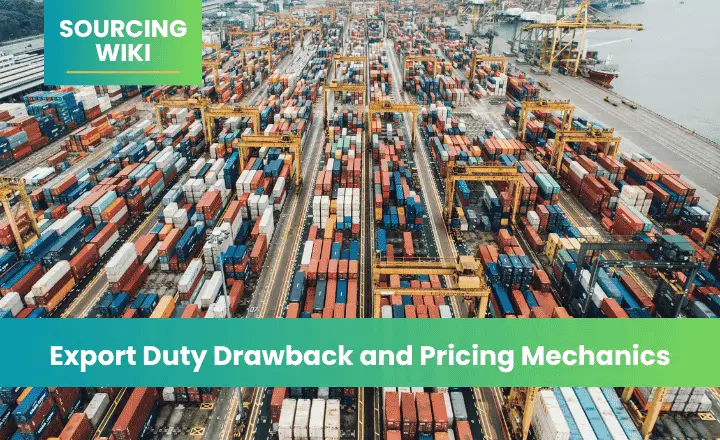
Export duty drawback and pricing mechanics dictate how Chinese manufacturers structure product quotes, handle value-added tax (VAT) refunds, and calculate export profit margins. In Chinese cross-border trade, the government offers export VAT rebates—ranging up to 13 percent—to incentivize manufacturing exports. Understanding how factories incorporate tax drawbacks into FOB prices enables foreign buyers to negotiate fair unit costs, avoid tax invoice fraud, and mitigate shipment delays caused by tax authority audits.
Value-Added Tax (VAT) Rebate Structure in Chinese Manufacturing
China enforces a domestic Value-Added Tax (VAT) system on the sale of goods and industrial processing services within its borders[1]. When a registered Chinese factory purchases raw materials, components, and electricity to manufacture finished goods, it pays an input VAT (normally 13 percent) to its domestic suppliers. To maintain international competitiveness and eliminate double taxation, the State Taxation Administration (STA) reimburses factories for this input VAT upon verifying that the finished products have been legally exported out of mainland China. This government refund is known as the export duty drawback or VAT rebate (出口退税)[2].
Tax-Inclusive Invoices versus Cash Price Differentials
Understanding factory pricing requires distinguishing between "tax-inclusive prices" (含税价) supported by official VAT invoices (增值税专用发票, commonly calledFapiao) and "cash prices" (不含税价)[3]. When a factory quotes an export FOB price, it assumes the buyer will export the goods legally through official customs channels, allowing the factory to issue a VAT Fapiao and collect the government tax rebate[3]. Because the tax rebate offsets a portion of the factory's production cost, the resulting official FOB price is often lower than or equal to the domestic cash price. However, if a buyer requests EXW terms without issuing official export documentation, the factory cannot claim the VAT refund and must charge a higher cash price or absorb a margin loss.
Tariff Policy Shifts and Price Adjustment Clauses
Export VAT rebate rates are periodically adjusted by Chinese fiscal authorities to support specific high-tech industries or discourage carbon-intensive manufacturing[1]. When the government lowers or cancels the export tax rebate rate for a specific HS code commodity, the factory's net margin shrinks immediately. Sourcing agreements must incorporate explicit price adjustment clauses that govern policy changes. A structured contract defines whether price increases resulting from tax rebate policy shifts are borne entirely by the buyer, absorbed by the supplier, or shared according to a pre-established formula.
Tax Compliance Risks and Fapiao Audit Exposure
Claiming export tax drawbacks requires rigorous tax compliance and accurate export documentation[4]. To receive the tax refund, the factory must collect matching VAT Fapiaos from its raw material suppliers, submit official export declarations from China Customs (GACC), and present verified foreign exchange settlement records from the State Administration of Foreign Exchange (SAFE). If a supplier utilizes fake VAT invoices, under-reports material costs, or engages in fraudulent tax refund claims (骗取出口退税), Chinese tax authorities will freeze the factory's export tax accounts. Tax audits can result in frozen bank accounts, seized factory inventory, and delayed export shipments for foreign buyers. Sourcing agents mitigate this risk by auditing factory tax registration status and verifying invoice authenticity during supplier due diligence.
Frequently Asked Questions (FAQ)
Why do Chinese factories quote lower prices under FOB terms when receiving export VAT refunds?
Chinese factories incorporate anticipated government VAT refunds (up to 13 percent) directly into their profit margin calculations. Receiving this tax rebate allows factories to lower their export FOB unit prices to attract international buyers while maintaining overall profitability.
What is a VAT Fapiao and why is it necessary for export tax drawbacks?
A VAT Fapiao is an official government-regulated tax invoice issued by material suppliers and manufacturers in China. It provides legal proof of input VAT paid on raw materials, which the factory must present to Chinese tax authorities to receive its export tax rebate.
What happens if the Chinese government lowers the export rebate rate for a product?
If the government reduces the export tax rebate rate for a specific product category, the factory loses a portion of its tax refund income. Without a pre-agreed contractual price clause, the factory may attempt to raise FOB unit prices on pending or future purchase orders to offset the lost margin.
Partial Sources
[1] State Taxation Administration of the People's Republic of China (STA) - Export VAT Rebate Policies: http://www.chinatax.gov.cn/
[2] International Trade Centre (ITC) - Export Pricing Strategies and Tax Mechanics: https://www.intracen.org/
[3] General Administration of Customs of the People's Republic of China (GACC) - Customs Clearance and Tax Declarations: http://english.customs.gov.cn/
[4] State Administration of Foreign Exchange (SAFE) - Cross-Border Trade Payment Rules: http://www.safe.gov.cn/
Related Knowledge Base
Sourcing Practices & Insights: Export Duty Drawback and Pricing Mechanics
Latest Sourcing Guides

Get Started Today
Let's Turn Your Sourcing Goals into RealityWeChat:+86 15157124615
WhatsApp:+86 15157124615
Address:Building 10 #39 Xiangyuan Road, Hangzhou, China
