

Spend Analytics
Concept Definition
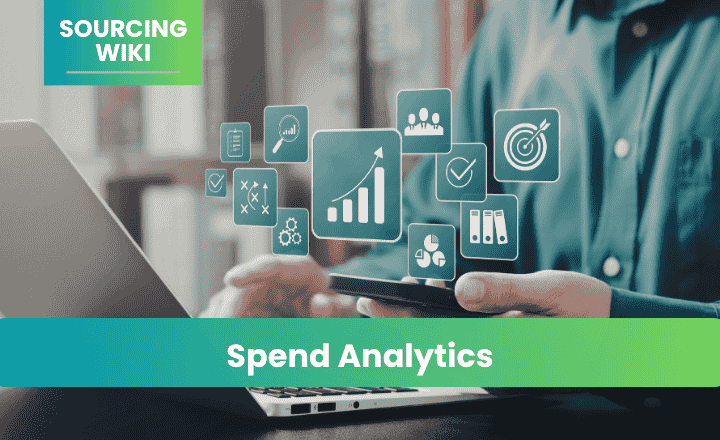
Spend analytics is the discipline of transforming raw expenditure data into structured, actionable intelligence. For most organizations, procurement spend is distributed across multiple ERP systems, purchasing platforms, expense management tools, and business units — creating a fragmented data landscape that obscures total supplier exposure, category concentration, compliance gaps, and savings opportunities. Spend analytics addresses this fragmentation systematically.
Data Processing and Classification
The process begins with data collection and aggregation. Source data is extracted from accounts payable systems, purchase order records, credit card transaction files, and any other channels through which organizational money flows to external vendors. This data is rarely clean: supplier names appear in multiple formats, transactions lack consistent category codes, and invoice data often contains errors or missing fields.
Data cleansing and enrichment follow. Supplier normalization — the process of resolving duplicate and variant supplier records into a single, canonical entity — is foundational. A single supplier may appear as dozens of variations across a multi-entity organization. Without normalization, total spend with that supplier is invisible, undermining leverage in any renegotiation. Enrichment appends third-party data: DUNS numbers, industry classifications, ownership structures, and risk indicators.
Classification is the analytical core of spend analytics. Spend is mapped to a taxonomy — most commonly UNSPSC (United Nations Standard Products and Services Code) or a custom organizational hierarchy — that organizes expenditure by category, subcategory, and commodity. Consistent classification enables like-for-like comparison across business units and time periods, and is the prerequisite for meaningful category analysis.
Analytical Insights and Applications
With clean, classified data in place, spend analytics generates insights across several dimensions. Category analysis identifies concentration of spend within subcategories, potential for consolidation, and pricing benchmarks. Supplier analysis reveals dependency risks, tail spend proliferation, and opportunities for preferred supplier program compliance. Compliance analysis surfaces the proportion of spend flowing through contracted versus uncontracted channels. Time-series analysis detects spend trend anomalies, budget variance drivers, and seasonal patterns.
Strategic Value and Technology Trends
The strategic value of spend analytics lies in its role as the diagnostic foundation for procurement strategy. Savings initiatives without spend visibility are directionally uncertain at best; supplier consolidation programs without a clear picture of total spend per supplier are operationally blind. Category managers who operate with accurate, current spend data make faster, better-calibrated sourcing decisions and conduct more credible supplier negotiations.
Modern spend analytics platforms use machine learning to automate classification, identify anomalous transactions, and surface insights that manual analysis would miss. However, the quality of analytical output remains fundamentally dependent on data governance discipline — specifically, the consistency and completeness of upstream transaction data capture.
Related Knowledge Base
Sourcing Practices & Insights: Spend Analytics
Latest Sourcing Guides



Get Started Today
Let's Turn Your Sourcing Goals into RealityWeChat:+86 15157124615
WhatsApp:+86 15157124615
Address:Building 10 #39 Xiangyuan Road, Hangzhou, China
