

Introduction
A growing brand hits a quiet ceiling somewhere between its first few products and its hundredth. The founder who once personally messaged factories cannot keep doing it across a dozen categories, and the retailer expanding its private label cannot have a buyer learning Mandarin and customs law on the fly. At that point a question surfaces that smaller sellers never have to ask: should we keep sourcing in-house, or hand it to a service built to do exactly this?
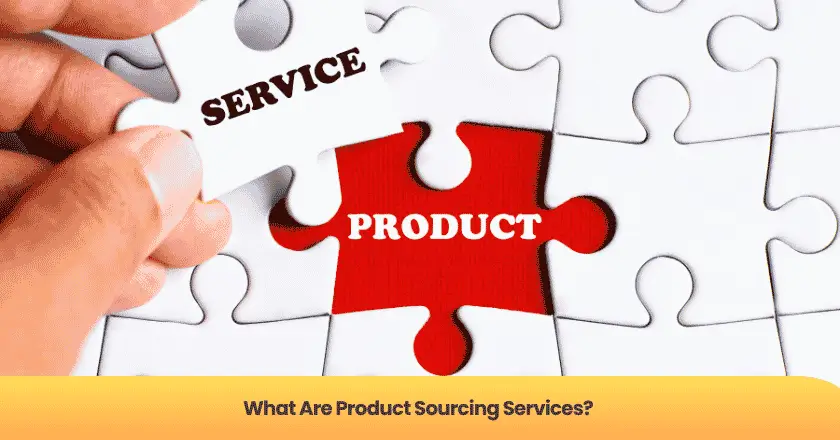
Product sourcing services are the answer that many brands and retailers eventually reach for, yet the term covers a wide range of arrangements that are easy to confuse. Some find suppliers and stop there. Others manage the entire path from product idea to delivered goods. Knowing what these services actually include, how the models differ, and when they earn their cost is the difference between a smart outsourcing decision and an expensive mismatch.
This guide explains product sourcing services in plain terms. What they do, the different shapes they take, the value they add for an organization rather than a solo seller, and how a brand or retailer decides whether and which one to use. The aim is clarity, so a decision-maker can weigh the option properly instead of guessing at what they would actually be buying.
Key Takeaways
• Product sourcing services manage some or all of the work between a product idea and delivered goods, ranging from supplier discovery alone to full end-to-end handling of vetting, negotiation, quality control, and logistics for a brand.
• The models differ sharply in scope, so a brand must distinguish a finder who only locates suppliers from a full-service partner who owns the entire outcome, since paying for one while expecting the other leads to gaps no one is covering.
• The strongest argument for outsourcing sourcing is focus, because it frees a brand's team to concentrate on product, marketing, and growth rather than spending its scarcest hours managing factories across time zones and languages.
• Sourcing services earn their fee through access, quality assurance, and prevented disasters far more than through a simple price cut, which means judging them on the cheapest quote alone misses where their real value sits.
• Brands and retailers benefit most when category breadth and volume make in-house sourcing impractical, since the coordination load that a solo seller can manage becomes a full operation once many products and suppliers are involved.
What Product Sourcing Services Actually Do
Before weighing whether to use one, it helps to see the full range of work the term can cover. Sourcing services sit on a spectrum, and understanding that spectrum is the key to buying the right one rather than the one that merely sounds impressive.
The Spectrum From Finder to Full Partner
At the simplest end, a sourcing service finds suppliers and hands you a shortlist. You take it from there, handling negotiation, quality, and shipping yourself. At the fullest end, a service owns the entire process, namely finding and vetting factories, negotiating terms, managing samples, controlling quality, consolidating orders, and coordinating logistics to your door. Most services sit somewhere along this line, and the position they occupy is the single most important thing to confirm before signing.
The trap is assuming. A brand that hires a finder while expecting a full partner discovers, too late, that no one was watching production or arranging inspection. The short answer is that the word sourcing means very different things at different points on the spectrum, so the scope has to be made explicit, never assumed from the label.
The Core Functions Under One Roof
A full-service offering bundles functions a brand would otherwise assemble from separate vendors. Supplier discovery and verification. Negotiation of price, MOQ (minimum order quantity, the smallest batch a factory will run), and terms. Sample management and OEM (original equipment manufacturer, where the factory builds to your design) coordination. Quality control through inspection. Order consolidation and export logistics. Bundling these under one accountable partner is the core appeal, because it replaces a patchwork of providers with a single owner of the outcome.
Expert Tip: Before engaging any sourcing service, write down every function you need handled, from supplier search to final inspection to shipping, and ask the provider to confirm in writing which ones they own. The gaps between what you assumed and what they actually cover are exactly where sourcing relationships go wrong.
The Different Models Brands Encounter
Sourcing services do not come in one shape. The model matters as much as the provider, because each suits a different kind of buyer and carries different trade-offs in cost, control, and coverage. Recognizing the models lets a brand choose deliberately.
Agents, Companies, and Hybrids
A sourcing agent is typically an individual or small team acting as your representative for a commission or fee, close to the factories and flexible. A sourcing company is a larger organization with broader infrastructure, often offering more functions and capacity but with more structure. Some operate as hybrids, pairing the personal attention of an agent with the depth of a company. None is universally better. The right model depends on your scale and how much you need handled.
Be clear-eyed about what each is not. An agent who guards the factory's identity or cannot explain their pricing is protecting a markup, not serving you. A large company that treats your account as a rounding error may offer less attention than a focused agent. Worth knowing: transparency about pricing and suppliers is the dividing line that matters more than the size of the provider.
In-House Versus Outsourced
The deeper choice is whether to build sourcing internally or buy it as a service. An in-house team gives maximum control and category knowledge, but it is expensive to staff, slow to build, and demands expertise in factories, language, and logistics that takes years to develop. Outsourcing trades some control for immediate capability and a partner who already has the network and the experience in place.
Most brands land somewhere in between as they grow, keeping strategy and product decisions in-house while outsourcing the on-the-ground execution. Real talk: building a sourcing operation from scratch to chase a little more control often costs far more, in money and time, than partnering with one that already exists.
Expert Tip: Map your sourcing into two columns before deciding: the strategic calls only your team should own, like product and brand direction, and the executional work, like factory vetting and inspection, that a service can carry. Most brands find the second column is far larger than they assumed, which clarifies exactly what to outsource.
Where the Value Actually Comes From
A sourcing service that only saved a few percent on unit price would rarely be worth it for a serious brand. The real value sits elsewhere, in the things a service makes possible that an in-house team at the same stage simply could not.
Access, Assurance, and Focus
The first value is access. A strong service reaches factories a brand could never find or qualify alone, which means better-fitting suppliers and options beyond the obvious platforms. The second is assurance, the on-the-ground quality control that catches defects before they ship and protects a brand's reputation. A defective batch does more damage to an established brand than to a beginner, which makes that assurance especially valuable.
The third value, and often the largest, is focus. Outsourcing sourcing frees a brand's team to spend its scarcest hours on product, marketing, and growth rather than on managing factories across time zones. For a brand whose advantage is its design or its customer relationships, every hour reclaimed from factory coordination is an hour returned to what actually differentiates the business.
The Disasters You Never See
Much of a sourcing service's value is invisible by design. The unreliable factory screened out before you ever heard its name. The defect caught at the line before it reached your customers. The shipping error fixed before it stranded your goods. These prevented disasters never appear on an invoice, which is exactly why brands that have not experienced one tend to underestimate the service that quietly prevents them.
Common Mistake: Evaluating a sourcing service only on the unit price it negotiates. The cheapest quote attached to weak vetting and no real inspection is no bargain for a brand, because one damaged shipment or one wave of bad reviews costs far more than the fee of a service that would have prevented it.
Deciding Whether You Need One
Not every brand needs a sourcing service, and the decision turns on a few honest questions about scale, complexity, and where your team's time is best spent. The answers point clearly toward or away from outsourcing.
The Signals That Point to Yes
Outsourcing tends to make sense when category breadth or volume makes in-house sourcing impractical. A brand juggling many products across several factories carries a coordination load that quietly consumes a team. When you lack direct factory access, face a language barrier, or simply value your team's time more than the hours sourcing demands, a service usually earns its keep. The more complex your sourcing, the stronger the case.
Stage matters too. An early brand with one product and a trusted supplier may not need a service yet. A scaling brand adding categories, or a retailer expanding private label across many lines, reaches the point where doing it in-house means hiring and training an entire function. At that threshold, a service is often faster, cheaper, and lower-risk than building the capability from nothing.
Choosing and the 2026 Landscape
When you do choose, judge a service on access, quality systems, transparency, and track record rather than on the headline fee. Confirm exactly which functions they own, how and when they inspect, and how they charge. A provider open about pricing and suppliers, with verifiable experience, is worth far more than the cheapest quote attached to vague answers.
The landscape keeps modernizing. Through 2026, sourcing services increasingly pair human judgment with AI-assisted supplier matching and digital production tracking, giving brands faster supplier shortlists and clearer visibility into orders. The judgment calls, reading a supplier's reliability and managing a problem, stay human, but the tools make a strong service more transparent and responsive than it could have been even a year ago.
Full-Service Sourcing the Way NewBuyingAgent Delivers It
For a brand weighing the full-service end of that spectrum, what matters is whether one partner can genuinely own access, quality, and coordination together. NewBuyingAgent is a strong partner for global sourcing from China, backed by 30 years of expertise in trade, manufacturing and quality control. That kind of history is what lets a single partner carry the whole outcome rather than a slice of it. It draws on its 50,000+ cooperated partner factories—with no language, region, or time zone barriers—and its local reputation gets you full factory cooperation. Access at that scale is precisely what an in-house team at most brands cannot replicate. And because the whole sourcing operation runs on your behalf, your team's hours go back where they belong. NewBuyingAgent handles all factory communication—ideal for multi-category buyers—freeing up your time to focus on expanding your local market sales.
Frequently Asked Questions
What exactly do product sourcing services include?
They range from finding suppliers alone to owning the entire process. A full-service provider handles supplier discovery and verification, negotiation of price and terms, sample management, quality control through inspection, order consolidation, and export logistics. The key is confirming the scope, since the word sourcing means very different things depending on where a service sits on that spectrum.
What is the difference between a sourcing agent and a sourcing company?
An agent is usually an individual or small team acting as your representative for a fee, close to factories and flexible. A company is a larger organization with broader infrastructure and capacity but more structure. Some hybrids combine both. Neither is universally better, since transparency about pricing and suppliers matters more than the size of the provider you choose.
When should a brand outsource sourcing instead of doing it in-house?
When category breadth or volume makes in-house impractical. A brand juggling many products across several factories carries a coordination load that consumes a team. Lacking factory access, facing a language barrier, or valuing your team's time over the hours sourcing demands all point toward a service. The more complex your sourcing, the stronger the case for outsourcing it.
Do sourcing services really save money?
Often, but the savings come from access and prevented problems more than a simple price cut. A strong service reaches better suppliers, catches defects before they ship, and avoids costly mistakes a brand would otherwise absorb. Judging a service only on the cheapest quote misses where the real value sits, since one prevented disaster can outweigh the entire fee.
How do I choose the right product sourcing service?
Judge it on access, quality systems, transparency, and track record rather than the headline fee. Confirm exactly which functions it owns, how and when it inspects, and how it charges. A provider open about pricing and suppliers with verifiable experience is worth far more than a cheap quote attached to vague answers about what they actually cover.
How are product sourcing services changing in 2026?
Through 2026, services increasingly pair human judgment with AI-assisted supplier matching and digital production tracking, giving brands faster shortlists and clearer order visibility. The judgment calls of reading supplier reliability and managing problems stay human. The tools make a strong service more transparent and responsive, so pairing modern technology with real experience defines the best providers now.
Conclusion
Product sourcing services are best understood not as a single thing but as a spectrum, running from simply finding suppliers to owning every step between a product idea and a delivered shipment. The most important move for any brand or retailer is to pin down exactly where on that spectrum a service sits, because the gap between a finder and a full partner is precisely where outsourcing relationships succeed or quietly fail. Once the scope is clear, the value becomes clear too, namely access to suppliers you could not reach, quality assurance you could not perform from a distance, and the focus your team regains when factory coordination is no longer theirs to carry.
The decision to use one comes down to scale, complexity, and where your people are most valuable. A small brand with one product may not need a service yet. A growing brand spread across categories, or a retailer scaling private label, usually reaches the point where building that capability in-house costs more than partnering with one that already exists. Weigh it on the things that matter, access, assurance, transparency, and focus, rather than the fee alone, and the right sourcing service stops being an expense and becomes part of the infrastructure that lets the business grow.
NewBuyingAgent
Related Resources

Начните сегодня
Давайте превратим ваши цели по закупкам в реальностьWeChat:+86 15157124615
WhatsApp:+86 15157124615
Адрес: Здание 10 #39 Xiangyuan Road, Ханчжоу, Китай
