

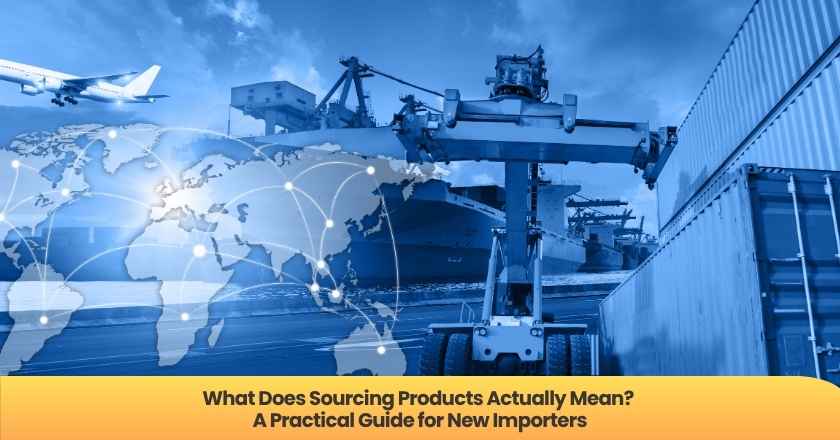
New importers hear “sourcing” constantly and quietly assume it just means finding a cheap supplier. So they find one, place an order, and are blindsided when the goods arrive wrong, the customs bill surprises them, or the supplier turns out to be a middleman. The word covers far more than “finding” — and the gap between what people think sourcing means and what it actually involves is where beginners lose money.
Sourcing products is the whole discipline of deciding who makes your goods, on what terms, and under what controls — from first search through verification, sampling, negotiation, and landing acceptable product at your door. Understanding the full scope is the first real step toward doing it well.
If you'd like experienced help walking through that whole process, NewBuyingAgent supports new importers across each stage of sourcing.
Key Takeaways
• Sourcing is the full process of finding, vetting, and securing a supplier — not just locating the cheapest price.
• It differs from procurement, which is the ongoing act of buying once a supplier relationship already exists.
• The core stages are discovery, verification, sampling, negotiation, and quality control through to delivery.
• Most beginner failures come from treating sourcing as a single step rather than a sequence of checks.
• You can source directly, through a trading company, or with a sourcing agent, depending on your needs.
What Sourcing Actually Means
The word gets used loosely, so it's worth pinning down. Sourcing is broader than buying and broader than finding — it's the entire upstream process of building a supply relationship that delivers the right product reliably. Seeing the full definition reframes how a beginner should approach it.
More than finding a supplier
Sourcing spans everything between “I need this product made or supplied” and “my first reliable shipment landed.” That includes discovery, capability checks, sampling, price and term negotiation, and the quality controls that protect you once production starts. Finding a supplier is just the opening move.
Sourcing versus procurement
Procurement is the ongoing act of buying once a supplier relationship exists. Sourcing is the upstream work of building that relationship and deciding whether it deserves to exist at all. The riskiest decisions — who you trust with your money and your brand — happen during sourcing, not during the routine reorder.
Why the distinction matters
Beginners who think sourcing means “get a quote” skip the verification and quality steps that prevent disasters. Understanding sourcing as a full discipline, not a single transaction, is what separates importers who build stable supply from those who lurch from one supplier problem to the next.
Expert Tip: Think of sourcing as building a relationship you'll rely on, not closing a one-time purchase — because that framing changes every decision you make. A buyer chasing the lowest single quote will skip the floor walkthrough and the second sample; a buyer building a relationship invests in verifying the supplier properly because they intend to reorder for years. The mindset shift is practical, not philosophical: it's the difference between sourcing that produces one lucky order and sourcing that produces a dependable supply chain. Treat the first order as the start of something, and you'll do the checks that make the rest possible.
The Core Stages of Sourcing
Sourcing becomes manageable when you see it as a sequence of stages, each building on the last. Knowing the stages lets a beginner approach the process methodically rather than as one overwhelming task. Here's what the full arc looks like in practice.
Discovery and shortlisting
Start by finding candidate suppliers from multiple channels — marketplaces, trade shows, referrals, agent networks — and narrowing to a shortlist of three to five. A wider initial pool gives you leverage and a fallback. Treat any single listing as a lead to investigate, not proof of a good supplier.
Verification and sampling
Verify each shortlisted supplier — business license, production scope, export records, and a live floor walkthrough — then order samples. Two rounds, judged against a written spec, reveal what you’ll actually receive in bulk. This stage is where most beginners cut corners and most disasters originate.
Negotiation and quality control
Negotiate price, terms, and inspection rights while your leverage is highest, before any deposit. Then arrange quality control — a signed golden sample and inspections against your spec — to protect the order through production. These final stages turn a promising supplier into a delivered, acceptable shipment. For beginners, NewBuyingAgent walks through each of these stages, its 30 years of experience and 20,000+ specialists turning a first order into a repeatable process.
Common Mistake to Avoid: Collapsing the whole sourcing process into a single step — “find a supplier and place the order” — and skipping verification, sampling, and quality control to save time. New importers eager to launch often treat these stages as optional friction, then discover the supplier was a middleman, the bulk goods didn’t match the sample, or defects only surfaced at their port. Each stage exists because skipping it causes a specific, costly failure. Work through them in sequence; the few weeks they add are trivial against the cost of a ruined first order.
Where You Can Source From
Sourcing isn't one channel — there are different routes to a supplier, each with trade-offs in cost, control, and effort. For a new importer, understanding the options prevents both overcomplicating and oversimplifying the search. Most products can be sourced several ways.
Direct from manufacturers
Buying direct from a factory means the factory's price is your price, with no reseller margin, and the most control over quality. It requires more effort to find and manage suppliers, and you must meet the factory's MOQ (Minimum Order Quantity — the smallest batch it will produce). For a focused product line at reasonable volume, direct usually wins.
Through trading companies
A trading company buys from factories and resells to you, adding a margin for the service. It can simplify sourcing across many products or very small volumes. The trade-off is a markup, sometimes hidden, and less direct control. Useful when chosen knowingly, costly when mistaken for buying direct.
With a sourcing agent
A sourcing agent handles discovery, verification, negotiation, and quality control on the ground. For beginners who lack the time, language, or local presence to manage factories directly, an agent fills the gap while keeping incentives aligned with yours.
Expert Tip: As a new importer, be sure you know which of these three you're actually dealing with, because they're easy to confuse and the difference affects your price and control. A trading company often presents itself like a factory, and an agent and a trading company both sit between you and production but have opposite incentives — the agent works for you on a fee, the trader profits from your markup. Ask directly: “Do you make this yourself, resell it to me, or represent me for a commission?” Knowing the answer is foundational, and a vague response is itself information worth acting on.
What Sourcing Costs and Protects Against
Beginners often focus on the unit price and miss both the full cost of sourcing and what proper sourcing protects them from. Understanding the real economics — and the risks sourcing exists to manage — reframes it from an expense into an investment.
The full cost picture
Sourcing costs more than the unit price — there's landed cost (FOB price (Free On Board — the cost of goods loaded onto the vessel at the Chinese port, before freight and insurance), freight, duties, fees), plus the time or agent fee to do it properly. In 2026, with the US de minimis exemption gone, every import carries duty, so the full cost picture matters more than ever.
What good sourcing prevents
Proper sourcing protects against the expensive failures: paying a middleman's hidden margin, receiving off-spec goods, getting stuck with a supplier that can't deliver, or losing a deposit to weak payment terms. Each stage you don’t skip removes a specific risk. The process is insurance as much as logistics.
Payment as protection
Part of sourcing is structuring payment to keep leverage — a 30% deposit with the balance on a passed inspection, rather than full prepayment. This keeps real money tied to acceptable goods. For a beginner, safe payment terms are among the simplest and most powerful protections in the whole process.
Common Mistake to Avoid: Judging the cost of sourcing by the unit price alone and treating verification, sampling, and inspection as expenses to minimize. New importers often see a few hundred dollars for an inspection or a sample round as cost to cut, then lose far more to a defective bulk order or an unverified supplier. The right way to see it: sourcing properly is insurance against failures that cost multiples of what the checks do. The cheapest sourcing process is the one that prevents the expensive disaster, not the one with the lowest line items.
Getting Started as a New Importer in 2026
With the definition and process clear, the practical question is how to begin without being overwhelmed. The answer is to start small, work the stages in order, and build confidence through a low-stakes first order rather than betting big on an unproven process.
Start with a small first order
Keep your first order small enough that a total loss wouldn't hurt, even if a supplier offers a discount for more. A first order is really a test of the supplier, the shipping route, and your own process. Prove the chain works before scaling, and treat the first order as education.
Work the stages in sequence
Resist the urge to rush from discovery straight to a deposit. Verify, sample, negotiate terms, and arrange inspection in order — each stage protects the next. Following the sequence is what turns a beginner's sourcing from a gamble into a repeatable process you can scale with confidence.
Know when to get help
If you lack the time, language, or local presence to manage factories directly — common for new importers — a sourcing agent can fill the gap while you learn. In 2026, remote tools let you verify suppliers and oversee production without traveling, lowering the barrier to sourcing well from the start. Helping new importers source confidently while they learn is part of what NewBuyingAgent offers.
Expert Tip: Treat your first sourcing project as a deliberate learning exercise, documenting each stage as you go — who you contacted, what you verified, what the samples showed, what the landed cost actually came to. Beginners who keep this record turn one order into a reusable playbook and a growing list of vetted suppliers, while those who improvise repeat the same mistakes each time. The first order is expensive tuition whether you learn from it or not; the importers who scale are the ones who capture the lessons in a form they can apply to the second order, the tenth, and the hundredth.
Frequently Asked Questions
What does sourcing products actually mean?
Sourcing is the full process of finding, vetting, and securing a supplier for your product — spanning discovery, verification, sampling, negotiation, and quality control through to delivery. It's far broader than just finding the cheapest price. The riskiest decisions, like who to trust with your money and brand, happen during sourcing, which is why treating it as a complete discipline rather than a single transaction matters.
What's the difference between sourcing and procurement?
Sourcing is the upstream work of building a supplier relationship and deciding whether it should exist — finding, verifying, and qualifying a supplier. Procurement is the ongoing act of buying once that relationship is established. Sourcing happens first and carries the bigger risk decisions; procurement is the routine reordering that follows. New importers focus on sourcing, since the relationship has to be built before it can be bought from.
What are the main steps in sourcing a product?
The core stages are discovery and shortlisting candidate suppliers, verifying each one's legitimacy and capability, ordering and approving samples against a written spec, negotiating price and terms while your leverage is highest, and arranging quality control through to delivery. Working these in sequence, rather than collapsing them into “find a supplier and order,” is what prevents the costly failures beginners commonly hit.
Can a beginner source products without an agent?
Yes — many do, especially with a small first order and remote verification tools. You can vet suppliers, review samples, and arrange third-party inspections yourself. An agent helps when you lack the time, language, or local presence to manage factories directly, which is common for beginners. Whether to use one depends on your capacity; the sourcing process itself is the same either way.
How much does sourcing a product cost?
Beyond the unit price, sourcing involves landed cost — freight, duties, and fees, with every import now carrying duty since the US de minimis exemption ended — plus the time or agent fee to do it properly. The checks like sampling and inspection cost a few hundred dollars but prevent failures costing multiples of that. Budget the full landed cost and treat verification spending as insurance, not overhead.
Conclusion
Sourcing products isn't finding a cheap supplier — it's the full discipline of discovery, verification, sampling, negotiation, and quality control that turns “I need this made” into a reliable shipment at your door. New importers who understand that scope, work the stages in order, start small, and treat the checks as insurance build supply chains that last. The ones who treat sourcing as a single step keep paying for the stages they skipped. If you'd like experienced help walking through the whole process, that's exactly what NewBuyingAgent does for new importers. With 30 years of expertise and 20,000+ specialists, it helps beginners source from China with confidence and minimal risk across a 50,000+ factory network.
NewBuyingAgent
Related Resources
Get Started Today
Let's Turn Your Sourcing Goals into RealityWeChat:+86 15157124615
WhatsApp:+86 15157124615
Address:Building 10 #39 Xiangyuan Road, Hangzhou, China
