

Introduction
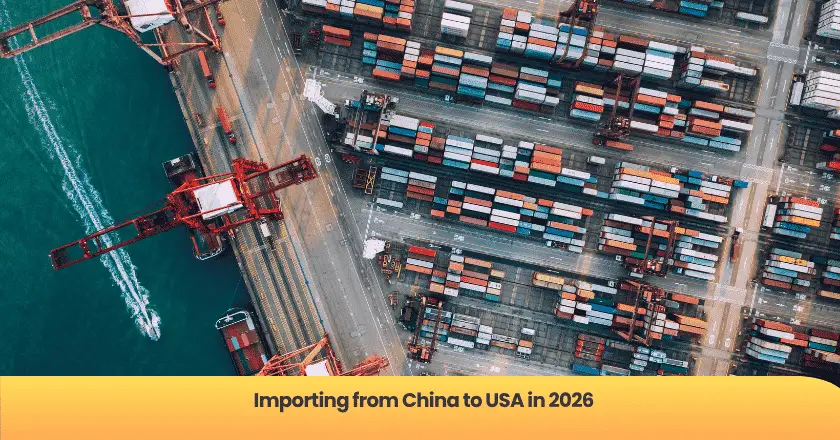
The moment your name goes on a customs entry, you become a U.S. importer of record, and a set of responsibilities most first-timers never saw coming lands squarely on you. The product was the easy part. Getting goods from a Chinese factory across an ocean and through U.S. Customs, cleanly and legally, is a process with its own vocabulary, its own paperwork, and its own ways to go wrong. Done right it is routine. Done carelessly it means a container sitting at a port while costs pile up.
Importing from China to the USA in 2026 rewards the planner and punishes the improviser. The buyers who treat customs clearance as an afterthought discover, at the worst possible moment, that a missing document or a wrong classification can freeze a shipment they have already paid for. The buyers who set up the importer-of-record role, the bond, the broker, and the compliance steps in advance barely notice the border at all. Their goods simply arrive.
This guide walks through what importing from China actually involves in 2026, from setting up to legally bring goods in, to clearing customs, to meeting the agency rules that govern what is allowed into the country. The aim is a clear map of the process so your first shipment, or your fiftieth, moves through the system instead of getting stuck in it.
Key Takeaways
• Becoming a U.S. importer of record carries real legal responsibility, since the moment your name is on the entry you are accountable for the shipment meeting every customs and agency requirement, which makes the setup worth getting right before goods ship.
• A customs bond and a licensed customs broker are foundational for commercial imports, because the bond guarantees duties will be paid and the broker handles the classification and filings that are genuinely easy to get wrong and costly to fix.
• Accurate, consistent documentation is what keeps goods moving, as a single mismatch across the commercial invoice, packing list, and entry filing can flag a shipment for review and strand it at the port of entry.
• Agency compliance depends entirely on your product, since the FDA, CPSC, and FCC each govern specific categories that must meet U.S. standards and carry correct documentation before the goods are allowed to enter.
• The China side of the import is where most quality and supplier risk lives, so vetting the factory and inspecting goods before they ship prevents problems that U.S. customs clearance can neither catch nor fix once they arrive.
Setting Up to Import Legally
Before a single carton ships, a few foundations have to be in place. Skipping them does not save time. It just moves the delay to the port, where it is far more expensive. Getting set up correctly is the cheapest insurance in the whole process.
Importer of Record, EIN, and the Bond
To import commercially you need a U.S. tax identifier, typically an EIN for a business, and you act as the importer of record, the party legally responsible for the entry meeting all requirements. Commercial shipments, generally those above a low value threshold or subject to another agency's oversight, also require a customs bond, a financial guarantee that duties and fees will be paid. The short answer is that these are not optional extras. They are the baseline that makes a legal commercial import possible at all.
Setting this up is more straightforward than it sounds, and a customs broker can handle most of it. The important thing is doing it before your goods are in transit, not while a container waits at the dock. A buyer who arranges the importer-of-record status and the bond in advance removes an entire category of delay before it can happen.
Why a Customs Broker Is Worth It
A licensed customs broker is the single most useful relationship for most importers. They classify your goods under the correct code, prepare and file the entry, coordinate with CBP, and handle the submissions that agencies require. Misclassifying a product or filing late is easy to do alone and expensive to fix, which is exactly the kind of mistake a broker exists to prevent.
Expert Tip: Engage your customs broker before you place the order, not after the goods ship. A good broker will flag classification questions, agency requirements, and documentation needs while you can still build them into the order, turning potential port delays into routine paperwork handled in advance.
Clearing Customs Without Getting Stuck
Customs clearance is where unprepared importers lose days or weeks. The system runs on documentation and consistency, and it flags anything that does not line up. Understanding how the process works is what keeps your goods flowing through it.
Documentation That Has to Match
Your shipment travels with a set of documents, namely the commercial invoice, the packing list, the bill of lading, and the security filing your broker submits before the vessel departs. These have to be accurate and consistent with one another, because the customs system treats discrepancies between documents as a reason to take a closer look. A value on the invoice that does not match the entry, or a description that does not fit the goods, can flag a shipment for review.
Consistency is the quiet discipline that keeps goods moving. The same product described the same way, the same value declared across every document, the same origin stated everywhere. Worth knowing: most customs delays are not dramatic seizures. They are routine holds triggered by paperwork that did not quite agree with itself, and they are almost entirely preventable with care upfront.
Common Mistake: Letting the factory fill in shipping documents without checking them against your own records. A description or value the supplier enters loosely can contradict your entry and flag the shipment. Review every document for consistency before the goods sail, because a mismatch is far easier to fix on paper than at the port.
Timelines and the Filings That Hit Them
Clearance runs on deadlines. A security filing goes in before the vessel leaves the origin port, entry documents are filed within a set window of the shipment's arrival, and an entry summary with estimated duties follows shortly after. Your broker manages these dates, but you should understand them, because a late filing is a classic and avoidable trigger for extra scrutiny. Real talk: the importers who clear customs smoothly are the ones whose paperwork is early and accurate, every single time.
Sea and air carry different rhythms. Ocean freight is economical and slow, with a longer transit that gives clearance documents time to be prepared, while air is faster and pricier and compresses the same steps into a tighter window. Either way, the filings are the same. Only the clock changes, and planning around it is what keeps a shipment from arriving faster than its paperwork.
Meeting the Agency Rules for Your Product
Customs is not the only gatekeeper. Depending on what you import, other federal agencies have their own requirements, and a product that clears customs can still be held for failing an agency rule. Knowing which agencies touch your product before you order is what prevents that surprise.
Who Regulates What
Different products answer to different agencies. The FDA oversees food, cosmetics, supplements, and some medical and houseware items. The CPSC regulates toys and children's products with safety standards. The FCC covers electronics and anything with a transmitter. Identifying which agency, if any, governs your product before you place the order tells you what testing, labeling, and documentation you will need to have ready.
Skipping this homework is how shipments get held. Importers sometimes assume a small or low-value order is exempt and learn at the port that it is not, because agencies apply their rules by product type, not by order size. A defect-free product that lacks a required certification or label is just as stuck as a non-compliant one, so the paperwork matters as much as the goods.
Common Mistake: Treating agency compliance as a customs problem your broker will simply handle. A broker files entries, but they cannot retroactively make an uncertified product compliant. Confirm your product's FDA, CPSC, or FCC requirements before production, so the goods are built and documented to meet them from the start.
Marking and Labeling
Country-of-origin marking is required, so your goods and packaging must correctly and clearly state where they were made. Product-specific labeling, such as a physical business address, accurate quantity statements, and any safety warnings, has to be in place for retail goods. These details feel minor until one triggers a rejection, which is why building them into your supplier agreement before production is far cheaper than fixing them after.
The China Side Decides the Rest
Everything customs cannot do for you happens before the goods ship. U.S. clearance confirms paperwork and compliance, but it cannot tell you whether the factory is real or the product is good. Those risks live entirely on the China side, and they are the ones that hurt most when ignored.
Vetting and Inspection Come First
Customs clearance verifies documents, not quality. A defective batch clears customs as easily as a perfect one, then becomes your problem at the warehouse. This is why vetting the supplier and inspecting the goods in China, before they ship, matters more than any step at the border. Confirm the factory is a real producer rather than a reseller, set your AQL (acceptable quality limit, the defect rate an inspection passes) in writing, and inspect before the goods leave.
A pre-shipment inspection while you still hold the balance payment is the protection a customs entry can never provide. It catches defects and substitutions while they are still in China and still fixable, rather than after they have crossed an ocean and cleared a border. The buyers who pair careful China-side sourcing with clean U.S. clearance are the ones whose imports simply work.
Building a Repeatable Process in 2026
The first import is a project. The tenth should be routine. The difference is the systems and relationships you build early, namely a trusted broker, a vetted supplier, and a documented process you can run again. Through 2026, digital production tracking and AI-assisted supplier tools make the China side faster and more transparent, giving you clearer visibility into an order long before it reaches a U.S. port.
Reordering compounds the advantage. A factory that knows your standards and a broker who knows your products turn a once-daunting import into a smooth, repeatable cycle. By 2026, the buyers who treat both ends of the journey as a single connected process, the China side and the U.S. side, are the ones who scale importing without the drama that stops so many others at their first stuck container.
Securing the Supplier End With NewBuyingAgent
U.S. clearance is its own discipline, but the quality and supplier risks that customs cannot catch all sit on the China side, which is exactly where the right partner earns its place. NewBuyingAgent is a strong partner for global sourcing from China, backed by 30 years of expertise in trade, manufacturing and quality control. That experience is what turns the riskiest end of an import into the most reliable one. On the quality side, its 20,000+ product development and QC experts ensure your products match market needs and stay high-quality. So the goods that reach the U.S. border are ones you can trust before they ever ship. And with the sourcing and factory management handled for you, your attention stays on the business. NewBuyingAgent handles all factory communication—ideal for multi-category buyers—freeing up your time to focus on expanding your local market sales. Contact now.
Frequently Asked Questions
What do I need to set up before importing from China to the USA?
A U.S. tax identifier, usually an EIN for a business, and importer-of-record status, since you become legally responsible for the entry. Commercial shipments generally require a customs bond guaranteeing duties will be paid. A licensed customs broker can arrange most of this. Set it all up before your goods ship, not while a container waits at the port.
Do I really need a customs broker?
For most commercial imports, yes. A licensed broker classifies your goods under the correct code, prepares and files the entry, coordinates with customs, and handles agency submissions. Misclassifying a product or filing late is easy to do alone and expensive to fix. The broker's fee is modest against the cost of a delayed or rejected shipment, making it a worthwhile relationship.
Why do shipments get held at customs?
Usually because documents do not agree with each other. A value on the invoice that does not match the entry, a description that does not fit the goods, or a late filing can all trigger a review. Most holds are not dramatic seizures but routine flags caused by inconsistent paperwork, which careful, consistent documentation across every document largely prevents.
Which agencies might regulate my product?
Your product type decides this. The FDA covers food, cosmetics, supplements, and some medical and houseware items. The CPSC regulates toys and children's products. The FCC covers electronics and transmitters. Identify which agency, if any, governs your product before ordering, then prepare the testing, labeling, and documentation it requires so the goods are not held at entry.
Can customs clearance catch a quality problem?
No. Customs verifies documents and compliance, not product quality. A defective batch clears customs as easily as a perfect one, then becomes your problem at the warehouse. This is why vetting the supplier and running a pre-shipment inspection in China, while you still hold the balance payment, matters far more than anything that happens at the border.
How do I make importing easier over time?
Build repeatable systems and relationships. A trusted customs broker, a vetted supplier, and a documented process turn a daunting first import into a routine cycle. Through 2026, digital production tracking and AI-assisted supplier tools add visibility on the China side. Treating both ends as one connected process is what lets buyers scale importing without recurring drama.
Conclusion
Importing from China to the USA in 2026 is not difficult so much as unforgiving of improvisation. The process rewards the buyer who sets up the importer-of-record role, the bond, and the broker before goods ship, who keeps documentation accurate and consistent so nothing flags at the border, and who confirms which agency rules govern their product before production rather than discovering them at the port. None of these steps is complicated on its own. They simply have to be done, in order, before the moment they matter, because the cost of skipping one always lands at the worst possible time.
The deeper truth is that a clean import is decided on both ends of the journey at once. The U.S. side is paperwork and process, manageable with a good broker and a little discipline. The China side is where the real product and supplier risk lives, and where careful vetting and inspection prevent the problems customs can never catch. Get both right, lean on the brokers and partners who handle the parts where mistakes are expensive, and importing stops being a gamble at the border and becomes a reliable engine you can run shipment after shipment, scaling your business instead of fighting it.
NewBuyingAgent
Related Resources
Get Started Today
Let's Turn Your Sourcing Goals into RealityWeChat:+86 15157124615
WhatsApp:+86 15157124615
Address:Building 10 #39 Xiangyuan Road, Hangzhou, China
