

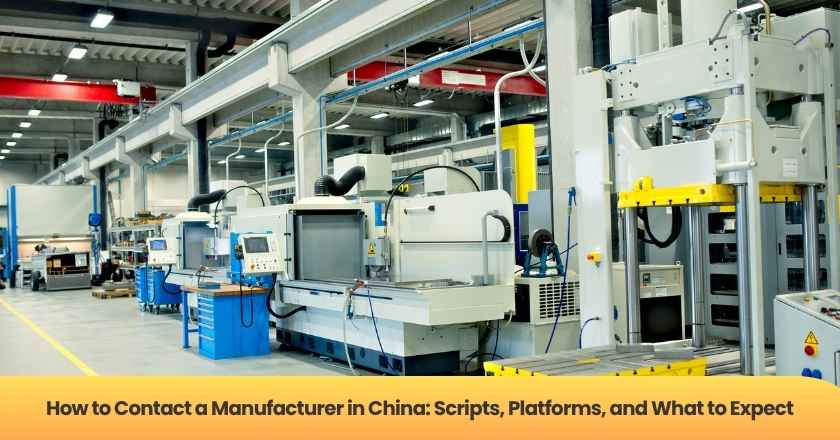
You send ten inquiries to Chinese factories and hear back from three, two of which clearly didn't read your message. The problem usually isn't the factories — it's the inquiry. A vague "can you make this, what's your price?" signals an inexperienced buyer who may never order, and busy manufacturers triage those to the bottom of the pile.
Contacting a manufacturer in China well is a skill: choosing the right platform, writing a message that marks you as a serious buyer, and knowing what a normal response looks like so you can read the signals. Get the first message right and your reply rate, and your leverage, both climb. If you'd rather have someone fluent handle outreach, supplier communication, and the day-to-day sourcing process for you, NewBuyingAgent is the ideal partner to help you source reliably and efficiently from China.
Key Takeaways
• A detailed, specific first message marks you as a serious buyer and dramatically raises your reply rate.
• Choose the contact channel to fit the stage — platforms for discovery, email for formal quotes, WeChat for fast back-and-forth.
• Treat a quick "yes to everything" with caution, since vague agreement often hides a problem the factory won't state directly.
• Expect a normal rhythm: inquiry, clarifying questions, quote, sample discussion — silence or instant agreement are both warning signs.
• Verify any promising manufacturer before sampling, regardless of how responsive or polished the contact feels.
Choosing the Right Platform and Channel
Where and how you reach a manufacturer shapes the response you get. Each channel suits a different stage of the relationship, and using the wrong one — a formal RFQ over a chat app, or casual questions on a platform inbox — creates friction. Match the channel to the moment.
Discovery platforms
B2B marketplaces and trade directories are where most first contact happens, and their messaging systems are fine for initial inquiries. Just remember these inboxes are crowded, so your message competes with hundreds. A platform message is a starting point, not a relationship.
Email for formal communication
Once a manufacturer responds, email is the standard channel for formal quotes, specs, and documents. It creates a written record, which matters when you reference an agreement later. Keep your spec and RFQ (Request for Quotation — the document describing exactly what you need so suppliers can quote accurately) in email rather than disappearing chat threads.
WeChat and instant messaging
Chinese factories run much of their daily business on WeChat, and moving onto it signals you're serious and reachable. It's ideal for quick questions and real-time back-and-forth across time zones. Keep important commitments in email too, since chat messages are easy to lose in a dispute.
Expert Tip: When a manufacturer's sales rep asks to move the conversation to WeChat, take it as a positive signal and go — but keep every binding detail mirrored in email. WeChat is where the real, fast relationship happens with Chinese factories, and staying only on a platform inbox can mark you as a tentative buyer. The discipline is to negotiate freely on chat for speed, then confirm the agreed spec, price, and terms in a written email both sides can reference if a dispute arises months later.
Writing a First Message That Gets a Reply
Your opening message does more screening than any later step, in both directions: it tells the factory whether you're worth prioritizing, and their reply tells you whether they can actually make your product. A specific, professional inquiry is the single highest-leverage thing you control.
What a strong inquiry includes
Lead with exactly what you need: product, materials, key specs, target quantity, and your timeline. Specificity signals you're a real buyer who will order, not a tire-kicker. A factory reading a detailed inquiry treats it as a genuine opportunity and replies accordingly.
A first-contact script
A clear opening message might read along these lines, adapted to your product:
Subject: RFQ — [Product], [quantity] units, recurring orders
Message: Hello, we are a [country] company sourcing [product]. We need [quantity] units to the following spec: [material, dimensions, key requirements, packaging]. Please confirm whether you manufacture this in-house, your FOB price, MOQ, lead time, and which certifications you hold for it. We plan to place a sample order first, then recurring volume. Thank you.
Why this works
It states volume and intent, asks whether they manufacture in-house, and requests the specifics that matter — marking you as informed. The question about in-house production also quietly filters trading companies, who tend to dodge it. You learn something from who answers cleanly and who doesn't.
Common Mistake to Avoid: Opening with "What is your best price?" and nothing else. Without a spec, quantity, or sign of real intent, that message reads exactly like the hundreds of low-quality inquiries factories ignore or answer with a meaningless throwaway number. You've signaled you're not a serious buyer, and you've given the factory nothing to quote against. Lead with detailed requirements and clear volume instead — it's the difference between landing in the priority pile and the spam folder.
What to Expect in Their Response
Knowing the normal rhythm of a manufacturer's reply lets you read the signals — which responses indicate a capable, interested factory and which hint at a reseller or a problem. The pattern of the exchange tells you nearly as much as the content.
The normal sequence
A typical exchange runs: acknowledgment, clarifying questions about your spec, a quote with FOB price and MOQ (Minimum Order Quantity — the smallest batch they'll produce), then a sample discussion. A factory asking sensible clarifying questions is usually a good sign — it means they're engaging with production reality, not just sending a generic price.
Reading response time and quality
Reasonably prompt, detailed replies that address your specific questions signal a professional operation. Replies that ignore your questions and push a catalog, or that take weeks, signal either disinterest or a middleman forwarding your message elsewhere. Quality of engagement matters more than raw speed.
Decoding the polite 'yes'
In Chinese business culture, a flat "no" is often considered impolite, so a factory may answer "yes, no problem" to mean "I heard you." Treat enthusiastic agreement to everything as a prompt to confirm with specific, closed questions rather than as a green light. Watch whether the answers stay concrete.
Expert Tip: Plant one specific, closed technical question in your follow-up and watch how it's answered. Instead of "Can you do this?" ask "Can you hold a ±0.5mm tolerance on this part at 10,000 units — yes or no, and what's your typical defect rate?" A real manufacturer gives you a concrete, slightly cautious answer grounded in its actual process. A reseller, or a factory overpromising to win you, gives a breezy "yes, no problem." The texture of that one answer reveals more than a dozen friendly exchanges.
Moving from Contact to a Real Relationship
First contact is only the opening. Turning a responsive inquiry into a working relationship means advancing through verification, sampling, and terms without losing momentum or skipping the checks that protect you. This is where many buyers either rush or stall.
Verify before you invest
Before sampling, confirm the manufacturer is real: business license, production scope, export records, and a live floor walkthrough. A responsive, friendly contact tells you nothing about capability or legitimacy. Keep the warmth of the relationship separate from the verification of the facts.
Request and pay for samples
Move to a sample once a factory looks credible, and write a clear spec for it to be judged against. Expect to pay sample and possibly tooling costs — a factory giving everything away free can be a warning sign as much as a generous one. Treat the sample as the next filter.
Keep leverage until terms are set
Your leverage is highest before the deposit, so settle price, payment structure, lead time, and inspection rights while the factory is still earning your business. A 30% deposit with the balance on a passed inspection keeps money tied to acceptable goods.
Common Mistake to Avoid: Letting a warm, fast-replying sales contact talk you past the verification step because the rapport feels reassuring. Friendly, responsive communication is pleasant and easy to mistake for trustworthiness, but it says nothing about whether the company owns a factory or can hold your tolerances. Plenty of charming contacts represent trading companies or workshops that can't deliver at volume. Run the license check, the technical question, and the floor walkthrough regardless of how good the conversation feels.
Communicating Effectively in 2026
Beyond the first message, the way you communicate over the life of the relationship shapes your pricing, priority, and quality. A few habits separate buyers factories take seriously from those they treat as disposable. These compound over repeat orders.
Write for clarity across the language gap
Use short sentences, concrete numbers instead of adjectives, and drawings or annotated photos where words get fuzzy. “Make it sturdy” becomes “use 3mm steel, minimum.” The plainer and more visual your communication, the smaller the gap between what you meant and what gets made.
Use remote tools
Video walkthroughs, digital sample reviews, and shared records are standard in 2026, letting you build a real relationship without traveling. A scheduled video call early on signals seriousness and lets you read a supplier far better than email alone. Remote no longer means distant.
Be the buyer factories prioritize
Factories give better pricing, faster turnaround, and first call on capacity to buyers who communicate clearly, pay on agreed terms, and don't change the spec mid-run. Being predictable and professional is itself a negotiating advantage. The relationship is an asset that pays off across every reorder.
Expert Tip: Early in a relationship, schedule one short video call rather than relying solely on text, even if the factory's English is limited. Seeing the person, hearing how they discuss your product, and watching them pull up your spec on screen tells you things a polished email thread hides — whether they actually understand the product, whether they're at a real facility, and how they handle a question they didn't expect. The call costs twenty minutes and routinely surfaces a mismatch that would otherwise only appear after you'd ordered.
Frequently Asked Questions
What's the best way to first contact a manufacturer in China?
Start through a B2B platform's messaging system or email with a detailed inquiry: product, specs, target quantity, timeline, and a question about whether they manufacture in-house. Specificity marks you as a serious buyer and raises your reply rate. Once they respond, email handles formal quotes while WeChat suits fast back-and-forth — match the channel to the stage.
Why am I not getting replies from China factories?
Usually because the inquiry is too vague. A bare “what's your price?” with no spec, quantity, or sign of intent reads like the low-quality messages factories ignore. Lead with detailed requirements, realistic volume, and a note that you plan to sample then reorder. A professional, specific message moves you from the spam pile into the priority queue.
Should I use WeChat to talk to suppliers?
Yes, once a relationship starts — Chinese factories run much of their daily business on WeChat, and moving onto it signals you're a serious, reachable buyer. It's ideal for quick questions and real-time discussion across time zones. Just mirror any binding commitments — spec, price, terms — in email too, since chat messages are easy to lose in a later dispute.
What does it mean if a factory says yes to everything?
Often that they're being polite rather than confirming capability. A flat “no” is frequently seen as impolite in Chinese business culture, so reluctance shows up as vague agreement. Treat “yes, no problem” as “message received” and confirm with specific, closed questions. Watching whether the answers stay concrete tells you what the agreement is really worth.
How long should I expect to wait for a quote?
A professional manufacturer typically acknowledges within a day or two and provides a quote within several days, often after asking clarifying questions about your spec. Replies that take weeks, or that ignore your questions and push a generic catalog, signal disinterest or a middleman forwarding your message. Engagement quality matters more than raw speed when judging the response.
Conclusion
Getting a manufacturer in China to take you seriously starts with one well-built message: specific product, real volume, the right questions, on the right channel. Read their reply for engagement rather than just price, decode the polite “yes,” and verify before you sample. Do that and your reply rate, your leverage, and your relationships all improve from the first contact. If you'd rather hand the outreach and the bilingual back-and-forth to someone who does it daily, that's part of what NewBuyingAgent offers. Its team removes the language, region, and time-zone barriers entirely, managing factory communication across 50,000+ partners so multi-category buyers reclaim their time.
NewBuyingAgent
Related Resources
Get Started Today
Let's Turn Your Sourcing Goals into RealityWeChat:+86 15157124615
WhatsApp:+86 15157124615
Address:Building 10 #39 Xiangyuan Road, Hangzhou, China
