Introduction
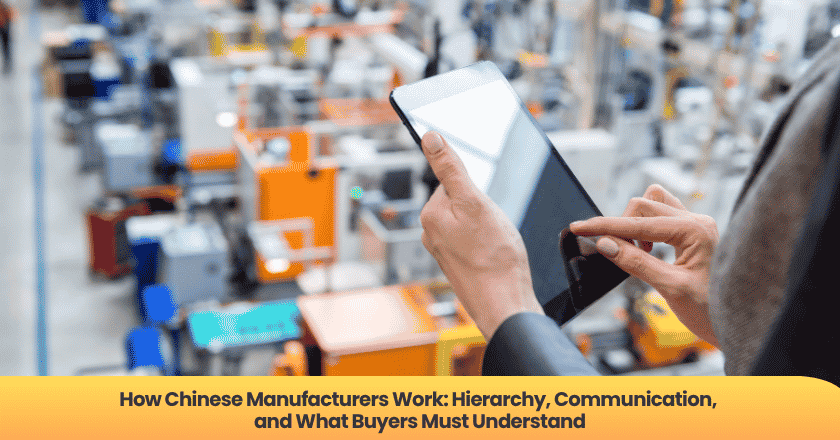
Place an order with a factory in Shenzhen and you are not really dealing with one company. You are dealing with a sales rep, a production manager, a quality lead, a boss who signs off on pricing, and sometimes a separate trading house that sits between you and the people holding the tools. Each of them has a different incentive, a different level of authority, and a very different idea of what “yes” means.
Buyers who treat a Chinese supplier as a single voice on the other end of an email tend to get burned. Prices drift. Lead times slip. A spec you confirmed twice somehow changes on the production line. None of this is random. It tracks the internal structure of how Chinese manufacturers in china organize labor, authority, and information.
Knowing that structure is the difference between an order that lands clean and one that turns into a month of firefighting. The sections below break down who actually does what inside a Chinese factory, how decisions travel up and back down the chain, and the communication habits that protect your money.
Key Takeaways
• A Chinese factory is a layered organization, so the sales contact you email rarely holds the authority to approve pricing, materials, or schedule changes without sign-off from owners above them.
• Decisions flow upward to the boss and back down to the floor, meaning a confirmed detail can still shift unless it is documented, drawn, and tied to your purchase order in writing.
• Trading companies and real factories both have a place, but mixing them up without knowing which you are talking to distorts pricing, lead times, and your ability to control quality directly.
• Communication failures usually come from structure and incentive gaps rather than dishonesty, so clear specs, written confirmations, and patience with the chain prevent most costly production surprises.
• Building trust over repeat orders unlocks better cooperation, faster responses, and pricing that first-time buyers never see, because factories reward partners who behave like long-term accounts.
The Layered Structure Inside a Chinese Factory
A mid-size Chinese manufacturer is not flat. It runs on clear vertical layers, and each layer guards its own slice of authority. When you understand the layers, the strange delays and the sudden “let me check with the boss” replies start to make sense.
Who Sits at the Top
At the top is the owner, often called the laoban (the boss). In most small and mid-size factories this person controls pricing, major investment, and any deal that affects margin. The boss may never appear in your emails, but every meaningful concession passes through them. Real talk: if your price negotiation stalls, it usually means your request has reached the laoban and the answer is still being weighed.
Below the owner you often find a general manager or a factory director who runs daily operations. This person translates the boss's goals into production reality. They care about throughput, worker scheduling, and keeping machines busy. They rarely want to talk to overseas buyers directly, which is why you almost never reach them.
The Middle Layer That Runs Your Order
Your order lives with production managers, line supervisors, and a quality control team. The production manager decides where your job fits in the queue. A small first order from a new buyer often sits behind larger repeat accounts, which is one reason new buyers wait longer than they expect.
Quality control (the team that checks whether goods meet your spec) is its own function with its own pressures. In many factories QC reports to production, not to an independent boss, so there is a built-in tension between shipping fast and shipping perfectly. Knowing that tension exists tells you why an outside inspection step is worth the cost.
Expert Tip: Ask early whether QC reports to the production manager or to the owner. An independent QC line inside the factory is a strong signal that the supplier takes consistency seriously, before you ever pay for a third-party inspection.
Sales Reps, Trading Companies, and the Person You Actually Email
The friendly English-speaking contact who answers within an hour is almost never the person making your product. Understanding who they are, and who they answer to, changes how you read every message they send.
The Sales Rep's Real Role
Your sales contact is a relay. They carry your questions up the chain and carry answers back down. They are measured on closing orders and keeping buyers happy, not on the technical truth of every promise. That gap is why a rep may say “no problem” to a tricky request and then go quiet for three days while the factory works out that it is, in fact, a problem.
This is not usually dishonesty. The short answer is that the rep wants to keep you engaged while the real decision happens above them. Read enthusiasm as a starting position, not a confirmation. A promise becomes real only when it is written into a purchase order or a signed spec sheet.
Factory or Trading Company?
Some of your contacts work for the factory. Others work for a trading company (a middleman firm that resells factory goods without owning machines). Both models are legitimate. A good trading company adds value through language skills, consolidation, and access to many factories. A weak one simply adds margin and a layer of distance between you and quality control.
The practical risk is not knowing which one you have. A trading company quoting OEM (original equipment manufacturer, meaning the factory builds to your design) work may be passing your drawings to a plant you never see. That extra layer can blur accountability when something goes wrong on the line.
Common Mistake: Assuming a slick website and a large catalog means you are talking to the factory. Broad product ranges across unrelated categories often signal a trading company. Ask to see the production site or a business license that matches the goods you are buying.
How Decisions Travel Up and Back Down
Authority in a Chinese factory moves in a loop. Your request goes up to whoever can approve it, a decision forms, and the answer comes back down through the same people who passed it along. The loop takes time, and rushing it rarely speeds it up.
Why “Yes” Is Not Always Final
When a sales rep agrees to a change, they may be agreeing in principle while the owner has not yet signed off on cost. A material swap, a tighter tolerance, or a faster ship date all touch margin or capacity, so they need approval from above. Until that approval lands, what you heard was intent, not commitment.
This is why experienced buyers confirm everything twice and put the final version in writing. A detail spoken on a call can evaporate by the time it reaches the production floor. A detail written into the order, with a drawing attached, survives the trip up and back down the chain.
The Role of Guanxi and Trust
Relationships, often described through the idea of guanxi (long-term mutual trust and obligation), shape how fast that loop moves for you. A first-time buyer sits at the back of the line. A buyer with three clean repeat orders gets faster answers, better pricing, and the benefit of the doubt when a spec is ambiguous.
Trust is not bought with a single large order. It is built through reliable payment, clear specs, and reasonable behavior over time. Factories quietly rank their accounts, and the buyers near the top get cooperation that newcomers cannot access at any price.
Communication Habits That Protect Your Orders
Most order disasters trace back to communication, not malice. The factory did what it understood you to mean. The fix is rarely louder emails. It is clearer structure, tighter documentation, and respect for how the chain processes information.
Write Specs the Factory Cannot Misread
Vague specs get filled in by whoever is on the line that day, and their default is the cheapest compliant option. Pin down materials, dimensions, tolerances, colors by reference code, packaging, and labeling. Attach drawings and photos. A spec that leaves room for interpretation will be interpreted in the factory's favor, not yours.
Set your MOQ (minimum order quantity, the smallest batch a factory will run) and your AQL (acceptable quality limit, the defect threshold for passing an inspection) in writing before production starts. These two terms decide cost and quality more than almost anything else, and leaving them loose invites disputes later.
Confirm in Writing, Then Confirm Again
Follow every call or chat with a written summary the contact can forward up the chain. This gives the boss and production manager a single reference instead of a memory of a conversation they were never part of. Worth knowing: a clear written recap often reaches three people who never spoke to you directly.
Numbered purchase orders, signed spec sheets, and dated revisions create a paper trail that survives staff turnover and language gaps. When a question comes up on the floor six weeks later, the document answers it. Your memory of a phone call does not.
Expert Tip: Send a short written recap after every meaningful conversation, even when the call felt clear. The recap is not for you. It is the artifact that travels up to the owner and down to the line, keeping everyone aligned on the same version of the order.
Timing, Lead Times, and the Production Calendar
A Chinese factory runs on its own rhythm, and that rhythm does not bend around your launch date. Reading the calendar correctly keeps you from promising your own customers dates the factory was never going to hit.
The Queue You Cannot See
Your order joins a queue shaped by other buyers, raw material availability, and machine scheduling. A quoted lead time assumes everything goes smoothly and that your job holds its place. New accounts and small orders are the easiest to bump when a larger client pushes in. Build a buffer into every date you pass downstream.
Chinese New Year reshapes the entire calendar. Factories slow for weeks around the holiday as workers travel home, and capacity stays tight for a stretch afterward as staff return at uneven rates. Orders placed close to that window need extra runway, and by 2026 many buyers plan their first-half production specifically around it.
Technology Is Changing the Tempo
The communication picture is shifting. Through 2026, more Chinese manufacturers run digital factory management and AI-assisted quoting, which trims the back-and-forth on standard items and surfaces production status faster than the old email-and-wait routine. Smaller plants still lag, so the gap between digitized and traditional suppliers is widening.
This matters for how you choose partners. A supplier with real-time production tracking shortens the decision loop because status no longer depends on a sales rep finding time to ask the floor. The structure is the same, but the information moves faster, and faster information means fewer surprises.
Reaching the Factories You Cannot Access Alone with NewBuyingAgent
Once businesses understand how layered and guarded Chinese factory supply chains truly are, the value of an established local sourcing partner becomes clear. NewBuyingAgent serves as an ideal partner for global sourcing from China, backed by 30 years of professional expertise in trade, manufacturing and quality control. Its long-standing industry presence breaks through rigid factory hierarchies to unlock inaccessible supply resources. The platform offers access to over 50,000 cooperating partner factories with no language, regional or time zone barriers. Its outstanding local reputation ensures full cooperation from factory teams. Thanks to widespread on-site recognition and trust built over the years, client demands are delivered to the proper management level efficiently without being blocked by ordinary sales staff. NewBuyingAgent takes full charge of all factory communication, making its services perfectly suited for multi-category buyers. It enables clients to free up substantial time to focus on expanding local market sales.. Contact now.
Frequently Asked Questions
Who actually makes pricing decisions inside a Chinese factory?
The owner, often called the laoban, controls pricing and any concession that affects margin. Your sales contact relays requests upward but rarely holds that authority alone. When a price negotiation stalls, it usually means the decision has reached the owner and is still being weighed above the sales desk.
How do I tell a real factory from a trading company?
Watch the product range first. A genuine factory tends to specialize in related goods, while a very broad catalog across unrelated categories often points to a trading company. Ask to see the production site, request a business license that matches your goods, and confirm who controls quality control on the line.
Why does a Chinese supplier say yes and then change the answer?
A sales rep frequently agrees in principle before the owner signs off on cost or capacity. The first yes signals intent, not a final commitment. The change appears once the request travels up the chain and the real margin or scheduling impact becomes clear to the people with approval authority.
How important is trust when working with Chinese manufacturers?
Trust, often framed as guanxi, shapes how quickly factories respond and how flexible they become. First-time buyers wait at the back of the queue, while reliable repeat accounts unlock faster answers and better pricing. You build it through clear specs, dependable payment, and reasonable behavior across several orders.
What should I always put in writing before production starts?
Lock down materials, dimensions, tolerances, colors by reference code, packaging, and labeling, along with your MOQ and AQL. Attach drawings and photos to remove guesswork. A numbered purchase order and a signed spec sheet create a paper trail that survives staff turnover, language gaps, and the long trip down to the floor.
How do Chinese New Year and 2026 tech trends affect lead times?
Factories slow for weeks around Chinese New Year as workers travel home, so plan extra runway around that window. Through 2026, more suppliers run digital management and AI-assisted quoting, which speeds standard quotes and status updates. The internal hierarchy stays the same, but information now moves faster between layers.
Conclusion
A Chinese manufacturer is a chain of people, each with a defined slice of authority and a different reason to say yes. The sales rep who answers fast is a relay, not a decision-maker. The owner who approves your price may never send you a single message. The production manager who controls your place in the queue is weighing your small first order against a stack of larger accounts. Once you see those layers clearly, the delays and the shifting answers stop feeling personal and start looking like a system you can work with.
The buyers who succeed are not the ones who push hardest. They are the ones who write specs no one can misread, confirm every detail in writing, respect the time the chain needs, and earn trust over repeat orders until the factory treats them like a partner worth protecting. Get the structure right and the rest of sourcing gets dramatically easier, leaving you free to grow the business that all this effort is meant to serve.
NewBuyingAgent
Related Resources
Get Started Today
Let's Turn Your Sourcing Goals into RealityWeChat:+86 15157124615
WhatsApp:+86 15157124615
Address:Building 10 #39 Xiangyuan Road, Hangzhou, China