

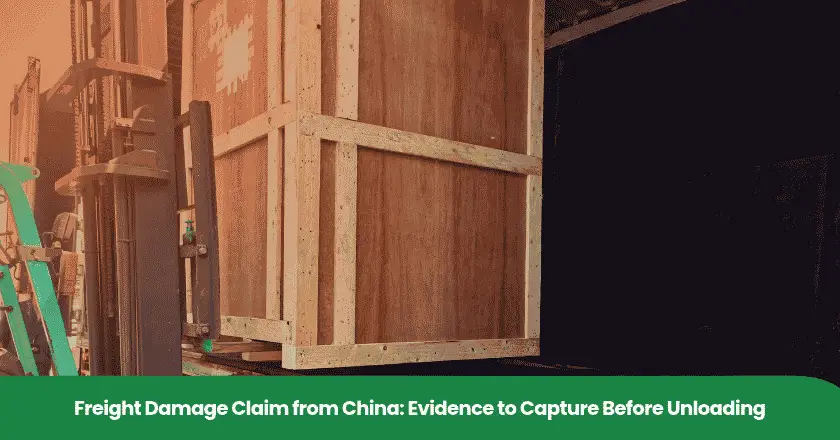
A freight damage claim is a request for recovery for cargo loss or damage under an applicable carriage contract or insurance policy. It is distinct from the first notice that an incident has occurred.
Before unloading, record the shipment identity, container and seal details, external condition, delivery time and receiving location. At the first safe opening, photograph the cargo in its original position before moving affected packages. Notify the relevant carrier, logistics party and cargo insurer promptly, where applicable; do not wait for a completed damage count or monetary claim to report the incident.
Preserve the condition before the evidence changes
The strongest receiving record connects the arriving shipment to the damage observed and the handling that followed. Capture what is visible before opening, what becomes visible during safe unloading and what controlled inspection later establishes. Keep the original files and packaging where safe, and record any necessary changes. Photographs support an investigation; they do not alone prove who caused the damage or what will be paid.
- How it works: connect arrival, cargo-position and unit-level evidence with shipment references.
- Risk: moving, repacking or discarding goods can remove useful context.
- Timeline: check actual notice, claim-document and legal deadlines separately.
- Decision: protect people and prevent further loss while recording what changes.
Record the arrival condition before the cargo moves
Preserve the scene that unloading will change. Identify the shipment and record the exterior, seals, visible exceptions and handover details before opening or moving cargo, wherever safely accessible. Then capture the first safe view of the load in place. That sequence helps distinguish arrival observations from conditions created or discovered later, without pretending that every internal defect can be seen before unloading.
Before arrival, assign the evidence recorder, safe-unloading supervisor and notice sender. Have the transport reference, packing list, expected package count and relevant carrier and insurer contacts ready. Log the observer, date, time, time zone and location for each event to connect photographs and notices.
The IMO/ILO/UNECE CTU Code, chapter 12 recommends checking external condition and the seal reference stated in the transport documents, documenting significant damage and contacting the operator about seal discrepancies. CTU means cargo transport unit, such as a freight container. This is non-mandatory international guidance; the applicable safety rules and transport arrangements still govern the receiving operation.
Comparing arrival observations with origin condition requires shipment-specific product and packing records. For recurring China procurement, NewBuyingAgent’s local China factory resources and product-development and quality-control capability are relevant to defining those origin facts. An unrelated sample photo cannot establish how this order left the factory.
Separate the receiving stages in the record. An external arrival photograph, an in-place cargo photograph and a later product inspection answer different questions. Preserve each at the first safe opportunity and state any stage that could not be observed.
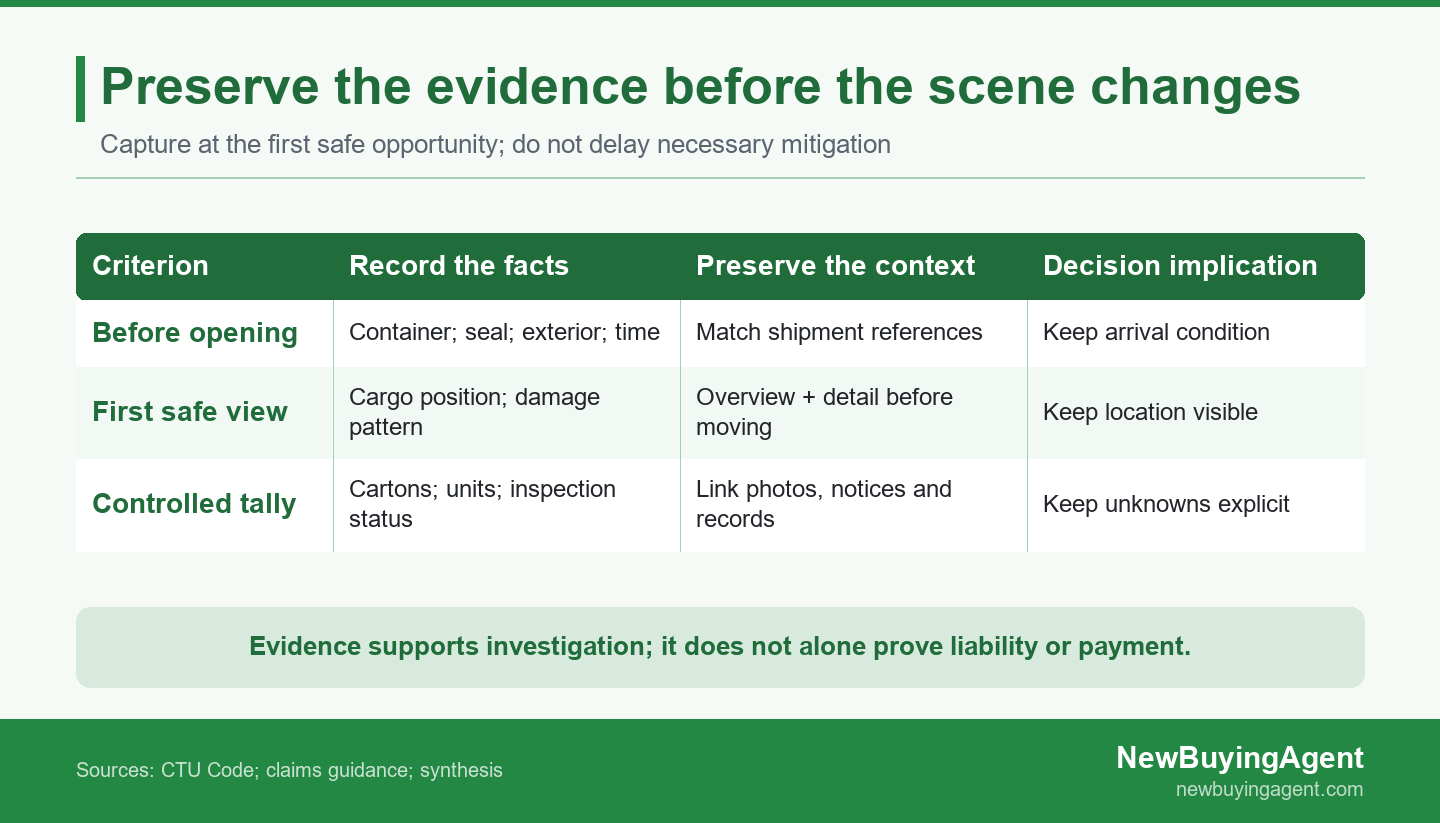
Preserve arrival condition, original cargo position and unit-level findings at the first safe opportunity.
Capture evidence at each safe handover
Use the matrix below to assign the evidence before receiving starts. Add actual filenames, observers and exceptions beside each row. The aim is to retain identities and context, not simply collect many close-ups. Take overview photographs that locate the damage, then details that show its nature. Keep safe access and the receiving site’s handling controls ahead of any photographic target.
Save original image and video files with their available metadata. Keep an index connecting each file to the shipment, package or location. If annotated or compressed copies are needed for a claim portal, retain the originals separately. A written event log should explain the sequence where camera timestamps are missing or inaccurate.
The UK HSE loading and unloading guidance calls for checks that loads have not shifted and will not move or fall when restraints are removed. It also emphasizes advance agreement between companies involved in unloading. These are safety considerations, not claims-filing rules: the receiving supervisor must determine the safe method, equipment and access for the actual load.
| Stage | Record | Keep linked | Purpose |
|---|---|---|---|
| Before opening | Container; seal; exterior | Shipment; time; place | Arrival condition |
| First safe view | Load position; damage | Overview and details | Original location |
| During handling | Removal sequence; changes | Package or pallet ID | Handling history |
| Controlled tally | Cartons; units; findings | Photo and inspection log | Verified extent |
| Notification | Recipient; message; time | Shipment; attachments | Notice record |
| Mitigation | Move; repack; protect | Reason; instruction; cost | Explain changes |
Match the shipment, container and seal before opening
Photograph the container number or other transport-unit identifier and compare it with the delivery records. Record the seal number and visible condition before authorized removal. Capture accessible dents, holes, distorted doors, wet areas or other exceptions with enough surrounding detail to locate them. Do not climb the unit or enter a dangerous area to complete a photo checklist.
If the seal is missing, damaged or different from the recorded reference, note the discrepancy and ask the relevant logistics party for the seal-change and handover records. A mismatch needs investigation; it does not by itself prove theft. Conversely, an apparently intact seal does not establish that the goods inside are sound.
Preserve removed irregular seals where safe and appropriate, recording who removed them and when. Retain available official inspection and resealing records rather than treating an unexplained discrepancy as confirmed tampering.
Show damage in its original position during unloading
Once the receiving supervisor permits safe opening, record the first view before affected packages are moved. Show the load arrangement, visible restraint or bracing condition, affected cartons and their position relative to surrounding goods. Link close-ups of crushing, tears, staining or broken product to an identifiable package. A loose broken item photographed later on a warehouse floor supplies much less location context.
Seatrade’s notice-of-loss form requests photographs showing cargo position and records of delivery and unstuffing, meaning removal from the container. Its instructions call for stopping unloading and contacting the carrier for a survey when damage is discovered. Follow the actual carrier and survey instructions while keeping the operation safe and taking necessary measures to prevent further loss; this form is not a worldwide claims procedure.
Do not reconstruct a supposedly original scene after moving goods. If movement was necessary, record why, who directed it and the before-and-after evidence available. Where an unstable load, suspected harmful atmosphere or leaking dangerous goods creates a hazard, stop routine access and obtain the appropriate trained response.
Record exceptions and the limits of the inspection
Enter specific observed exceptions on the delivery or handover record through the available process. Identify the affected packages, visible condition and any inspection limit. “Several cartons wet; contents not yet inspected” is more informative than an unsupported statement that the entire shipment is destroyed. Keep the signed record or electronic submission and any response from the driver or warehouse.
If the other party will not acknowledge the exception, record that refusal and send a separate written notice to the appropriate recipient promptly. Do not assume a note kept only in an internal warehouse system has reached the carrier or insurer. Preserve the evidence of sending and follow the required channel.
For consolidated cargo or terminal-controlled handling, the buyer may never see the sealed container. Record that access limit, request available deconsolidation and handover records, and document the first condition the receiving team can actually observe. Do not describe later warehouse photographs as evidence taken before terminal unloading.
Notify the right parties while preserving the cargo
Send the first factual notice promptly to the parties required by the shipment’s arrangements, then complete the formal claim through the applicable procedure. Contact the cargo insurer if the shipment is insured and seek survey instructions where damage warrants examination. Keep notification, evidence preservation and safe mitigation moving together; waiting for a final loss figure can leave the receiving incident unreported.
Identify who is entitled or authorized to claim and which carriage contract, transport leg and insurance policy are relevant. The supplier, forwarder, carrier and insurer have different roles. Copying the supplier on an email does not establish that notice has reached every required recipient.
Separate an incident notice from a formal claim
An initial notice reports what happened and asks for the appropriate response, including survey attendance or evidence-preservation instructions. A formal claim may require a monetary demand, authority to claim and further documents. Do not label the first message as the completed claim unless it actually satisfies the relevant requirements. Equally, do not delay that first message while waiting for every supporting invoice.
For U.S. motor-carrier and freight-forwarder claims governed by Part 370, 49 CFR 370.3 requires a written claim identifying the shipment, asserting liability and seeking a specified or determinable amount. A damage notation or inspection report alone is insufficient under that rule. This illustrates the distinction; it does not impose the U.S. filing requirements on every international ocean or air shipment.
Use these fields for an initial incident notice, adapting them to the required form. They are not a substitute for a legally sufficient formal claim:
- Shipment and transport-document references; container or package identifiers.
- Arrival and discovery date, time, time zone and location.
- Observed damage or shortage; known inspection limits.
- Current goods location and receiving contact.
- Available photographs and handover record.
- Request for survey and preservation instructions; further findings to follow.
Arrange the survey and prevent further damage
A survey is an examination documenting cargo condition and evidence for the claim investigation. Ask the insurer or relevant claims contact whether a survey is needed and how affected goods should be held. Preserve packaging and representative evidence where safe. Do not treat an appointment or survey report as acceptance of liability, insurance coverage or the claimed amount.
The Chubb claim instructions hosted by Hapag-Lloyd call for prompt contact with the named insurer or surveyor and preserving condition and packing before the survey, except where changes are required to minimize loss. They also state that a surveyor cannot commit the underwriters. These are instructions for the relevant policy or certificate, so check the shipment’s actual documents rather than borrowing another policy’s conditions.
If wet cargo must be moved under cover or separated to prevent further damage, record the necessity, available instructions, work performed and resulting condition. Photograph changes when safe and retain associated costs. Unsafe goods, contamination and regulated waste require the appropriate specialist or authority response; preserving evidence is not permission to leave a hazard uncontrolled.
Track each actual deadline and responsible party
Make a deadline record for each relevant carrier, logistics party and insurer. Distinguish notice of apparent or concealed damage, submission of claim documents and any time limit for legal action. Record the source clause, trigger event, calculated due date, time zone and person responsible. Do not adopt a familiar concealed-damage period as the rule for every route, transport mode or policy.
Keep acknowledgments, requests for more information and any expressly agreed extensions. A case number or ongoing correspondence does not by itself prove that a deadline has been extended or that responsibility has been accepted. If the applicable terms or timing are unclear, obtain qualified advice promptly while preserving the available facts and notice record.
Reconcile damage, quantities and the proposed claim
Count what arrived, what was inspected and what the inspection found using consistent units. Keep carton damage separate from product damage and from the monetary loss being claimed. A visibly crushed box may contain partly sound goods, while an apparently sound box may conceal damage. The claim file should make those inspection limits visible instead of converting uncertainty into a total-loss figure.
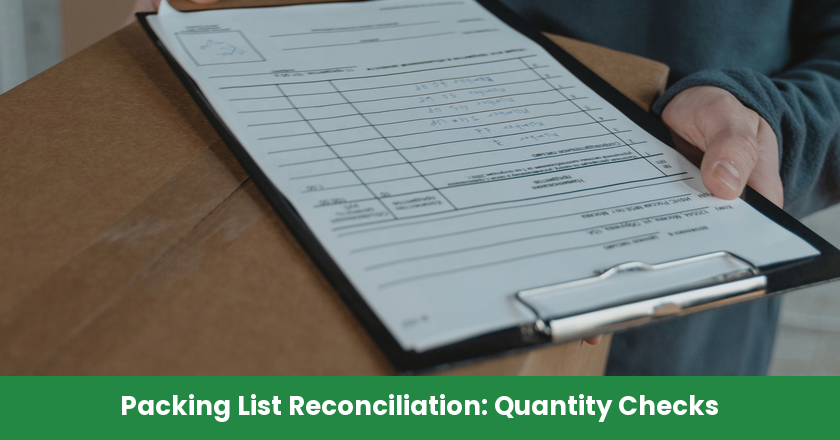
Start with the packing list and actual receiving tally, then connect affected cartons to their product quantities and inspection results. Record shortages separately from damaged goods so the same units are not counted twice. Retain the basis for any later repair, replacement, salvage or disposal proposal.
Follow a damaged-carton example without assuming the cause
In this hypothetical example, a shipment contains 100 cartons with 10 units each. The receiver counts all 100 cartons. At the first safe opening, 8 cartons appear crushed; the other 92 show no external exception. Controlled inspection of the 8 suspect cartons finds 12 damaged units and 68 units with no visible damage. The remaining 920 units have not yet been inspected. None of these observations establishes the cause or an insurer’s payable amount.
The initial suspect group contains 80 units, not 80 confirmed damaged units. Preserve the first-view photographs showing where those cartons sat, their packing materials and the unit-level findings. Report the incident promptly with the known limits, then obtain the relevant survey instructions and complete the outstanding inspection through the safe receiving plan.
| Recorded status | Cartons / units | What it establishes |
|---|---|---|
| Received tally | 100 cartons | Matches expected carton count |
| External exceptions | 8 cartons / 80 units | Suspect group before inspection |
| Confirmed damage | 12 units | Observed in suspect group |
| No visible damage | 68 units | Inspected; stated scope only |
| Not yet inspected | 920 units | Internal condition unresolved |
The inspection statuses reconcile to the expected product quantity: 12 plus 68 plus 920 equals 1,000 units. Keep the receiving count and inspection basis with that calculation. Do not replace the unresolved group with “sound goods,” assert a handling cause from the crushed cartons alone or calculate recovery as the invoice value of every suspect unit.
Build the claim file from connected source records
Organize the file around shipment identity, condition, quantity, claimed amount and correspondence. Include the relevant transport documents and terms, commercial invoice, packing list, delivery record, scene photographs, tally, inspection or survey findings and the notice trail. Add the insurance certificate or policy when claiming under insurance, plus evidence of the claimant’s authority where required.
The Maersk Cargo Insurance claims checklist includes commercial and transport documents, delivery and storekeeper records, and damage photographs. It separates first notification from documented submission and notes that requirements vary by claim. This product-specific checklist does not establish coverage or settlement for another shipment.
Support each proposed amount with its quantity and cost basis. Keep repair estimates, replacement evidence, necessary handling costs and any salvage or disposal decisions separate so they can be assessed under the actual terms. Record approvals and proceeds where relevant, and avoid claiming the same loss twice through overlapping descriptions.
Use the findings to improve the next China order
After preserving the claim evidence, compare the receiving findings with the actual origin packing and product records. Look for a supported explanation before deciding whether to change the carton, insert, pallet arrangement or handling plan. The useful outcome is a specific corrective action and a way to verify it on the next order, rather than an assumption that either the factory or carrier must be at fault.
Keep the claim investigation and repeat-order purchasing decision connected but distinct. A buyer may need revised packaging before the next shipment even while the cause or financial responsibility for the earlier loss remains unresolved.
Compare origin packing evidence with the receiving record
Request the shipment-specific packing specification, product revision, relevant quality records, loading photographs and available handover information. Check that these describe the order in question. An approved packing sample or an image from a previous production run may explain the intended method, but it does not establish that the same method was used for the damaged shipment.
Agreed existing-factory management connects NewBuyingAgent’s supplier communication, production and quality follow-up, and logistics coordination to these origin facts—for example, confirming an insert revision for the next order. Destination surveyors and the appropriate claims parties retain their own responsibilities.
Specify the proposed change and the evidence needed to check it, such as the actual packed product and agreed validation appropriate to the damage mechanism. Do not promise that a stronger box alone eliminates every transport risk.
Include receiving requirements in the purchasing brief
For repeat orders, define the receiving constraints alongside the product and packaging requirements: available unloading equipment, carton or pallet limits, inspection access and the people responsible for exceptions. Confirm who will keep origin records and who will collect destination evidence. Clear responsibilities help the next incident record start with the shipment facts instead of a search for missing files.
When those needs are part of recurring China procurement, share your purchasing requirements with NewBuyingAgent. Include the product and specification, quantities, target price, destination, timing, current supplier and relevant packing or receiving constraints. These inputs support a discussion of product supply or agreed existing-factory management, including the product, quality and logistics requirements for the next order.
Frequently Asked Questions
Does an intact seal prove the cargo was undamaged?
An intact seal does not prove that the internal cargo is undamaged or establish when a hidden defect arose. Record its condition alongside the container and shipment references, then preserve the first safe view and controlled inspection findings. Internal load movement, packaging performance and product condition require their own evidence. Avoid treating a seal photograph as proof either of sound goods or of a particular party’s liability.
What if damage is found only after a clean delivery receipt?
Document the discovery and notify the relevant carrier and insurer promptly, stating when, where and how the damage was found. Preserve the goods, packaging, receipt and inspection evidence, and check the actual concealed-damage notice and claim requirements. A clean receipt can affect the evidence available; do not assume it either guarantees rejection or leaves the claimant’s position unchanged.
What if the terminal or warehouse will not allow inspection?
Record the access restriction, the party controlling the goods and the condition the receiver could actually observe at handover. Request the available unloading, tally and exception records, and seek an inspection opportunity through the appropriate contact. Photograph the first safely accessible condition and identify its timing honestly. Missing pre-unloading access should remain an explicit evidence gap, not be filled by relabeling later photographs.
Should damaged packaging be discarded after taking photos?
Retain relevant packaging and affected goods pending survey or claims instructions where it is safe and lawful to do so. Photographs may not preserve every detail needed for examination. If necessary mitigation, contamination controls or lawful disposal requires a change, document the reason, instructions, material affected and available before-and-after evidence. Keep any required approvals and disposal or salvage records with the claim file.
NewBuyingAgent
Related Resources
Get Started Today
Let's Turn Your Sourcing Goals into RealityWeChat:+86 15157124615
WhatsApp:+86 15157124615
Address:Building 10 #39 Xiangyuan Road, Hangzhou, China
