

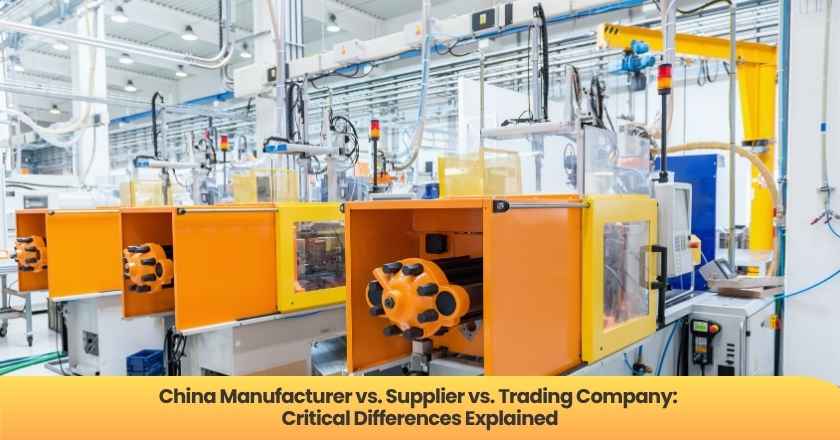
Many buyers use the terms manufacturer, supplier, and trading company interchangeably when sourcing from China. In practice, they are not the same thing—and understanding the difference can have a significant impact on pricing, communication, quality control, and supply chain reliability.
A manufacturer owns and operates production facilities. A trading company typically sources products from multiple factories and sells them under its own business structure. A supplier, meanwhile, is a broader term that can refer to either a manufacturer, a trading company, or another entity that provides goods to buyers.
The challenge is that these distinctions are not always obvious. A trading company may present itself as a factory, a manufacturer may also operate a trading division, and many suppliers use marketing language that makes it difficult for overseas buyers to understand exactly who they are dealing with.
In this guide, we'll break down the critical differences between manufacturers, suppliers, and trading companies in China, explain the advantages and disadvantages of each model, and help you determine which option best fits your sourcing needs.
Key Takeaways
• A manufacturer owns the production line; a trading company resells another factory's output at a markup.
• "Supplier" is a broad umbrella term — it tells you nothing about whether you're dealing with a factory or a middleman.
• Buying direct from a manufacturer usually means better pricing, cleaner communication, and clearer accountability.
• Trading companies aren't always wrong — they can simplify multi-category or very small orders — but you must know you're using one.
• You can identify each type through the business license, technical questions, and a live floor walkthrough.
Defining the Three: What Each Actually Is
The confusion starts with loose language, so precision is the fix. Each term describes a specific role in how goods reach you, and the differences are concrete, not academic. Get the definitions straight and the rest of the decision follows naturally.
The manufacturer
A manufacturer owns the factory and physically makes the product. When you buy from one, you're dealing directly with the company that controls production, quality, and cost. This is the source — there's no one between you and the line, which is what makes direct manufacturing relationships valuable.
The trading company
A trading company buys from factories and resells to you, taking a margin for the service. It doesn't own production; it brokers it. Some are transparent intermediaries that add real value; others present themselves as factories to capture a markup you didn't know you were paying.
The supplier
"Supplier" is simply anyone who supplies you goods — it can be a manufacturer, a trading company, or a distributor. The word describes the transaction, not the type. Because it's an umbrella term, calling someone your "supplier" tells you nothing about whether you’re buying at the source or through a middleman.
Expert Tip: Don't let a company's name decide the question for you. Plenty of trading companies include "factory," "manufacturing," or “industrial” in their registered name, and plenty of genuine manufacturers have generic-sounding trade names. The name is marketing; the business license, production scope, and a live look at the floor are the facts. Treat the label a company gives itself as a claim to verify, never as the answer to whether it actually owns a production line.
How the Differences Hit Your Price
The most immediate effect of the three types is on what you pay. A margin you can't see is still a margin you fund, and over repeat orders it compounds. Understanding where the money goes in each relationship is the clearest reason to know who you're dealing with.
Direct from the manufacturer
Buying direct means the factory's price is the price, with no reseller margin layered on. You also negotiate FOB (Free On Board — the cost of goods loaded onto the vessel at the Chinese port, before freight and insurance) terms straight with the source. For a single product line at reasonable volume, this usually delivers the best unit cost.
Through a trading company
A trading company's margin is built into the unit price you’re quoted, often invisibly. You might pay more than the factory charges without ever seeing the gap. The markup can be modest and fair for genuine service, or significant and hidden — and you can’t tell which without knowing you’re dealing with a trader.
When the markup is worth it
A trading company's margin can be justified when it consolidates many products, handles tiny volumes a factory won’t entertain, or manages categories you couldn’t source alone. The cost buys real convenience. The problem is paying that margin while believing you’re buying direct, which is value you’re not receiving.
Common Mistake to Avoid: Negotiating hard for a "direct factory price" from a company that's actually a trading company. You can squeeze the quote all you like, but you're negotiating against a margin you can't see, and the trader simply protects it by adjusting what they pay the factory or cutting material quality. You feel like you won; the real factory price is still hidden from you. Confirm the company is the actual manufacturer before assuming your negotiation is reaching the true source cost.
How They Affect Quality and Accountability
Price is visible eventually; the quality and accountability differences are subtler and often more costly. When production sits behind an intermediary, your ability to control and enforce quality changes fundamentally. This is where the type of company matters most over the life of a relationship.
Control over production
With a manufacturer, your spec and your QC (Quality Control — the inspection steps that catch defects during and after production) requirements reach the people actually making the goods. With a trading company, your instructions pass through a middleman to a factory you may never identify, and detail gets lost at each handoff.
Who answers when it goes wrong
A manufacturer is directly accountable for defects — they made the goods. A trading company can deflect, blaming a factory it controls no better than you do. When a batch fails, the broken chain of accountability is exactly when you discover the intermediary can't actually fix the problem.
Inspection access
Inspecting a manufacturer's line against your golden sample is straightforward. With a trading company that hides its factory, arranging a during-production inspection is harder, sometimes impossible. If you can’t reach the line, you can't catch a defect before it ships — the costliest gap in remote sourcing.
Expert Tip: If a company resists letting your inspector visit the production line, treat it as a strong signal you're dealing with a trading company, not a manufacturer. A genuine factory has its line right there and is usually willing to show it. A trader has to arrange access to a plant it doesn't own, and may stall, make excuses, or offer only a "warehouse" visit. Your inspector's ability to stand on the actual production floor is one of the clearest practical tests of which type you're really working with.
How to Identify Which One You're Dealing With
The good news is that telling the three apart is a matter of a few concrete checks, not guesswork. Each test is cheap and quick, and together they reliably reveal whether you’re at the source or behind a middleman. Run them before you commit, not after.
Read the business license
Request the business license and read the registered scope. A manufacturer's scope names production of your product category; a trading company's names wholesale, trade, or import-export. This single document, read properly, is the most reliable first filter between the two.
Ask a hard technical question
Pose a specific technical question about your product — a tolerance, a material grade, a process. A manufacturer answers directly from production knowledge; a trading company gives a vague reply or needs to "check with the factory." The depth of the answer maps closely to whether they actually make the goods.
See the floor and check export records
Request a live, unedited walkthrough of the production line, and cross-reference export records. A real manufacturer shows the line making your kind of product and has a shipping history to match. A company that can’t show a floor or has no production trail is almost certainly a trader.
Common Mistake to Avoid: Accepting a "verified supplier" or gold badge on a B2B platform as proof you're dealing with a manufacturer. Those badges generally confirm only that a company paid for membership and uploaded documents — not that it owns a factory. Trading companies carry the same badges as manufacturers. Buyers who let the badge replace the license check, the technical question, and the floor walkthrough routinely discover after ordering that their "verified manufacturer" was a reseller all along. The badge verifies membership, not production.
Choosing the Right Type for Your Business in 2026
Knowing the differences is only useful if you choose deliberately. None of the three is universally right — the best fit depends on your product range, volume, and how much you can manage yourself. The goal is a conscious choice, not a relationship you stumbled into.
When to go direct to a manufacturer
For a single product line at reasonable volume, a direct manufacturer relationship usually wins on price, quality control, and accountability. If you can commit to the factory's MOQ (Minimum Order Quantity — the smallest batch it will produce) and manage the relationship, going direct is generally the stronger path.
When a trading company makes sense
If you order across many unrelated products, need very small volumes, or lack the capacity to manage multiple factories, a transparent trading company can be worth its margin. The key word is transparent — chosen knowingly for its convenience, not mistaken for a factory.
The sourcing-agent alternative
A sourcing agent offers a third path: the access and convenience of an intermediary, but working for you on a transparent commission rather than profiting on a hidden markup. For buyers who want direct-factory pricing without managing factories alone, this aligns incentives in a way a trading company structurally can't. It's often the best of both for growing importers.
Expert Tip: Decide which type you want before you start outreach, then screen for it from the first message rather than discovering it after negotiating. If you’ve decided you want a direct manufacturer, lead with the technical question and the floor-walkthrough request, and drop anyone who can't satisfy them early. Buyers who skip this and negotiate first often build a relationship with a trader before realizing it, then feel committed. Knowing your target type upfront turns identification from an afterthought into your opening filter.
Frequently Asked Questions
Is a supplier the same as a manufacturer?
Not necessarily. "Supplier" is an umbrella term for anyone who supplies you goods — it can be a manufacturer, a trading company, or a distributor. Calling a company your supplier says nothing about whether it actually makes your product or resells someone else's. Always confirm the specific type rather than relying on the generic label.
Is it always better to buy from a manufacturer than a trading company?
Usually for a single product line at reasonable volume, since direct buying means better pricing, control, and accountability. But a trading company can be the better choice when you order across many categories, need very small volumes, or can’t manage multiple factories. What matters most is knowing which you’re dealing with and choosing it deliberately rather than by accident.
How can I quickly tell a manufacturer from a trading company?
Check the business license scope, ask a specific technical question, and request a live floor walkthrough. A manufacturer’s license names production of your product, it answers technical questions directly, and it shows you the line. A trading company has a trade-focused scope, deflects technical detail to "the factory," and struggles to show production it doesn’t own.
Are trading companies a scam?
No — a transparent trading company provides a real service by consolidating products, handling small volumes, or managing categories you couldn’t source alone. The problem isn't trading companies; it's paying their margin while believing you're buying direct from a factory. A trader chosen knowingly for its convenience is legitimate; one disguised as a manufacturer is the issue.
How is a sourcing agent different from a trading company?
A sourcing agent works for you on a transparent commission, so it's motivated to get you the factory's best price. A trading company buys and resells, profiting when your cost rises. Both sit between you and the factory, but their incentives are opposite. The agent gives you intermediary convenience with direct-factory alignment, which a trading company structurally cannot.
Conclusion
Manufacturer, supplier, and trading company aren't interchangeable words — they’re three different relationships that shape your price, your quality control, and who answers when an order fails. The manufacturer is the source, the trading company is a reseller, and "supplier" tells you nothing on its own. Identify which you're dealing with through the license, a hard question, and the floor, then choose deliberately.
NewBuyingAgent
Related Resources
Get Started Today
Let's Turn Your Sourcing Goals into RealityWeChat:+86 15157124615
WhatsApp:+86 15157124615
Address:Building 10 #39 Xiangyuan Road, Hangzhou, China
