Yiwu Wholesale Market
Definition and Scale
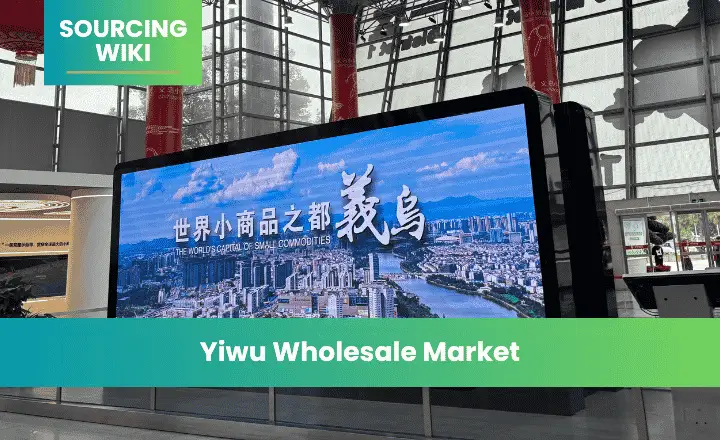
TheYiwu wholesale market is a vast complex of wholesale trading in Yiwu, a city in Zhejiang Province, China, centred on the Yiwu International Trade City, a multi-district market housing tens of thousands of booths across roughly 75,000 stalls.[1] It is widely described as one of the world's largest markets for small commodities, and its defining characteristic is density: an extraordinary concentration of suppliers of low-cost consumer goods within walking distance of one another.
Where this density changes the sourcing math: a buyer who wants 200 phone cases, 300 keychains, 150 kitchen gadgets, and 100 seasonal ornaments would normally need four separate factory relationships, four separate MOQs, and four separate shipments. At Yiwu, all four can come from booths a few minutes' walk apart, combined into a single consolidated shipment — which is precisely what discount retailers, gift importers, and variety stores need and what factory-direct sourcing generally can't offer at this scale of variety.
Product Mix and Buying Rhythm
The market's product mix leans toward small, light, high-variety goods: accessories and jewellery, stationery, toys, household items, decorations, gifts, and seasonal merchandise. Unit values are low, minimum orders are modest by Chinese standards — often a few cartons — and purchase orders frequently combine dozens of different items from different booths.
This shapes a distinct buying rhythm. Much of the merchandise is seasonal, tied to holidays and festivals in destination markets, so buyers work to tight calendars, placing orders well ahead of selling windows to allow for production, consolidation, and ocean transit. Quality expectations are calibrated to the price point: consistency and fitness for purpose, rather than premium construction, define an acceptable order.
Navigating the Market and Buying Effectively
Navigating Yiwu effectively is a skill in itself, because the market's scale makes unaided searching impractical. Booths are organised by product category across districts, but finding the right supplier among thousands of similar offerings, negotiating in Chinese, and coordinating purchases across many stalls leads most overseas buyers to work with local agents.
A typical engagement covers translation and market guidance, negotiation, order collection from multiple booths, inspection and warehousing, and consolidation into a single shipment. Consolidation deserves emphasis: the ability to gather small orders from dozens of suppliers into one container, checked and repacked, is the operational core of Yiwu sourcing and the reason agents there function as much as logistics coordinators as finders of goods.
A Hub in Global Small-Commodity Trade
Within global trade, Yiwu occupies a distinctive niche as the wholesale heart of the low-cost, high-variety segment. Its exports flow disproportionately to emerging markets, discount chains, and online sellers, and its activity is tracked closely enough that observers treat it as a barometer of demand for value goods. The market has also adapted to e-commerce, with many booths supplying online sellers and accepting smaller, faster-turning orders than traditional export practice assumed.
For buyers, the practical lesson is that Yiwu rewards a specific approach: go for breadth and price, plan around seasons, verify quality directly rather than trusting display samples, and use consolidation to make many small purchases behave like one efficient shipment. Buyers should also be realistic about timing: a serious sourcing visit to Yiwu is measured in days rather than hours, and those who arrive with a defined product list, target prices, and a consolidation plan extract far more value from the market than those who browse its districts without a structure.
FAQ
Do I need to visit Yiwu in person, or can I source from it remotely?
Both are common. An in-person visit lets you inspect goods directly and negotiate face to face, while remote buyers typically work through a local agent who visits booths, arranges samples, and manages consolidation on their behalf.
What's the biggest risk of buying at Yiwu compared to buying from a factory directly?
Many booths are traders reselling from factories rather than manufacturers themselves, so pricing may include a markup and customization options are usually limited. This trade-off is generally accepted at Yiwu in exchange for the breadth and low minimums the market offers.
How does order consolidation actually work at Yiwu?
An agent or consolidation service collects goods purchased from multiple booths, inspects and repacks them, and combines everything into a single shipment — turning dozens of small individual purchases into one container rather than dozens of separate small shipments.
Is Yiwu only useful for very small orders?
It's best suited to buyers who want variety across many low-cost items rather than volume in a single product. For a large order of one specific item, a direct factory relationship usually offers better pricing and more customization than sourcing that same item through Yiwu.
Sources & References
[1] China Goods (official platform of Yiwu China Commodities City Group) —Yiwu Market Overview. Accessed August 14, 2026.
Related Knowledge Base
Sourcing Practices & Insights: Yiwu Wholesale Market
Latest Sourcing Guides
Comece hoje
Vamos transformar seus objetivos de compras em realidadeWeChat:+86 15157124615
WhatsApp:+86 15157124615
Endereço: Edifício 10 #39 Xiangyuan Road, Hangzhou, China