

Customs Clearance Process for Importers
Definition and Scope
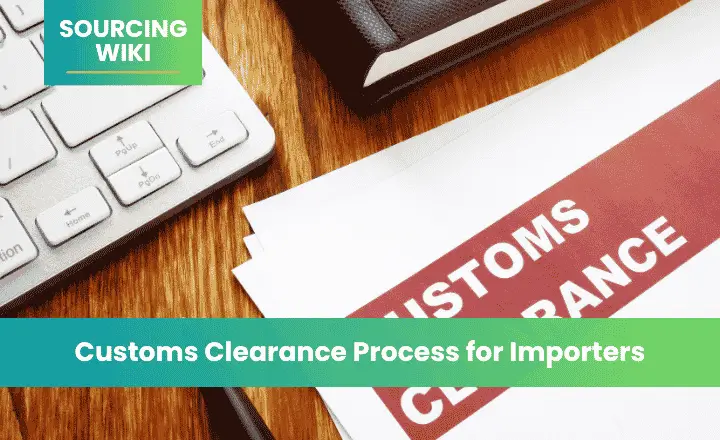
Customs clearance is the process by which an imported shipment is formally declared to customs authorities, reviewed for compliance, and released for delivery once any applicable duties are paid. It sits at the intersection of several document-specific topics already covered elsewhere in this wiki — the Bill of Lading, Commercial Invoice, Packing List, and Certificate of Origin all feed into this single process — but clearance itself is a distinct workflow with its own stages, deadlines, and points of failure. For a buyer who has already arranged freight and is waiting on a shipment, understanding this process end to end is what makes the difference between a shipment that clears smoothly and one that sits accumulating demurrage charges while paperwork gets sorted out.
The Clearance Process, Stage by Stage
Clearance generally unfolds in three stages. It begins with entry filing: the importer or their customs broker submits the shipment's documentation to the customs authority's system, formally notifying them that the goods have arrived (or, for ocean freight, that they will soon arrive) at the port of entry. From there, the customs authority reviews the filed documents and decides whether to clear the shipment outright or hold it for further inspection — this is also the stage at which duties owed on the shipment are calculated and become payable. If the shipment is selected for inspection, that may be a routine random check or one triggered by a specific compliance requirement tied to the type of goods being imported; once inspection is complete (or skipped, if the shipment wasn't selected) and any duties are paid, the goods are released for pickup or onward delivery.
Key Documents and When They're Needed
| Document | Purpose | Typical Timing |
|---|---|---|
| Entry documents / Entry Summary | Formally declares the shipment to customs; used to assess duties and provide shipment data | Filed within a set window after the shipment arrives at the port of entry |
| Commercial Invoice & Packing List | Describes the goods, value, and contents for classification and duty calculation | Filed alongside the entry |
| Bill of Lading | Evidence of the contract of carriage and shipment details | Referenced during entry filing |
| Customs Bond | A financial guarantee to the customs authority that duties will be paid | Required for most formal-entry shipments above a set value threshold |
| Importer Security Filing (for ocean freight) | Provides advance shipment data before the vessel departs the origin port | Filed a set number of hours before the vessel is loaded, well ahead of arrival |
| Partner Government Agency approvals | Additional certifications for regulated goods (food, chemicals, restricted products) | Filed with entry, only if the goods fall under a regulating agency's scope |
Why Clearance Delays Happen — and How to Avoid Them
In practice, clearance delays are rarely caused by missing paperwork alone; they're more often caused by paperwork that is incomplete, inconsistent, or too vague to support proper classification. A product description like "parts" or "accessories" gives customs nothing to classify against, while a description that clearly states what the item is, what it's made of, and how it's used moves through review far more smoothly. Responsibility also needs to be unambiguous from the start: customs cannot finalize an entry if the Importer of Record isn't clearly identified, so this detail should be settled well before a shipment arrives rather than sorted out under time pressure once the free-time clock on demurrage charges has already started running. Because a formal entry may require a customs broker and a bond, and because advance filings like the Importer Security Filing have their own separate deadlines tied to when cargo is loaded — not when it arrives — the practical takeaway for buyers is that customs clearance preparation needs to start well before the shipment reaches port, not after.
FAQ
Who is responsible for filing customs entry documents?
Either the importer of record directly, or a licensed customs broker acting on the importer's behalf. For higher-value or regulated shipments, using a broker is generally required rather than optional.
What's the difference between a formal and informal entry?
An informal entry generally applies to lower-value shipments and involves a simpler process; a formal entry is required above a certain value threshold, or at any value if the goods are controlled or regulated, and typically requires a customs broker and a bond.
What happens if my shipment gets selected for inspection?
It may be a routine random check, or it may relate to a specific compliance requirement tied to the type of goods (for example, products regulated by a food, chemical, or safety agency). The shipment is held at the port until the inspection is complete.
Why do customs delays often lead to demurrage charges?
Because a container generally can't leave the port terminal until it clears customs, and demurrage charges accrue once a container sits at the terminal past its free-time window — so a slow or incomplete customs filing directly eats into that free-time clock.
What is the most common documentation mistake that delays clearance?
Vague or generic product descriptions that don't give customs enough detail to classify the goods correctly. A clear description of what the item is, its material, and its use tends to move through review much faster.
Sources & References
- U.S. Department of Homeland Security / U.S. Customs and Border Protection — official guidance on import entry documentation requirements and filing deadlines: dhs.gov. Accessed August 25, 2026.
Related Knowledge Base
Sourcing Practices & Insights: Customs Clearance Process for Importers
Latest Sourcing Guides


Comece hoje
Vamos transformar seus objetivos de compras em realidadeWeChat:+86 15157124615
WhatsApp:+86 15157124615
Endereço: Edifício 10 #39 Xiangyuan Road, Hangzhou, China
