

MSDS (Material Safety Data Sheet)
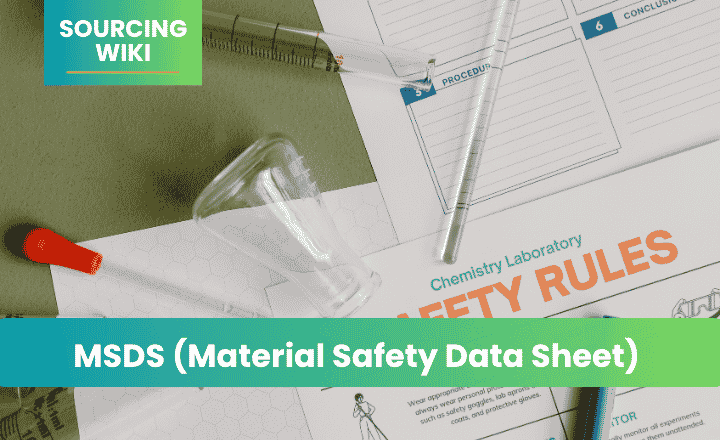
Concept Definition
An MSDS (now officially known as SDS or Safety Data Sheet under the Global Harmonized System) is a technical document provided by manufacturers that details the physical and chemical properties of a product. It serves as a comprehensive guide for the safe handling, storage, transport, and emergency procedures related to "sensitive" or hazardous materials.
In international trade, an MSDS is not just a safety guide; it is a mandatory logistics document. Without a valid and up-to-date MSDS, shipping lines and airlines will refuse to book cargo for any product containing batteries, liquids, powders, or chemicals.
Why an MSDS is Essential for Sourcing
- Shipping Classification: Logistics providers use the MSDS to determine if a product is "Dangerous Goods" (DG) or "Non-Hazardous." This dictates whether your goods can fly on a passenger plane, a freighter, or must go by sea.
- Customs & Port Compliance: Customs authorities and port operators require the MSDS to ensure the goods are declared correctly and stored in safe areas within the terminal.
- Safety & Handling: It provides warehouse workers and couriers with instructions on what to do if a package leaks, catches fire, or is accidentally inhaled or ingested.
- Liability Protection: Having a correct MSDS ensures that the importer is compliant with international safety regulations, reducing the risk of heavy fines or cargo seizures.
Common Products Requiring an MSDS
Many buyers are surprised to learn that "everyday" items require an MSDS for export:
- Electronics: Anything with a Lithium-ion or Lithium-polymer battery (e.g., power banks, Bluetooth headphones, electric scooters).
- Liquids & Gels: Cosmetics, perfumes, essential oils, glues, and cleaning agents.
- Powders: Pigments, certain food additives, and industrial chemicals.
- Compressed Gases: Lighters, aerosol sprays, or fire extinguishers.
Key Sections of an MSDS
A standard SDS consists of 16 sections. For logistics and sourcing, the most critical sections are:
- Section 3 (Composition): Lists the chemical ingredients.
- Section 9 (Physical Properties): Describes the appearance, odor, and pH.
- Section 14 (Transport Information): The most important section for buyers. It lists the UN Number, Hazard Class, and Packing Group. This section tells the freight forwarder exactly how the goods must be handled.
Best Practices for Importers
- Request it Early: Do not wait until the goods are finished. Ask the factory for the MSDS during the quoting or sampling stage. If they cannot provide one, it may be a sign that the factory is not qualified for export.
- Check the Expiry: MSDS documents usually need to be updated annually or every two years (especially for batteries). Ensure the document provided is for the current calendar year.
- Verify the Match: The product name and manufacturer name on the MSDS must match the information on your Commercial Invoice and Packing List exactly. Any discrepancy will lead to the shipping line rejecting the booking.
- Language Requirements: For US and EU imports, the MSDS must be provided in English. Some local authorities may require a version in the destination country's official language.
Related Knowledge Base
Sourcing Practices & Insights: MSDS (Material Safety Data Sheet)
Latest Sourcing Guides



Comienza hoy
Convirtamos tus objetivos de abastecimiento en realidadWeChat:+86 15157124615
WhatsApp:+86 15157124615
Dirección: Edificio 10 #39 Xiangyuan Road, Hangzhou, China
