

A plush toy can look right in the carton and still hide a weak filling opening, a different stuffing lot or a hard eye that comes free under testing. Plush toy quality control should specify where the toy must stay closed, which filling the factory may use and how to assess pieces that can detach or become accessible. The checks below give buyers a way to approve the sample and then decide whether a production lot matches it.
Approve the Build Before Releasing a Plush Toy
Approve a plush toy's seam construction, filling and attachments against the actual production build before release. Record where the seams are tested, which materials and lots went inside the shell, and which parts can detach or become accessible. Use the destination and intended age to identify applicable requirements, then link the results to the finished goods.
- Decision: Select and identify the closure and body seams that need assessment on the finished toy.
- How it works: Match the stuffing material, supplier lot, fill weight and any internal pouch to the approved specification.
- Risk: Stop release if a seam opens during a required test, a relevant component comes free or the batch identity cannot be established.
The federal examples concern U.S. children's toys. Buyer specifications can add workmanship and appearance requirements, such as even fill or a straight closure. Give those checks their own acceptance criteria and record them alongside the applicable safety checks.
Test the Seams That Keep the Toy Closed
Start at the places where the shell has to carry a load or keep its contents inside. Mark the opening used to insert the filling, the body seams and joints around limbs, ears or a tail on the drawing. Ask the lab which locations it will assess under the applicable method, and have it record how each tested specimen behaved.
The CPSC toy safety guidance summarizes ASTM F963 section 4.27 as requiring applicable stuffed and beanbag-type toy seams to resist ripping during testing. This check is additional to other applicable use-and-abuse testing under the toy standard. Ask the lab to identify the applicable methods, which simulate some of the stresses a toy can experience, and the criteria it will use for this construction.
| Location | What to specify | What to record |
|---|---|---|
| Filling closure | Stitch pattern, overlap and end finish. | Opening point and exposure of contents. |
| Body panel seam | Fabric backing, thread and seam allowance. | Fabric tear, broken thread or pullout. |
| Limb or ear joint | Joining layers and reinforcement. | Movement, separation or detached piece. |
Seam allowance is the distance from the stitch line to the cut fabric edge. On a retained engineering sample, check whether the specified allowance and fabric layers are present at the critical joint. A large stitched area can still pull out if a folded section leaves little fabric beyond the stitch line. Keep the signed construction photos and drawing next to the sample.
A failure photo should show more than an open toy. If the stitches remain intact and the fabric pulls out, inspect the cut edge and allowance. If the thread breaks while the backing holds, check the thread, stitching and machine setup. If the fabric tears beside the seam, look at the backing and load path. Treat these observations as leads to investigate before assigning cause.
Use the production method in the sample sent for approval, including the way the factory closes the filling opening. A sample-room hand closure can hide a different bulk process. Match the sample and production operations before setting an in-line screen.
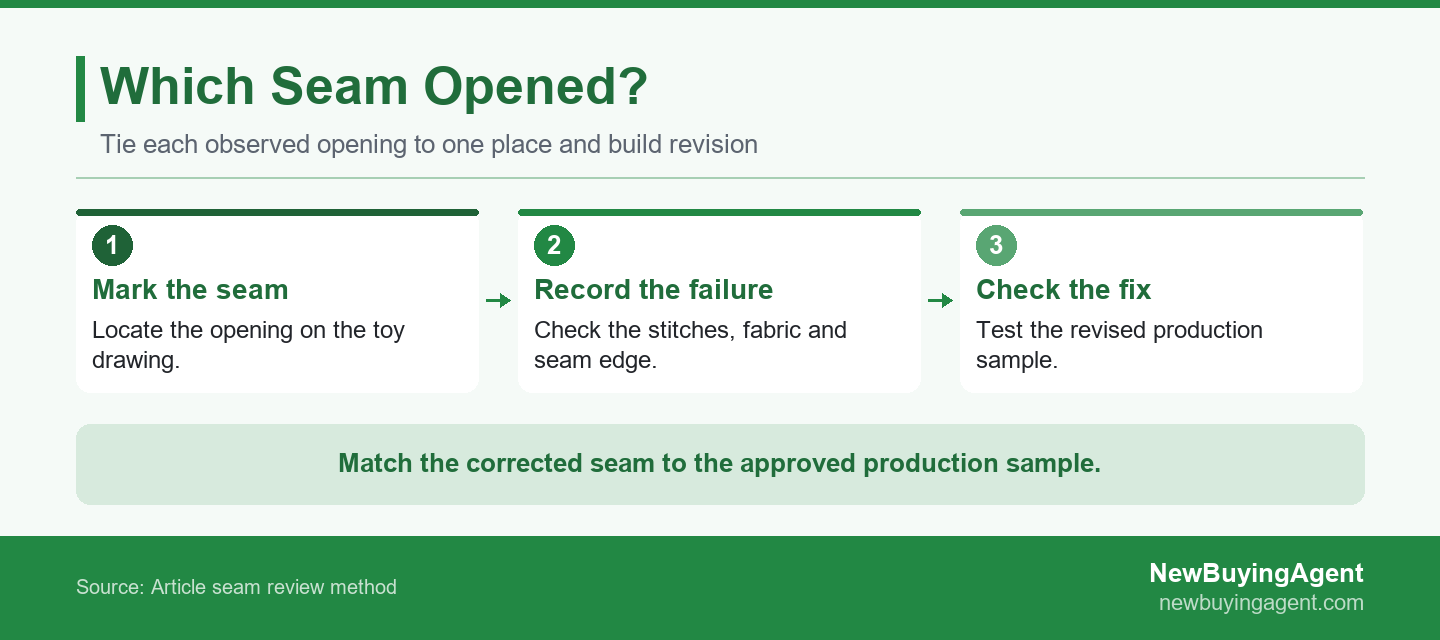
Record the seam location and how it failed before approving a correction
Verify the Filling by Material and Lot
Specify what goes inside the shell and how the factory will keep it there. List each fill in the bill of materials, a list of the materials and parts in the toy. Record the fill type, supplier, material code and lot, then identify where the fill sits and whether a separate pouch or lining contains it.
The CPSC third-party testing chart lists Stuffing Materials under ASTM F963 section 4.3.7 among toy-specific sections requiring third-party testing where applicable. Give the reviewer the actual fill types and any separate inserts. Ask which evidence applies to each material and which tests assess the finished toy. A material description on the supplier's packing list is a traceability record and needs the applicable test evidence alongside it.
Set a target fill weight and tolerance for each zone that matters, such as the body or weighted feet. Define where the operator weighs the fill and what the quality team opens on a designated sample to verify distribution. Finished weight can help screen for drift. It can miss a pouch installed in the wrong place or an underfilled head if another section is overfilled. A pouch also has its own seam and closure to specify.
State requirements may affect the label and the fill record. The Pennsylvania Department of Labor and Industry says its stuffed-toy law label identifies the material as new, recycled or a blend and carries the applicable Pennsylvania registration number. If that state is in your distribution plan, verify the actual facility registration, label wording and material status with the responsible reviewer before bulk printing.
When the same plush model is reordered across colors or seasons, NewBuyingAgent's China plush toy sourcing and supply can quote and supply the specified build through its cooperating factories, with quality control and logistics support. Include the approved fill codes, weight by zone and the rules for substitutes in the brief. Those details let the team compare the offered build with the retained sample.
Check Attachments and Pieces That Can Come Free
List hard eyes and noses, buttons, zipper pulls, decorative pieces, sound units and any separately packed accessories on the component drawing. Show the reviewer how each external piece is attached and what keeps each internal item inaccessible. Ask for an inspection of the toy as received and for findings on pieces that come free or become accessible after the applicable testing.
Under the Part 1501 procedure for covered toys intended for children under 3, an applicable piece that fits entirely inside the small-parts cylinder in any orientation without compression fails. The procedure also covers applicable pieces released by the specified use-and-abuse tests. The detached-piece provision excludes paper, fabric, yarn, fuzz, elastic and string. Keep any seam failure or exposed internal item in the wider safety review even if a particular loose material falls outside that cylinder check.
An attachment can break at the visible head, pull through the backing or expose a fastener inside the toy. Ask the lab and factory to distinguish those outcomes. CPSC's Bubba Bull plush toy recall describes a choking hazard from eyes that could break off. On a new design, show how each hard eye is installed and what supports it behind the shell. When you change to embroidery, review the pattern, backing and remaining attachments as part of the revised build.
Give the inspector a designated sample and an agreed screen for assembled attachments where appropriate. Record whether a part moves, the backing distorts or the fastening separates, and keep the sample identifier. Route any unexpected finding to the product safety reviewer. Tests of finished production do not become interchangeable because the factory and lab both describe the action as a pull.
Hold the Lot When the Closure Opens
In a hypothetical repeat order for a U.S.-bound plush rabbit from China, the sample meets the approved weight and looks normal. Its filling closure opens during testing. The factory changed to a different polyester fill supplier and shortened the fabric overlap at the closure. Hold affected goods while you trace both changes and verify the corrected build.
Start with the fill issue records, sewing work instructions, line or shift records and the cartons packed against them. Find where the new fill entered production and when operators started using the changed closure. If finished units cannot be separated reliably, widen the hold to cover the uncertain production window. Keep failed and retained samples identified so the lab and factory can compare what changed.
Do not infer the failure cause from the fact that two changes happened together. Open designated samples to compare seam allowance, stitch path and fill distribution with the approved construction. The CPSC material change guidance calls for testing the affected requirements at a CPSC-accepted third-party lab after a material change, then issuing a new certificate based on passing results. Have the responsible issuer determine which evidence needs to be replaced for the corrected toy.
If restoring the approved closure fixes one build, verify which units actually received that construction. Resolve the new filling separately with its material and supplier evidence. Before release, record the approved design and lot, the corrected sample result and the disposition of all held units. Keep unresolved cartons out of the release count.
Tie the Test Evidence to the Shipment
Use one release record per approved construction and production lot. It should tell quality staff which build the factory made, which specimen the lab tested and which cartons the buyer authorized. Fill in the fields below before the shipment is approved, then attach the signed inspection disposition and supporting observations for each lot.
| Check | Record to complete | Who confirms |
|---|---|---|
| Shell and closure | [Seam locations, pattern revision, construction and test result.] | Factory and quality. |
| Filling and inserts | [Fill codes, supplier lots, targets and containment details.] | Factory and quality. |
| Attachments | [Part IDs, assembly method, findings and report ID.] | Lab and compliance. |
| Lot release | [Carton IDs, inspection results, certificate and release decision.] | Importer and quality. |
At the start of a production run, identify the first samples made on the bulk line and check them against the signed drawing. On a designated sample that will be kept out of saleable stock, open the shell to verify the fill by zone, pouch location and backing behind the eyes or nose. Photograph the findings with the sample identifier and record the work order, station, time and material lot. Preserve the cut-open sample or photographs for comparison with later runs.
Set an explicit restart check after a material roll, fill lot, sewing machine setup or operator change at a critical station. If the agreed line check fails, quarantine the open work bins and packed cartons from the last verified check until the production boundary is known. Compare the bin tags with the packing record before moving any goods to the release area. Resume packing when quality has identified the approved setup, verified a new production sample and resolved the status of the quarantined goods.
The CPSC Children's Product Certificate guidance assigns the written Children's Product Certificate, or CPC, for covered children's products to the U.S. domestic manufacturer or importer. Where third-party testing is required, use a CPSC-accepted lab for the applicable rule. Verify that the certificate and reports identify the build being released, and confirm the applicable import filing requirements before shipment.
The CPSC tracking-label guidance calls for visible, legible permanent marks on the children's product and its packaging to the extent practicable. The marks must make the source, date and place of production, and a batch or equivalent identifier ascertainable. Verify the sewn tag or other product mark and the packaging against the production record. Use the internal lot map to connect the marked goods to the actual filling, closure and attachment inputs.
For replenishment, NewBuyingAgent's manufacturing and quality-control background can support repeat supply and production quality against the signed build. Send the latest part list and the release checks with the reorder, so any proposed change to the shell, fill or facial details can be reviewed before it goes into production.
For a new or repeat order from China, send the plush toy specification to NewBuyingAgent with the intended age, destination, quantities, target price and delivery timing. Attach the drawings, fill and attachment details, and the required tests or documents. The team can quote and supply the specified plush toy with quality control and delivery support.
Frequently Asked Questions
Does a visually closed seam prove the plush toy is ready to ship?
A closed-looking seam still needs the applicable performance evidence. Ask which closure, body seam and high-risk joints were evaluated and request the tested specimen revision. Confirm that the factory uses the same thread, fabric layers and sewing method on the bulk build. Keep the visual inspection as a separate workmanship check.
Can a factory switch suppliers if the filling is still polyester?
Treat a fill supplier change as a documented change to review before allowing the new material. Compare the actual fill identity, supplier lot, destination labeling and applicable safety evidence. Verify the effect on fill distribution and the way the shell closes, then record the disposition against the affected supplier and production lots.
Do embroidered eyes eliminate the need for small-part checks?
Embroidered eyes remove the separate hard eye component from the design, while other attachments and accessible components still need review. Check the rest of the build for parts that can detach or become accessible. Make sure the approved sample and lab scope reflect the actual backing, facial details and remaining accessories.
Can a factory pull check stand in for a lab report?
An in-line pull check can screen production against an approved method, while required laboratory tests need their own evidence. Agree who performs the factory check, which sample it uses and what triggers a hold. Link those findings to the lot and keep the applicable lab report tied to the same construction.
NewBuyingAgent
Recursos relacionados
Comienza hoy
Convirtamos tus objetivos de abastecimiento en realidadWeChat:+86 15157124615
WhatsApp:+86 15157124615
Dirección: Edificio 10 #39 Xiangyuan Road, Hangzhou, China
