

China Wholesale
Definition and Scope
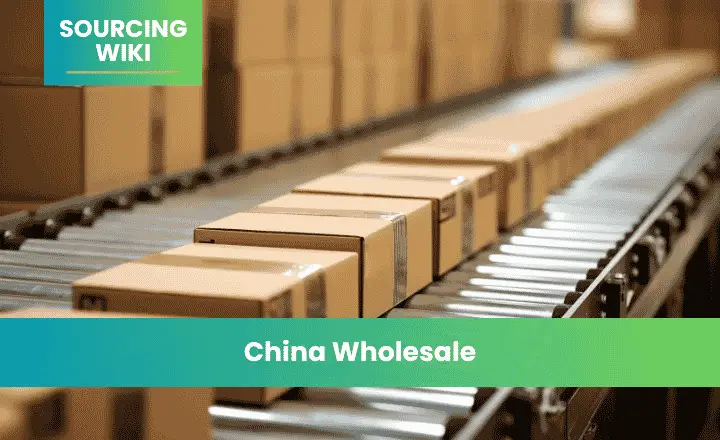
China wholesalerefers to the purchase of goods in bulk quantities from suppliers based in China, typically for resale or commercial use in another market. The term covers a broad field, ranging from sellers in large wholesale markets to factories offering existing products at volume-based prices.
Wholesale sits between retail purchasing and contract manufacturing. Retail involves small quantities at consumer prices, while contract manufacturing involves producing goods to a buyer's specifications. Wholesale generally involves selecting from products that already exist, trading some degree of customisation for lower minimums and faster purchasing.
This makes China wholesale particularly relevant to retailers, e-commerce sellers, distributors, and importers that want to test or expand a product category without immediately committing to private-label or custom manufacturing.
Main China Wholesale Channels
China's wholesale market can be accessed through several channels, each with a different balance of product selection, convenience, and supplier verification.
Physical wholesale markets such as Yiwu International Trade City bring large numbers of suppliers together and allow buyers to examine products directly.[1]Guangzhou and other manufacturing and trading centres also contain specialised wholesale markets serving particular product categories.
Online B2B platforms such as Alibaba and 1688 extend access without requiring buyers to travel. Alibaba is designed primarily for international trade, while 1688 is China's domestic wholesale marketplace. Both provide broad supplier access, but neither platform should be treated as a substitute for independent supplier verification.
Trade fairs provide another route. The Canton Fair, for example, brings together international buyers and exhibitors across a wide range of product categories and is organised by the China Foreign Trade Centre.[2]
For overseas buyers, the most appropriate channel depends on order size, product category, language capability, travel resources, and how much supplier verification the buyer can perform independently.
China Wholesale vs. Factory Direct Purchasing
Wholesale and factory-direct purchasing are not necessarily competing models. The better option depends on what the buyer is trying to achieve.
| Factor | China Wholesale | Factory Direct |
|---|---|---|
| Product | Existing products | Existing or customised products |
| MOQ | Often lower or more flexible | Often higher for production |
| Customisation | Usually limited | Generally greater |
| Product variety | High, especially across multiple suppliers | Focused on the factory's capabilities |
| Speed | Often faster for existing stock | May require production lead time |
| Best suited for | Retailers, resellers, testing new products | Larger repeat orders and customised products |
Wholesale can be the more practical starting point when a buyer needs relatively small quantities, wants to test demand, or needs products from multiple categories. Direct factory purchasing becomes more attractive when volumes are high, specifications are fixed, and customisation or long-term production capacity matters more than flexibility.
Evaluating China Wholesale Suppliers
A low wholesale price does not by itself establish a good supplier relationship. Buyers should first establish who they are dealing with and whether the supplier can consistently provide the required products.
Basic checks include verifying the supplier's registered identity and business scope, determining whether it manufactures or resells the products, requesting samples, and confirming the actual MOQ and price at the buyer's intended quantity.
For larger or repeat orders, buyers can add stronger controls such as factory verification, reference checks, production monitoring, and pre-shipment inspection. The level of verification should be proportionate to the value and risk of the order rather than identical for every purchase.
MOQ, Pricing, and Total Landed Cost
MOQ and unit price should always be considered together. Wholesale suppliers commonly offer different prices at different quantity levels, so the lowest advertised price may only apply to an order significantly larger than the buyer's intended purchase.
The more useful comparison istotal landed cost, not simply the supplier's quoted unit price. Depending on the transaction, this can include product cost, domestic transportation, consolidation, international freight, duties, inspection, and an allowance for defective or unsellable goods.
This is particularly important when buying from several suppliers. A slightly lower unit price can disappear once additional handling, separate shipments, and inefficient freight are included.
Wholesale pricing is also negotiable. Order quantity, payment terms, repeat-order potential, packaging requirements, and the overall commercial relationship can all affect the final price. The first quotation should therefore be treated as a starting point rather than automatically as the final wholesale price.
Consolidation for Multi-Supplier Wholesale Orders
Overseas buyers often purchase different products from several Chinese suppliers rather than placing one large order with a single factory. In these cases, consolidation can materially change the economics of the purchase.
A consolidation warehouse or sourcing partner can receive goods from multiple suppliers, check quantities and condition, combine shipments, and prepare them for international transport. This can reduce duplicated freight arrangements and make a multi-supplier purchase easier to manage.
However, consolidation is not automatically cheaper. Handling, storage, repacking, domestic transportation, and additional coordination all have costs. Buyers should compare the complete landed cost of consolidated and direct shipments rather than assuming consolidation always produces savings.
When China Wholesale Makes Sense
China wholesale is often a good fit when the buyer needs existing products, relatively flexible quantities, broad product selection, or a faster route to market. It is particularly useful for testing demand before investing in custom development or larger production runs.
Factory-direct purchasing may be more appropriate when the buyer needs exclusive designs, private labeling, specialised specifications, or high-volume repeat production.
The decision should ultimately be based on the buyer's required quantity, product complexity, desired level of customisation, supplier-management capability, and total landed cost. The cheapest unit price is only one part of that calculation.
Frequently Asked Questions
What is China wholesale?
China wholesale is the purchase of goods in bulk from suppliers in China, generally for resale or commercial use. Buyers can purchase existing products through wholesale markets, online B2B platforms, factories, and other commercial suppliers.
What is the difference between China wholesale and factory-direct purchasing?
China wholesale generally focuses on existing products and offers greater flexibility in product selection and order quantities. Factory-direct purchasing is more suitable when buyers need larger volumes, customised products, private labeling, or a longer-term manufacturing relationship.
What is a typical MOQ for China wholesale?
There is no standard MOQ. It varies by product, supplier, sales channel, and order quantity. Wholesale-market sellers and trading companies may accept smaller quantities, while factories may require higher volumes. Buyers should confirm the MOQ and the corresponding unit price for their actual order quantity.
How can I verify a China wholesale supplier?
Buyers should check the supplier's legal identity and business scope, determine whether it manufactures or resells the products, request samples, and evaluate its ability to meet the required specifications and quantities. For higher-value purchases, additional factory verification or pre-shipment inspection can reduce risk.
Does China wholesale always mean lower total cost?
No. A lower product price does not necessarily produce a lower landed cost. Freight, duties, inspection, domestic transportation, consolidation, handling, and defective goods can materially change the final cost. Buyers should compare suppliers using the expected total landed cost rather than unit price alone.
Sources & References
[1] Yiwu International Trade City— Official website of the Yiwu International Trade City, one of China's major wholesale market complexes.Yiwu International Trade City Accessed August 13, 2026.
[2] China Import and Export Fair (Canton Fair)— Official website of the Canton Fair, organised by the China Foreign Trade Centre and co-hosted by China's Ministry of Commerce and the People's Government of Guangdong Province.Canton Fair Official Website Accessed August 13, 2026.
Related Knowledge Base
Sourcing Practices & Insights: China Wholesale
Latest Sourcing Guides
Get Started Today
Let's Turn Your Sourcing Goals into RealityWeChat:+86 15157124615
WhatsApp:+86 15157124615
Address:Building 10 #39 Xiangyuan Road, Hangzhou, China
