Asia Sourcing
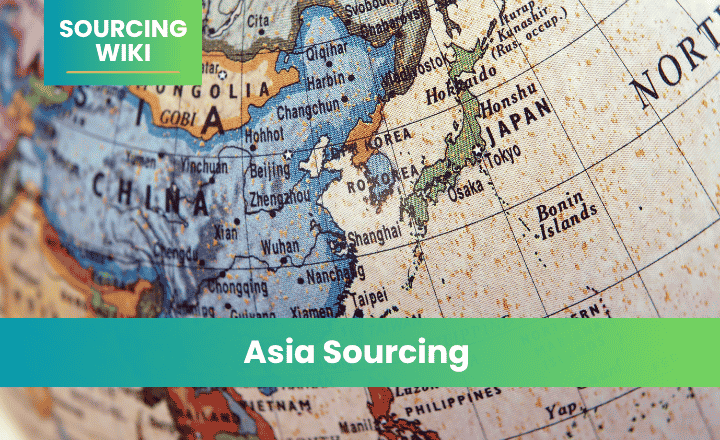
Definition and Historical Context
Asia sourcing refers to the widespread practice of procuring finished goods, industrial components, or raw materials from suppliers located within Asian countries — most prominently manufacturing powerhouses like China, Vietnam, India, Thailand, Indonesia, and Bangladesh.
As one of the most established and dominant forms of global procurement, Asia sourcing rose to prominence in the late 20th century. During this era, major manufacturers in North America and Europe actively sought to reduce overall production costs by leveraging the region's lower labor expenses, massive workforce, and rapidly expanding industrial capacity.
The World's Manufacturing Hub and Industrial Clusters
The operational practice of sourcing from Asia encompasses a comprehensive range of upstream and downstream activities: supplier identification, rigorous price negotiation, strict quality control, factory auditing, and complex international logistics coordination.
Asia is widely and universally regarded as the world's primary manufacturing hub, boasting deeply entrenched, mature ecosystems for key sectors:
- Electronics & Semiconductors: High-tech assembly and component fabrication.
- Textiles & Apparel: Massive-scale garment and footwear production.
- Consumer Goods & Furniture: Global export bases for household and retail products.
- Machinery & Engineering: Advanced industrial equipment and tooling.
A defining strength of the region is its highly efficient industrial clusters — such as the famous Pearl River Delta in southern China. These clusters allow international buyers to access densely concentrated, multi-tier networks of specialized factories and raw component suppliers within a single, highly integrated geographic region.
Core Motivations and Operational Challenges
While the strategic advantages are clear, operating across such vast geographic distances requires balancing significant benefits against inherent trade-offs:
| Key Sourcing Motivations | Primary Operational Challenges |
|---|---|
| Unmatched Cost Competitiveness: Drastically lower unit manufacturing and tooling costs. | Extended Lead Times: Long-distance ocean freight and potential maritime transit delays. |
| Massive Scalability: Capacity to rapidly scale production volumes up or down based on seasonal demand. | Intellectual Property (IP) Risks: Navigating varied legal frameworks regarding proprietary design protection. |
| Specialized Capabilities: Access to highly mature, niche technical production ecosystems. | Communication Barriers: Overcoming language differences and managing collaboration across large time-zone gaps. |
To effectively navigate the complexity of overseas quality assurance and mitigate transactional risk, many global buying organizations deliberately engage local on-the-ground sourcing agents or specialized third-party inspection firms (such as SGS, Intertek, or Bureau Veritas).
Modern Evolution: The "China Plus One" Era
In recent years, the landscape of Asia sourcing has entered a highly strategic evolutionary phase. Factors such as rising domestic labor costs within mature coastal industrial zones, shifting international trade tensions, and urgent corporate supply-chain resilience considerations have prompted businesses to re-evaluate their portfolios.
Rather than completely abandoning the region, forward-thinking organizations are actively diversifying away from single-country dependence. They are aggressively adopting "China Plus One" strategies — a model that maintains core high-volume operations in established hubs while simultaneously spreading new production capacity and secondary sourcing nodes across fast-growing adjacent Asian nations like Vietnam, India, and Indonesia to ensure long-term supply resilience.
Related Knowledge Base
Sourcing Practices & Insights: Asia Sourcing
Latest Sourcing Guides


Get Started Today
Let's Turn Your Sourcing Goals into RealityWeChat:+86 15157124615
WhatsApp:+86 15157124615
Address:Building 10 #39 Xiangyuan Road, Hangzhou, China