

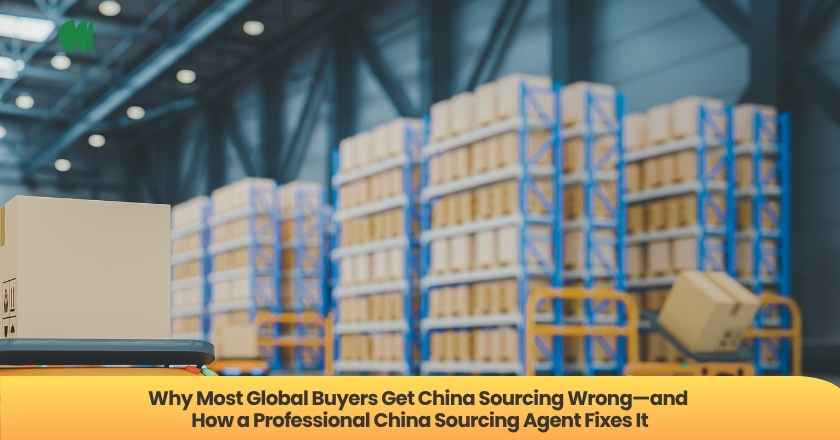
Introduction
For decades, China has been the world's factory, offering competitive pricing and vast manufacturing capacity. However, the path from product concept to delivered goods is fraught with obstacles for foreign buyers. Language gaps, cultural differences, limited factory access, and quality control risks turn what seems like a straightforward procurement into a high-stakes operation. The rise of e-commerce platforms like Amazon, Wayfair, and Walmart Marketplace has only intensified the need for reliable, scalable sourcing solutions.
This article is written for brand owners, importers, distributors, and e-commerce sellers who want to move beyond trial-and-error sourcing. We will dissect the industry challenges, reveal common mistakes, and present a structured approach that leverages local expertise, technology, and integrated quality control.
Key Takeaways
1. Direct sourcing from China is rarely cost-effective for small and mid-sized buyers due to limited factory access and weak negotiation power.
2. A professional China sourcing agent with a vetted factory network, integrated QC, and local expertise can deliver 8–20% total cost savings.
3. Cash flow improves significantly with flexible payment terms negotiated by an agent.
4. AI-powered market insights help ensure products match consumer demand, reducing dead stock risk.
5. The best agents act as a single accountable partner, not a middleman, covering everything from sourcing to post-delivery support.
Industry Background
China’s manufacturing ecosystem is massive but fragmented. According to industry estimates, less than 5% of China’s factories are directly accessible to foreign buyers through public channels like Alibaba or trade fairs. The remaining 95% operate through local networks, regional clusters, and word-of-mouth referrals. This information asymmetry creates an uneven playing field: buyers who lack on-the-ground presence pay higher prices, endure inconsistent quality, and waste countless hours on coordination.
The procurement services market has evolved to fill this gap. Traditional trading companies, third-party inspection agencies, and logistics providers offer piecemeal solutions. Yet most fail to integrate sourcing, quality control, and logistics into a single accountable service. As a result, buyers often manage multiple vendors with overlapping responsibilities and little transparency.
Core Problem
The central challenge for global buyers is finding a China sourcing agent that can deliver end-to-end reliability. The most common pain points include:
- Restricted factory access: Only a fraction of factories are discoverable via online platforms.
- Communication barriers: Language, time zone, and cultural differences slow decision-making and cause misunderstandings.
- Lack of supplier trust: Factories may withhold full cooperation from unknown foreign buyers.
- Uncompetitive pricing: The majority of factories are unreachable, meaning buyers miss out on better prices.
- Time-consuming coordination: Managing multiple suppliers drains resources that could be spent on market growth.
- Quality uncertainty: Without on-site oversight, defects go undetected until goods arrive, leading to returns and brand damage.
What Most Companies Do Wrong
Many buyers attempt to source directly from China by themselves, assuming they can replicate the success of larger corporations. Common mistakes include:
- Relying solely on B2B platforms like Alibaba, where supplier verification is limited and price competition often hides quality trade-offs.
- Building in-house sourcing teams in China, which requires significant investment in local staff, office space, and management overhead.
- Using separate vendors for sourcing, inspection, and logistics, leading to fragmented accountability and finger-pointing when problems arise.
- Negotiating payment terms poorly, such as accepting 30% deposit and 70% before shipment, which strains cash flow.
- Neglecting post-delivery issue handling, assuming quality problems are covered by inspection reports—only to discover that factories disclaim responsibility.
Strategic Analysis
The sourcing ecosystem is shaped by several market forces:
- Market power concentration: Large buyers (e.g., Walmart, Amazon) can command favorable terms, but small and mid-sized buyers lack leverage.
- Technology disruption: AI-driven market analysis now enables demand forecasting and product optimization that was previously available only to large retailers.
- Changing buyer expectations: E-commerce sellers demand faster turnaround, lower minimum order quantities (MOQ), and flexible payment options.
- Regulatory pressures: Compliance requirements (CE, FDA, LFGB, etc.) add complexity, especially for products entering European and North American markets.
A professional China sourcing agent bridges these gaps by acting as an extension of the buyer’s team. With local reputation, a vetted factory network, and integrated quality control, they can negotiate better pricing, enforce quality standards, and coordinate logistics seamlessly.
Practical Solutions
To select the right China sourcing agent, buyers should evaluate the following capabilities:
- Factory network depth: Look for agents with 50,000+ verified factories across multiple industries. The broader the network, the better the pricing and flexibility.
- Quality control integration: End-to-end QC from raw materials to pre-shipment reduces defect rates. In-process inspection catches issues before they become costly.
- Market intelligence: Agents using AI tools to analyze search trends and sales data can recommend products with higher market fit.
- Payment flexibility: The ability to negotiate post-shipment payment terms (e.g., 70% balance 15 days after shipment) improves cash flow.
- One-stop service: A single point of contact for sourcing, QC, logistics, and post-delivery support eliminates coordination headaches.
Actual Applications
Real-world examples illustrate the impact:
- A UK kitchenware brand reduced total costs by 22% by switching from multiple low-quality factories to a China sourcing agent. Procurement costs fell 8%, and $70,000 in annual inspection fees were eliminated because QC was integrated into production.
- A Canadian Wayfair seller of solid wood bookshelves secured a 9% cost reduction and improved payment terms from prepayment to 15 days post-shipment, freeing up cash flow for business growth.
- An Australian e-commerce seller of electric cookers had nearly 300 defective units removed during production thanks to on-site QC, eliminating customer complaints and boosting sales.
- A Dutch Amazon seller of engraved bracelets achieved 100% compliance on 8,000 units by using precision laser engraving factories and QC checks every two hours.
These cases demonstrate that a reliable China sourcing agent not only lowers costs but also improves product quality, speeds up time-to-market, and reduces operational risk.
Future Outlook
Over the next 3–5 years, the role of China sourcing agents will become even more critical. Key trends include:
- AI-driven product selection: Agents will increasingly use machine learning to identify trending products, optimize designs, and predict market demand—giving buyers a competitive edge.
- Sustainability and compliance: As regulations tighten globally, agents with expertise in certifications (OEKO-TEX, CE, FDA) will be essential.
- Supply chain resilience: Post-pandemic, buyers prioritize diversification and flexibility. Agents with broad factory networks can shift production quickly.
- Platform specialization: E-commerce platforms like Amazon, Wayfair, and Otto are raising quality standards. Agents that help sellers meet these standards will command premium value.
Risks remain: over-reliance on a single agent, lack of transparency in pricing, and potential conflicts of interest. Buyers should demand clear contracts, regular reporting, and a compensation guarantee for quality issues.
Conclusion
Navigating China’s complex manufacturing landscape requires more than just a contact list—it demands a strategic partner with deep local roots, technological savvy, and a commitment to quality. By moving away from fragmented, do-it-yourself approaches and partnering with a reliable China sourcing agent, global buyers can unlock significant cost savings, reduce risk, and focus on growing their businesses in their home markets.
For a deeper look at how NewBuyingAgent’s end-to-end sourcing framework works, download our brochure:
https://cdn.socialarks.com/sbsp/24772/0/2026/0421/69e71bf5d56c9.pdf
NewBuyingAgent
Related Resources
Get Started Today
Let's Turn Your Sourcing Goals into RealityWeChat:+86 15157124615
WhatsApp:+86 15157124615
Address:Building 10 #39 Xiangyuan Road, Hangzhou, China
