

Introduction
Most failed import businesses did not fail at sourcing. They failed at the product choice made months earlier, usually over a coffee, because something looked cool or a competitor seemed to be crushing it. The factory did its job. The freight arrived. The product just sat there, because nobody actually checked whether real buyers wanted it at a price that left room for profit.
Picking what to import from china is a research problem before it is a sourcing problem. The country can make almost anything across almost every category, which is a blessing and a trap. Endless options mean the constraint is not availability. It is judgment. Choose with data and the rest of the business has a fighting chance. Choose on a hunch and even flawless execution cannot save a product nobody is searching for.
This walks through how to turn that decision from a guess into a process. Reading demand signals, doing the margin math before you commit, checking how crowded a niche already is, and confirming the product can actually be made and shipped at the numbers your spreadsheet assumes.
Key Takeaways
• Product selection decides import success long before sourcing does, so the research you do before contacting any factory matters more than the price you eventually negotiate on a product nobody is searching for.
• Real demand data beats intuition every time, because search volume, marketplace sales rank, and review counts reveal whether actual buyers want a product rather than whether it merely looks appealing to you.
• Margin math must clear before commitment, since landed cost, platform fees, returns, and advertising can quietly erase a tempting unit price and leave a product that sells well yet loses money on every order.
• Competition is a signal to read, not simply to avoid, as an empty niche often means no demand while a crowded one means proven demand you must out-position rather than out-shout to win.
• Sourceability validates the whole plan, because a product only works when a real factory can build it to spec at an MOQ and a landed cost your margin model can actually absorb without breaking.
Start With Demand, Not With a Product
The instinct is to fall for a product first and justify it later. Flip that order. Begin with evidence that people are already trying to buy something, then decide whether you can serve that demand profitably. Data comes before desire.
Where Real Demand Shows Up
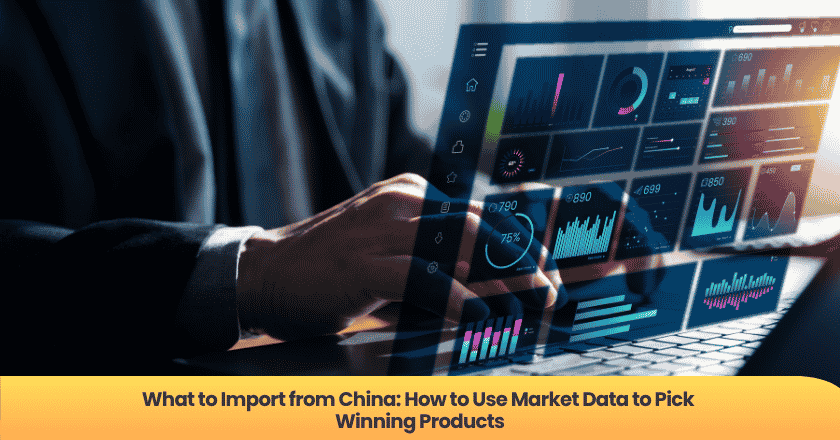
Search volume tells you how many people actively look for a product or its problem. Marketplace sales rank shows what is moving right now. Review counts on competing listings reveal how many units have actually sold over time, since only a fraction of buyers ever leave a review. Read together, these three signals separate genuine demand from a product that merely photographs well.
Watch the trend line, not just the snapshot. A product with steady or rising interest over a couple of years is a safer bet than a spike that may already be fading. The short answer is that you want demand that is proven and durable, not a fad you are catching on its way down.
Seasonality matters too. A product that sells beautifully for two months a year ties up capital and warehouse space the rest of the time, which changes the math entirely. Knowing whether demand is steady year-round or clustered into a short window tells you how much inventory risk you are really signing up for before a single unit ships.
Expert Tip: Pull at least two years of trend data on any product you are serious about, and overlay it month by month. A clean upward or flat line is a green light. A jagged seasonal curve is not a no, but it tells you exactly when to buy and how much to hold.
Validate Before You Fall in Love
Treat every exciting idea as a hypothesis to be disproven. Look for reasons it will fail before reasons it will win. If a quick check of demand signals comes back thin, the kindest thing you can do is kill the idea early and save the capital for one that survives scrutiny.
Common Mistake: Choosing a product because it looks impressive or a competitor seems successful, without checking whether real buyers search for it. A great-looking product with no demand is just expensive inventory waiting on a shelf you are paying to rent.
Do the Margin Math Before You Commit
A low factory price means nothing on its own. What matters is what survives after every cost between the factory floor and the customer's hands. Run that math first, because a product that cannot clear it is a trap no matter how well it sells.
Landed Cost Is Not the Unit Price
Your real cost per unit includes the product price, shipping, duties, and the per-piece share of any tooling. Sourcing on FOB (free on board, meaning the price covers goods loaded onto the vessel but not the ocean freight beyond) terms is common, so remember the quoted number stops at the port. Add everything past that point before you call anything cheap.
Then stack the selling costs. Platform commissions, payment processing, returns, storage, and advertising all eat into the gap between landed cost and sale price. A product with a tempting unit cost can still lose money once these layers pile up, which is exactly why so many imports that sell well still never turn a profit.
Advertising deserves its own line, because for most new products it is the largest hidden cost of all. Winning a customer in a crowded marketplace often costs real money per sale, and that number climbs as more sellers bid for the same attention. A product whose margin cannot fund customer acquisition will stall the moment you stop subsidizing it, no matter how good the listing looks.
The Margin You Actually Need
Aim for enough gross margin to absorb returns, fund advertising, and still leave profit. Thin-margin products demand high volume to matter and punish every mistake, while healthier margins give you room to market, discount, and weather a bad batch. Worth knowing: a slightly pricier product with a fat margin usually beats a cheap one with a razor-thin spread.
Expert Tip: Build your full landed-cost-to-profit model in a spreadsheet before you ever request a sample. If the numbers only work at a sale price the market data says buyers will not pay, the product is dead on arrival, and you just saved yourself a sourcing cycle.
Read the Competition Like a Signal
New importers fear competition and chase empty niches. That instinct is backwards. Competition is information, and learning to read it tells you more about a product's odds than almost anything else.
Empty Niches Are Usually Empty for a Reason
A category with no competitors sounds like opportunity. More often it means no one has found a way to sell the product profitably, or the demand simply is not there. Proven demand attracts sellers. A genuinely empty shelf is a warning as often as it is an invitation, so dig into why before you celebrate.
A crowded niche, by contrast, confirms that money is being made. The question shifts from whether demand exists to whether you can carve out a position within it. That is a more answerable question than gambling on a market that may not exist at all.
Finding Your Angle
You rarely win a busy category by selling the same thing slightly cheaper. You win by reading the gaps competitors leave: complaints in their reviews, a bundle nobody offers, a quality tier that is missing, a customer segment being ignored. Each gap is a foothold. The goal is to enter where you can be meaningfully different, not marginally cheaper.
This is where China's breadth becomes an advantage. Because nearly any variation can be made, you can act on the gap you find, whether that means a better material, a smarter feature, or packaging that finally fits how people use the thing. The product research tells you what to change, and the manufacturing base lets you change it.
Mine competitor reviews like a research department. The one-star and three-star reviews are a free, honest list of everything buyers wish the current products did better. A recurring complaint about a flimsy hinge, a confusing manual, or a size that runs small is a roadmap. Build the version that fixes the top three complaints and you enter the category already answering the objections your rivals have left unaddressed.
Confirm It Can Actually Be Sourced
A product that wins on paper still has to survive contact with a real factory. The final check closes the loop between your spreadsheet and the production floor, and it is the one most first-time importers skip.
MOQ, Tooling, and the Real Entry Cost
MOQ (minimum order quantity, the smallest batch a factory will run) decides how much capital your first order ties up. A product that pencils out beautifully at a thousand units may be impossible if the factory's minimum is ten thousand. Custom products often need tooling too, a one-time mold or setup cost that you must spread across your order to find the true per-unit price.
Match the entry cost against your risk tolerance. Testing an unproven product with a huge minimum order is how importers end up with a garage full of inventory. Sometimes a slightly higher per-unit price at a smaller MOQ is the smarter first move, because it lets you validate real sales before scaling commitment.
Specs, Quality, and Market Fit
Confirm the factory can hit the spec your margin model assumes, not just a cheaper version of it. Define materials, tolerances, and your AQL (acceptable quality limit, the defect rate an inspection will pass) early, because a product that arrives a grade below what you promised customers can sink a launch in reviews. Real talk: the cheapest quote that misses your spec is the most expensive option you can choose.
Stay alert to how fast this moves. Through 2026, AI-driven product and trend analysis is reshaping how importers spot opportunities, surfacing rising niches earlier and pairing them with capable suppliers faster than manual research could. The edge is shifting toward whoever reads the data well and acts on it before the niche gets crowded.
Turning Product Data Into Market-Ready Orders With NewBuyingAgent
Picking the right product is only half the battle. The other half is reaching a factory that can build it to spec, on target, across whatever category research points to. NewBuyingAgent serves as the perfect partner for global sourcing from China, backed by 30 years of expertise in trade, manufacturing and quality control. That span across categories is what lets a data-driven shortlist become real inventory instead of a stuck idea. It provides access to 50,000+ cooperated partner factories—no language/region/time zone barriers. Its local reputation delivers full factory cooperation. Just as important, the product itself has to match what buyers actually want. 20,000+ product development & QC experts ensure clients’ products match market needs and stay high-quality. So the winning product identified by research arrives built to fit the validated market.
Frequently Asked Questions
How do I know if there is real demand for a product?
Look at three signals together: search volume for the product or its problem, marketplace sales rank, and review counts on competing listings. Search shows interest, rank shows current movement, and reviews reveal long-term sales since only a fraction of buyers review. A rising trend line across a couple of years signals durable demand.
Why do products that sell well still lose money?
Because the unit price is only the beginning. Shipping, duties, platform fees, payment processing, returns, storage, and advertising all sit between landed cost and the sale. A tempting factory quote can vanish under those layers. Building a full landed-cost-to-profit model before sourcing is what exposes a money-losing product early.
Should I avoid products with lots of competition?
Not automatically. Heavy competition usually confirms that demand and profit exist, which is valuable information. An empty niche more often signals weak demand than untapped opportunity. The smarter approach is entering a proven category through a gap competitors leave, such as a missing quality tier, an unserved segment, or a feature reviews keep requesting.
What role does MOQ play in choosing what to import?
MOQ sets how much capital your first order locks up and can make an otherwise attractive product impractical. A high minimum forces a large bet on an unproven item. Accepting a slightly higher per-unit price at a smaller MOQ often makes more sense early, since it lets you validate real sales before committing serious money to scale.
How important is matching the product to market needs?
It is decisive. A product that arrives a grade below what customers expected sinks in reviews, while one tuned to what buyers actually want sells itself. Defining specs, materials, and quality thresholds up front keeps the finished goods aligned with the demand your research validated, rather than a cheaper version that misses the mark.
How is product research changing in 2026?
AI-driven trend and product analysis now surfaces rising niches earlier and matches them to capable suppliers faster than manual research allowed. Through 2026 the advantage increasingly belongs to importers who read demand data well and act before a niche crowds. The tools are faster, but the discipline of validating demand and margin still decides outcomes.
Conclusion
The difference between an import business that grows and one that stalls is usually settled at the product-choice stage, long before a single carton ships. The winners treat selection as research. They start from proven demand, run the margin math through every cost between factory and customer, read competition as a signal instead of a threat, and confirm the product can be built to spec at numbers their model can carry. None of that is glamorous, and all of it is what separates a profitable catalog from a warehouse of hopeful guesses.
China will keep making almost anything you can imagine, which means the limiting factor was never the country's capacity. It is your ability to choose well. Get the research right, match a validated product to a factory that can actually build it, and you turn the world's deepest manufacturing base from an overwhelming menu into a genuine advantage. That discipline, far more than luck or a clever-looking product, is what builds an import business that lasts.
NewBuyingAgent
Related Resources
Get Started Today
Let's Turn Your Sourcing Goals into RealityWeChat:+86 15157124615
WhatsApp:+86 15157124615
Address:Building 10 #39 Xiangyuan Road, Hangzhou, China
