

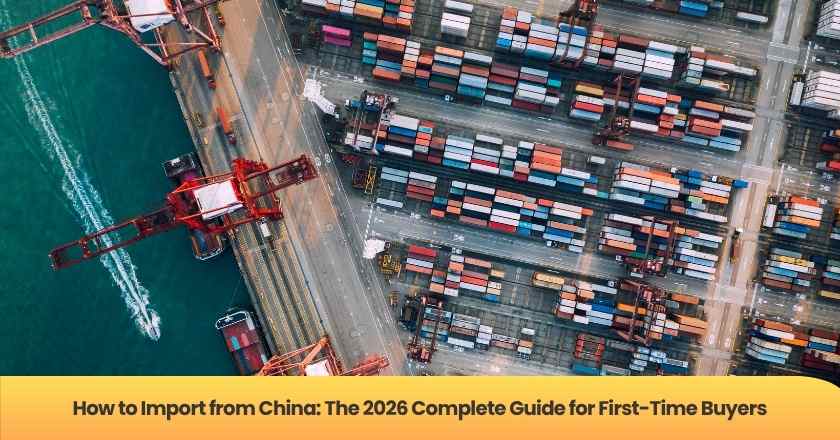
You've found a product that sells, traced it back to a factory in China, and the unit price looks like it could build a real business. Then the questions pile up: How do you pay safely? Who handles shipping? What happens at customs? Will the goods even match the sample? The distance between a promising quote and a delivered, profitable shipment is where most first-time importers get lost.
Importing from China is a sequence of solvable steps — find and vet a supplier, agree terms, arrange freight and customs, and control quality — each of which trips up beginners in predictable ways. Done in order, with the right checks, it's far less daunting than it first appears. If you'd rather have experienced hands manage the sourcing, QC, and door-to-door logistics, NewBuyingAgent supports first-time importers through the whole process.
Key Takeaways
• Vet your supplier before anything else, since a verified factory prevents the costliest first-import mistakes downstream.
• Learn the core Incoterms, because agreeing to the wrong one can shift thousands in shipping and risk onto you unexpectedly.
• Budget for landed cost, not unit price, as freight, duties, and fees often add a large share to the sticker number.
• Get your customs paperwork and product compliance right early, because errors here cause delays, fines, or seized goods.
• Inspect before the balance payment, given that catching defects at the factory is far cheaper than discovering them at home.
Step One: Find and Vet a Reliable Supplier
Everything downstream depends on getting this right. A great freight setup can't rescue goods from a factory that ships off-spec product. Spend your early effort confirming you're dealing with a real, capable manufacturer rather than rushing to place an order with the first cheap quote.
Where to look
B2B marketplaces, trade shows, and referrals each surface suppliers, but each also surfaces trading companies and brokers. Build a shortlist of three to five candidates from more than one channel so you can compare and keep a fallback. Treat any single listing as a lead, not as proof.
Verify before you trust
Request the business license and confirm the registered name, production scope, and that the payment account matches. Check certifications by number and ask for a live video walkthrough of the line. These checks cost almost nothing and screen out a large share of intermediaries posing as factories.
Send a clear RFQ
A precise RFQ (Request for Quotation — the document describing exactly what you need so suppliers can quote accurately) filters serious manufacturers from resellers. Specify materials, dimensions, quantity, packaging, and required certifications. Vague requests attract vague answers; specific ones expose who can actually make your product.
Expert Tip: On your first import, deliberately keep the order small enough that a total loss wouldn't hurt your business, even if the factory offers a steep discount for higher volume. A first order is really a test of the supplier, the shipping route, and your own process. Buyers who place a large order to chase a lower unit price, before proving any of those three works, are the ones who fund an expensive education. Prove the chain first, then scale.
Step Two: Understand Incoterms and Agree on Terms
Incoterms decide who pays for and who is responsible for the goods at each leg of the journey. Misunderstanding them is one of the most expensive beginner errors, because the wrong term can quietly load cost and risk onto you. A few minutes learning the basics saves real money.
The terms you'll actually meet
FOB (Free On Board — the supplier delivers and clears the goods for export, loaded onto the vessel; you take over cost and risk from there) is the common starting point for beginners because it draws a clear line. EXW (Ex Works — you collect from the factory door and handle everything after) gives you more control but far more responsibility. CIF and DDP shift more onto the supplier at a price.
Why FOB suits most beginners
FOB keeps the supplier responsible through export clearance and loading, then hands you a clean point to engage your own freight forwarder. It avoids the inflated freight markups some suppliers build into CIF quotes. For a first import, that clarity usually outweighs the convenience of door-to-door terms.
Lock the full agreement
Put price, Incoterm, quantity, lead time, packaging, and inspection rights into a written purchase order or contract. A clear, specific agreement is what a Chinese factory actually treats as binding. Ambiguity, not bad faith, causes most first-order disputes.
Common Mistake to Avoid: Accepting a CIF or DDP quote from the supplier because it seems simpler than arranging your own freight. Suppliers often pad the shipping and clearance portions of these quotes, and you lose visibility into what you're actually paying to move the goods. For a first import, FOB plus your own freight forwarder usually costs less and shows you exactly where every dollar goes. Convenience here frequently carries a hidden premium.
Step Three: Arrange Shipping and Freight
Once terms are set, the goods have to physically reach you. This stage involves choosing a shipping method, hiring a forwarder, and accepting that timelines in 2026 remain less predictable than they once were. Planning buffer here protects your launch from delays you didn’t cause.
Sea versus air
Sea freight is far cheaper per unit and suits most bulk orders, but it’s slow — often several weeks port to port. Air freight is fast and expensive, sensible for small, high-value, or urgent goods. Most importers default to sea and reserve air for samples or emergencies.
Hire a freight forwarder
A freight forwarder arranges the shipping, paperwork, and often customs clearance on your behalf. For a first import, a good forwarder is worth their fee in avoided mistakes. They translate the logistics jargon into a single coordinated booking rather than leaving you to assemble it.
Plan for realistic timelines
Build buffer for production, sampling rounds, and ocean transit, since first orders almost always run longer than the optimistic quote. In 2026, schedule reliability hasn’t fully returned to pre-2020 norms, so padding your launch date protects you.
Expert Tip: Get your freight quote based on the actual packed dimensions and weight of your goods, not an early estimate, before you commit to a shipping budget. Ocean freight is often priced by volume for lighter goods and by weight for dense ones, and the carton dimensions your factory uses can swing the cost meaningfully. Confirming real packed measurements with the factory before booking prevents the unpleasant surprise of a freight bill far above what you planned around.
Step Four: Handle Customs and Compliance
Customs is where unprepared importers lose time and money. Goods can be delayed, fined, or refused entry over paperwork or compliance gaps that were entirely avoidable. Getting this right before the shipment arrives turns customs from a hazard into a formality.
Get the paperwork right
Standard documents include the commercial invoice, packing list, bill of lading, and any certificates of origin or compliance. Accurate descriptions and values matter; under-declaring to save duty is a serious risk that can trigger penalties. Your forwarder or customs broker helps assemble these correctly.
Classify and budget for duties
Every product has an HS code (Harmonized System code — the international classification number that determines your duty rate) that sets the tariff you’ll pay. Confirm your product's code and rate before you import, since duties feed directly into your landed cost. Getting the classification wrong invites delays and back-charges.
Meet product compliance rules
Your destination market sets safety, labeling, and certification requirements — a product that's legal to make in China may still be non-compliant for sale at home. Confirm the rules for your category before production, not after the goods land. Non-compliant stock can be unsellable or seized.
Common Mistake to Avoid: Asking a supplier to under-declare the shipment value on the commercial invoice to reduce import duty. Suppliers sometimes offer this as a favor, but it's the importer who carries the legal risk. Customs authorities flag under-valued shipments, and the penalties, back-duties, and delays dwarf the duty you tried to save. Declare the real value, budget the real duty, and keep the import clean from the start.
Step Five: Control Quality Before You Pay the Balance
The cheapest place to catch a defect is at the factory, not your warehouse. Quality control is the step beginners most often skip and most often regret. A small inspection fee is trivial against the cost of a container of unsellable goods sitting at your door.
Approve a signed sample
Approve a pre-production sample from your actual materials and line, then sign and seal a reference unit while keeping an identical one. When a dispute arises, you compare bulk goods against a physical standard rather than an emailed description. It shifts most disputes in your favor.
Inspect during and before shipment
Arrange a during-production and a pre-shipment inspection against your spec, run by a third party or a sourcing agent. Catching a defect at 20% completion lets you correct the run; catching it at the port forces a bad choice. Tie your final payment to a passed inspection.
Structure payment to protect yourself
A 30% deposit with the balance on inspection or shipping documents keeps real money tied to acceptable goods. Avoid full prepayment on a first order, whatever the discount. Settle inspection rights and payment milestones in the same agreement, before the deposit leaves your account. For first-time importers, NewBuyingAgent handles this end to end, its 20,000+ QC specialists protecting the order while you focus on selling.
Expert Tip: Book your pre-shipment inspection only after at least 80% of the order is produced and packed, so the inspector samples finished goods representative of the whole batch. Inspecting too early, when only a fraction is complete, lets a factory pass the check on its best units and finish the rest with less care. The standard practice of inspecting near completion exists precisely because it reflects what will actually ship to you.
Frequently Asked Questions
How much money do I need to start importing from China?
It varies with the product and the factory's MOQ (Minimum Order Quantity — the smallest batch they’ll produce), but plan for the unit cost times the minimum order, plus samples, freight, duties, and inspection. Many first-time importers start with a few thousand dollars on a low-MOQ product. Budget the full landed cost, not just the unit price, before you commit.
Is FOB or EXW better for a first-time importer?
FOB is usually the better starting point. It keeps the supplier responsible through export clearance and loading, giving you a clean handoff to your own freight forwarder, while EXW puts the entire export process on you. FOB's clarity generally outweighs the extra control EXW offers until you’ve done a few imports.
Do I need a customs broker or freight forwarder?
For a first import, yes — a freight forwarder, often handling customs clearance too, is worth the fee. They arrange shipping, prepare or check documentation, and steer the goods through customs. Trying to coordinate carriers, paperwork, and clearance yourself on a first shipment is where many beginners create costly delays.
What happens if my goods fail customs?
Depending on the issue, goods can be delayed for corrected paperwork, charged additional duty, fined, or refused entry. The usual causes are inaccurate documentation, wrong HS classification, or non-compliance with destination safety or labeling rules. Getting paperwork, classification, and compliance right before the shipment arrives prevents almost all of these outcomes.
How do I avoid getting scammed on my first order?
Verify the supplier before paying — business license, certifications, export history, and a live floor walkthrough — and keep the first order small. Use safe payment terms, such as a 30% deposit with the balance on a passed inspection, rather than full prepayment. A small, well-vetted first order limits your exposure while you test the whole chain.
Conclusion
Importing from China is just a sequence done in order: vet the supplier, agree the right Incoterm, arrange freight, clear customs cleanly, and inspect before the balance. Each step has a predictable trap, and each trap has a cheap prevention. Run a small, well-checked first order to prove the chain, then scale with confidence.
If you'd like experienced support across sourcing, QC, and logistics, it's worth seeing how NewBuyingAgent guides first-time importers through each stage. With 30 years of experience and 20,000+ QC experts, it manages sourcing, quality, and door-to-door logistics so beginners avoid the costliest first-import mistakes. Contact now.
NewBuyingAgent
Related Resources
Get Started Today
Let's Turn Your Sourcing Goals into RealityWeChat:+86 15157124615
WhatsApp:+86 15157124615
Address:Building 10 #39 Xiangyuan Road, Hangzhou, China
