

Introduction
A factory that mass-produces plated fashion earrings is the wrong place to cast a solid-gold engagement ring, and the workshop that hand-sets diamonds can't touch your ten-thousand-piece accessory order economically. "Jewelry" splits into categories so different that the word alone tells a manufacturer almost nothing about what you need. Buyers who lump fine, fashion, and custom jewelry together end up with mismatched factories, misrepresented materials, and margins eaten by surprises.
Sourcing jewelry from China rewards knowing which category you're in and what it demands, because each points to a different kind of manufacturer and a different set of verifications. Materials misrepresentation is the recurring trap — plated sold as solid, low karat passed off as high — and it bites hardest where buyers don't test. The fix starts with matching the factory to the jewelry type and verifying materials rather than trusting the listing.
Key Takeaways
• Fine, fashion, and custom jewelry need different factories — match the manufacturer to the category.
• Material verification is the core risk; confirm metal purity and stones with testing, not the listing's wording.
• Fashion jewelry competes on plating durability and volume; fine jewelry on metal purity and craftsmanship.
• Custom jewelry requires design-and-development capability, not just production.
• Compliance (nickel, lead, cadmium limits) is mandatory for jewelry sold in Western markets.
Three Categories, Three Factories
Fashion jewelry
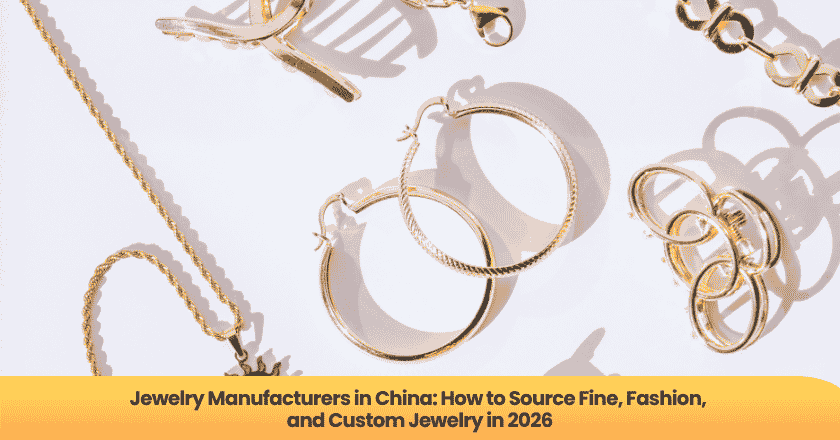
Fashion (or costume) jewelry uses base metals — brass, zinc alloy, stainless steel — with plating, often set with glass, cubic zirconia, or acrylic stones. It competes on design, price, and volume, and the factories that excel run high-output casting and plating lines with strong trend responsiveness. The make-or-break quality variable is plating durability: cheap plating tarnishes or flakes within weeks, generating returns. The right factory here is built for volume and consistent plating, not fine craftsmanship.
Plating is worth understanding in detail because it's where fashion jewelry quietly fails. Plating thickness is measured in microns, and a thicker layer lasts longer against wear and skin contact — a flash-plated piece may look identical to a properly plated one on day one and be worn through in a month. The plating method matters too: techniques like ion plating (IP) and quality gold plating wear far better than the cheapest electroplating. For a brand whose reputation rides on jewelry that still looks good after months of wear, specifying plating thickness and method, then verifying it, is as important as the design itself. A factory that talks fluently about microns and plating types is one that takes durability seriously; one that just promises "good quality plating" is leaving your returns rate to chance.
Fine jewelry
Fine jewelry uses precious metals — gold (specified in karat), silver (typically sterling, 925), platinum — set with real gemstones or diamonds. The priorities flip entirely: metal purity, stone quality, setting precision, and finishing craftsmanship matter far more than raw volume. These workshops are skilled, lower-volume operations, and the dominant risk is material misrepresentation — under-karat gold, lab stones sold as natural, lower-clarity diamonds than specified. Verification here is non-negotiable.
Custom jewelry
Custom work — your original designs, in either fine or fashion materials — demands development capability on top of production: CAD modeling, prototyping (often via lost-wax casting or 3D printing), and the engineering to make a design wearable and manufacturable. A factory that only produces its own catalog will improvise on your custom piece. Look for a real design and sampling department, not just a production floor.
Custom development also moves through stages worth understanding. A CAD model comes first, letting you refine proportions on screen before any metal is committed. Then a prototype — cast or printed — proves the design works physically: that prongs hold stones, that a ring is comfortable, that the piece can be produced repeatably. A capable manufacturer advises through each stage, flagging that a delicate element won't survive daily wear or that a setting needs reinforcement. Skipping straight to production from a sketch, without these checkpoints, is how custom jewelry arrives beautiful but fragile or unmanufacturable at scale. The development phase is where a custom piece is actually engineered, and a factory's willingness and ability to walk you through it is the clearest test of whether it can do custom work at all.
Expert Tip: Ask a jewelry manufacturer what share of its output is your exact category — plated fashion, fine gold, custom — and to show recent production of that type, not catalog images. A fashion factory casting and plating thousands of pieces weekly has the lines and plating control your accessory line needs; a fine-jewelry workshop has the bench jewelers and stone-setters yours requires. The two rarely overlap well. Production mix, not a broad "we make all jewelry" claim, reveals whether a factory actually fits your category.
Verifying Materials: The Core Risk
Metals and the testing that matters
The listing's wording is not evidence, and jewelry attracts material substitution because the difference between "14k gold" and "gold-plated" is invisible to the eye but enormous in cost. Specify metal type and purity precisely — karat for gold, 925 for sterling silver, the base alloy and plating thickness (in microns) for fashion pieces — and require verification. For precious metals, an assay or XRF (X-ray fluorescence — a non-destructive test of metal composition) test confirms purity; for plating, specify and check the micron thickness that determines durability. A "gold" piece confirmed only by email is confirmed by no one.
This is exactly where independent quality control earns its place. A factory's own claims come from the party motivated to ship; testing on the ground confirms what's real. An independent layer exists so jewelry materials match spec — metal purity, stone grade, plating thickness — rather than passing a glance and failing a customer's jeweler.
For higher-value fine jewelry, consider requiring hallmarking or an independent assay certificate that travels with the goods, giving you and your customers documented proof of metal purity. The cost of testing is trivial against the cost of selling under-karat gold as represented — a single appraisal by a customer's jeweler that reveals a discrepancy can unravel a brand's reputation and trigger refunds across a whole line. Treating material verification as routine rather than exceptional is what separates jewelry brands that endure from those undone by a supplier's quiet substitution.
Stones and finishing
For stones, specify whether natural or lab-grown, the grade, and the setting type, and require certification for significant gemstones or diamonds. Beyond materials, jewelry quality lives in finishing: smooth castings without porosity, secure stone settings that won't drop a stone, clasps and findings that function, and polish quality. A pre-production sample in your exact materials, locked as the sealed reference, is what your inspection checks against.
Lab-grown stones deserve particular attention in 2026, because their quality and prevalence have risen sharply and they're now a legitimate choice rather than a substitute to hide. The issue isn't lab-grown versus natural — both are valid — but disclosure: a lab stone sold as natural is fraud, and the price difference is large. If you specify natural, require certification; if you choose lab-grown, confirm it openly and price accordingly. Many brands now build product lines explicitly around lab-grown stones for their cost and sustainability story, which can be an advantage when disclosed honestly. The failure mode to guard against is a factory quietly substituting lab for natural to protect margin, which a stone certification from a recognized lab is designed to catch.
Common Mistake to Avoid: Accepting a metal or stone claim because the price seems reasonable and the sample looks right. Under-karat gold, thin plating that wears through in weeks, and lab stones sold as natural all look identical to an untrained eye and to a customer — until the piece tarnishes, the plating rubs off, or a jeweler appraises it. Buyers order on appearance, then face returns and reputation damage. Always specify materials precisely and verify with testing; the visible piece tells you nothing about what it's actually made of.
Custom Development, Compliance, and Placing the Order
Developing a custom piece
For custom jewelry, what you document and prototype is what you get. A capable manufacturer turns your sketch or CAD file into a prototype — typically a lost-wax casting or a 3D-printed model — refines fit and structure, and advises on manufacturability (a prong too thin to hold a stone, a design that won't cast cleanly). Expect a round or two of samples and pay for them; a serious development partner's attention is worth the fee. Settle design ownership and exclusivity in writing before production, since jewelry designs are easy to copy, and clarify who owns any molds you funded.
Compliance is mandatory, not optional
Jewelry sold in Western markets faces strict regulated limits on hazardous metals — nickel release (a common allergen, regulated in the EU), and lead and cadmium content (tightly limited in the US, especially for children's jewelry). A factory experienced in your target market designs to these limits and can provide test reports; one that hasn't may ship pieces that are illegal to sell or trigger a recall. Confirm compliance capability and require testing before bulk. Through 2026, enforcement of these limits has tightened, and tighter scrutiny of materials provenance makes a documented, compliant supply chain more important than ever.
The cost and reach picture
The best-fit jewelry factory often isn't the most visible online — many skilled workshops fill their books through relationships and don't market abroad, so the workshop genuinely built for your category may sit well outside the listings you can find. Reaching past the marketing-driven suppliers to those workshops is what separates a verified order from a gamble.
How NewBuyingAgent Helps You Source Jewelry
Jewelry's biggest pitfall is misrepresented material — plated sold as solid, low karat passed off as high — and buyers who don't test are the ones who get caught; lining up the right workshop for fashion, fine, or custom pieces and then verifying the metals and stones is heavy going from a distance, which is why many buyers bring in a sourcing partner. NewBuyingAgent is your perfect partner for global sourcing from China, backed by 30 years of expertise in trade, manufacturing and quality control.
The workshop best suited to your category rarely sits in the online-marketing column, so connecting your category to a genuinely matched maker comes first: with 100% Access to China's Factories, you use their 50,000+ cooperated partner factories—no language/region/time zone barriers. Their local reputation gets you full factory cooperation. Skirting the suppliers that only market well also helps on price: with Lower Prices Than Direct Sourcing, their wide factory network lets us pick low-cost, high-cooperation suppliers. Even with their margin included, they cut your costs by 5%-10%. And the things a glance can't tell apart — metal purity, stone grade, plating thickness — have to be held by real testing: NewBuyingAgent's 20,000+ product development & QC experts ensure your products match market needs and stay high-quality. Contact now.
Frequently Asked Questions
Can one factory make fine, fashion, and custom jewelry?
Rarely well. Fashion jewelry needs high-volume casting and plating lines; fine jewelry needs skilled bench jewelers and stone-setters at lower volumes; custom needs design and prototyping capability. A factory invests in its category and struggles outside it. Match each piece to a manufacturer whose normal business is that category.
How do I verify the metal is what's claimed?
Specify purity precisely — karat for gold, 925 for sterling silver, plating thickness in microns for fashion — and verify with an assay or XRF test for precious metals, and a micron check for plating. The listing's wording protects the seller; only physical testing confirms what the piece is actually made of, since under-karat or plated metal looks identical to the eye.
What compliance standards apply to jewelry imported from China?
For Western markets, regulated limits on hazardous metals are key: nickel release (an allergen, regulated in the EU) and lead and cadmium content (tightly limited in the US, especially for children's jewelry). Confirm the factory designs to your market's limits and can provide test reports, and require testing before bulk to avoid illegal or recalled product.
How do I source custom jewelry from China?
Find a manufacturer with real design-and-development capability — CAD modeling, prototyping via lost-wax casting or 3D printing, and manufacturability advice — not just a production floor. Document your design, approve a prototype in your exact materials, and settle design ownership and exclusivity in writing before production.
Why is one jewelry quote so much cheaper than others?
A quote well below the going rate usually means a cheaper material than claimed — lower karat, thinner plating, lab stones instead of natural — or a trading company quoting a different product. Ask for a material and plating-thickness breakdown and require a verified sample; the gap almost always traces to what the piece is really made of.
Conclusion
Sourcing jewelry from China starts with rejecting "jewelry" as one thing.
Identify your category — fashion, fine, or custom — match it to a manufacturer built for that work, verify every material with testing rather than trusting the listing, and confirm the hazardous-metal compliance your market demands.
Fashion rewards plating durability and volume, fine rewards purity and craftsmanship, custom rewards development capability — and material verification protects all three.
When matching the right workshop and verifying metals and stones from a distance is more than you want to manage, it's worth having a partner match your category to the right maker and put material testing behind your order.
NewBuyingAgent
Related Resources
Get Started Today
Let's Turn Your Sourcing Goals into RealityWeChat:+86 15157124615
WhatsApp:+86 15157124615
Address:Building 10 #39 Xiangyuan Road, Hangzhou, China
