

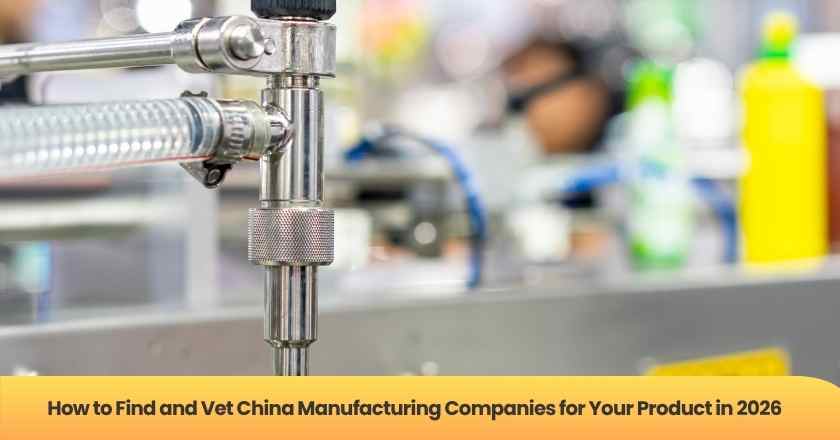
Search “manufacturer” for almost any product and China returns thousands of companies, each with a polished profile and a price that undercuts the last. The volume isn't the problem — the indistinguishability is. A trading company reselling another plant's capacity looks identical to the factory that actually owns the line, right up until your order goes wrong.
Finding China manufacturing companies for your product is two separate jobs: casting wide enough to build a real shortlist, then vetting hard enough that only genuine, capable factories survive. The buyers who do both well treat the search as a funnel, not a single lucky hit.If you'd rather have this handled on the ground by seasoned local procurement professionals, NewBuyingAgent serves as your local procurement partner delivering full end-to-end sourcing beyond just supplier screening.
Key Takeaways
• Use several discovery channels at once, since each surfaces a different mix of real factories and resellers.
• Build a shortlist of three to five candidates so you keep leverage and a fallback rather than betting on one.
• Verify legitimacy through the business license, export records, and a live floor walkthrough before spending on samples.
• Match the factory's capacity and experience to your specific product and volume, not just its willingness to say yes.
• Confirm certifications by number and audit capability before any deposit, because a polished profile proves nothing about the line.
Where to Find China Manufacturing Companies
Discovery is a volume game at the top: you want a wide pool so you can afford to reject most of it. The mistake is leaning on one channel and trusting whatever it surfaces. Each source carries a built-in bias, and knowing it keeps you from over-valuing the first promising profile.
B2B platforms and directories
Marketplaces give scale and filtering, but they list trading companies as readily as factories. Use them to assemble a long list, then verify each candidate independently. A listing is a lead to investigate, never proof that the company behind it manufactures anything.
Trade shows and industry clusters
Major fairs let you compare many suppliers quickly, and China's regional clusters concentrate specific industries in particular provinces. Sourcing within the right cluster often means better expertise and pricing. Fewer Western buyers travel for fairs than before 2020, and hybrid formats now make virtual attendance practical.
Referrals and sourcing agents
A manufacturer referred by another buyer in your market carries built-in social proof, and a sourcing agent maintains a network of pre-vetted factories. Both shortcut the discovery grind. Confirm the referrer's product and volume resemble yours, since a company excellent for one category can be wrong for another.
Expert Tip: When you build your initial long list, deliberately pull candidates from more than one Chinese region. Coastal provinces such as Guangdong and Zhejiang dominate many categories, but inland industrial clusters have grown quickly and often quote lower for comparable quality as their labor costs stay lower. Casting across regions early gives you honest price benchmarks and a fallback if your first-choice area is overloaded or its pricing has crept up over the past year.
Verifying a Company Is a Real Manufacturer
Before you invest time in samples or negotiation, confirm the company actually manufactures rather than resells. This stage is documents and a video call — cheap, fast, and able to end the conversation before you spend real money. It filters out the intermediaries that waste the most buyer time.
Read the business license
Request the business license and check the registered name, production scope, and registered capital. A manufacturer's scope names production of your product type; a reseller's names only trade or wholesale. Confirm the company name matches the bank account you're asked to pay into, since mismatches are an early warning.
Cross-check export records
A genuine exporting factory leaves a trail in customs and trade data. Where you can access it, confirming the company has shipped products like yours abroad is strong evidence it's a real producer. A firm with grand promises but no export history deserves extra scrutiny.
See the line in motion
Ask for a live, unedited video walkthrough of production, not a marketing reel. You’re looking for machines, materials, and staff making something like your product. A supplier who can't or won't show the floor is frequently a trading company without one to show.
Common Mistake to Avoid: Accepting a "verified" or gold-status badge on a B2B platform as proof a company is a real manufacturer. Those badges usually confirm only that the company paid for membership and submitted some documents — not that it owns a factory or can pass an audit. Buyers who let a platform badge replace their own license and floor checks often discover, after the deposit, that they’ve been dealing with a broker all along.
Matching Capability to Your Specific Product
A real manufacturer can still be the wrong one for your product. Saying yes is free; delivering your spec at your volume is not. The test is whether the company’s equipment, capacity, and experience fit what you actually need, rather than its enthusiasm to win the order.
Capacity versus your volume
Ask about monthly output, current order load, and how many lines could run your product. A company near full capacity may push your order back or rush it past quality. You want headroom, not a plant straining to fit you between larger clients.
Relevant product experience
A factory skilled in one product isn't automatically competent in yours. Ask for examples of similar products it has made and references from buyers in your market. Specific, checkable experience beats a broad claim of "we can make anything," which usually means subcontracting the parts they can't.
OEM versus ODM fit
Clarify whether you need OEM (Original Equipment Manufacturer — a factory that builds to your design, which you brand) or ODM (Original Design Manufacturer — a factory that designs the product you then brand). Many companies do both, so state which model your order is from the start to avoid mismatched expectations.
Expert Tip: Ask a shortlisted manufacturer to walk you through how it would handle your single hardest production challenge — the tightest tolerance, the trickiest material, the part most likely to fail. A company that genuinely makes your kind of product will describe a concrete process and the trade-offs involved. One that answers vaguely, or insists there’s no challenge at all, is either inexperienced with your product or planning to subcontract it. The specificity of the answer maps directly to real capability.
Auditing Quality Systems and Compliance
Capability on paper and capability in practice are different things, and the audit stage closes that gap. It confirms the company can hold quality across a full run and carries valid certifications for your market. This is the check buyers most often skip to save money and most often regret.
What an audit covers
A proper factory audit checks equipment, production capacity, quality management systems, and working conditions. The report tells you whether the plant can hold tolerances across a 10,000-unit run, not just polish one sample. Look for documented QC (Quality Control — the inspection steps that catch defects during and after production) procedures, not verbal assurances.
Verify certifications properly
Check certificates such as ISO 9001, CE, or RoHS by number against the issuing body, not the emailed PDF. Forged or expired documents are common enough that verification is routine. A genuine certificate that doesn’t cover your specific product is as unhelpful as a fake one.
Remote and third-party audits
In 2026, remote audits and third-party inspection firms are standard, so you can audit without traveling. A third party or sourcing agent visits, follows a checklist, and sends photos and findings. This has made thorough auditing affordable even for modest first orders. A sourcing partner such as NewBuyingAgent can run this on-site audit on your behalf.
Common Mistake to Avoid: Judging a manufacturing company's real capacity by the quality of a single sample. A small workshop can hand-build one flawless unit and then fail completely at 10,000. The sample proves the company understands your design; it says nothing about whether it can repeat that quality across a full production run. Always confirm output capacity and current order load separately from how good the sample looks. This is central to NewBuyingAgent's full-cycle procurement service. Its on-the-ground QC team verifies factories’ mass-production stability and real output capacity, instead of only checking finished prototype samples.
From Shortlist to Commitment in 2026
The final step is converting a vetted shortlist into a protected first order without surrendering the leverage you've built. This is where pricing, terms, and quality controls get locked. The buyers who scale cleanly are the ones who set this structure on the first order rather than improvising later.
Compare on landed cost
Compare your finalists on total landed cost — FOB price (Free On Board — the cost of goods loaded onto the vessel at the Chinese port, before freight and insurance), tooling, freight, duties, and fees — not the headline unit price. The cheapest quote often carries the highest total once everything is added. Normalize every quote to the same basis before deciding.
Lock terms before the deposit
Put the spec, quantity, price, lead time, packaging, and inspection rights into a written agreement that references a signed sample. A 30% deposit with the balance on a passed inspection keeps real money tied to acceptable goods. Settle this while your leverage is highest.
Build redundancy early
Qualify a backup manufacturer for your key product, and consider a China+1 strategy — adding a second-country source such as Vietnam or India to spread risk. Single-source dependence is the costliest sourcing fragility in 2026. The point isn't to leave China, whose supply depth is hard to match, but to avoid betting everything on one factory.
Expert Tip: Run a small trial order with your top manufacturing candidate before committing your main volume, even if it raises your per-unit cost on that batch. A trial tests the company, the shipping route, and your own process at low stakes. How a factory handles a modest first run — communication, sample fidelity, on-time delivery, inspection results — predicts how it will handle your scaled program far better than any audit report alone. The lesson is cheap to learn at trial size.
Frequently Asked Questions
How do I tell a real manufacturer from a trading company?
Check the business license scope, look for export records, and request a live walkthrough of the production line. A genuine manufacturer's license names production of your product type and it can show the floor making something similar. A trading company will have a trade-focused scope and will usually deflect requests to see actual production.
How many China manufacturing companies should I shortlist?
Aim for three to five serious candidates after filtering a wider initial pool. Fewer than three leaves you without leverage or a fallback if your first choice disappoints; far more than five spreads your attention too thin to vet any of them properly. The shortlist is for genuine comparison, not endless quote collection.
Do I need to fly to China to vet a manufacturer?
No — remote and third-party verification is standard in 2026. Document checks, video walkthroughs, and third-party or agent-run audits let you confirm legitimacy and capability without traveling. This makes thorough vetting affordable even for first-time buyers, and removes travel as a barrier to proper due diligence before you commit.
What certifications should a China manufacturing company have?
It depends on your product and market, but common ones include ISO 9001 for quality management and product-specific marks like CE or RoHS for regulated goods. Verify each certificate by number against the issuing body rather than trusting an emailed PDF, and confirm it actually covers your specific product, not just the company in general.
Is it still worth manufacturing in China in 2026?
For most product categories, yes — China's supplier depth, infrastructure, and component ecosystem remain hard to match.
Conclusion
Finding China manufacturing companies takes minutes; finding the right one takes a funnel. Cast wide across channels and regions, verify legitimacy with documents and a live floor, match capability to your actual product, audit before you trust, and lock terms before the deposit. Run that sequence and the thousands of identical-looking profiles resolve into the few factories that can actually deliver.
If you'd prefer seasoned local experts manage this full vetting & sourcing workflow in China, NewBuyingAgent stands as your reliable China procurement partner. With access to 50,000+ partner factories — versus the under 5% most buyers can connect with directly — it serves as your outsourced procurement arm to source, screen, negotiate prices and monitor supplier quality end-to-end. Contact now.
NewBuyingAgent
Related Resources
Get Started Today
Let's Turn Your Sourcing Goals into RealityWeChat:+86 15157124615
WhatsApp:+86 15157124615
Address:Building 10 #39 Xiangyuan Road, Hangzhou, China
