

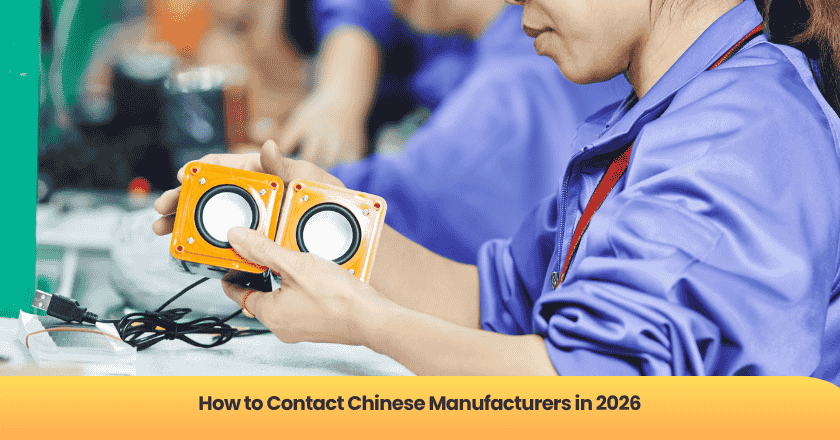
Getting your first message to a Chinese factory right—or wrong—can determine whether your sourcing journey starts with a reliable partner or ends in a costly headache. Millions of products sold globally originate from Chinese manufacturing hubs, and the process of reaching those factories is far more accessible today than it was a decade ago. You do not need to speak Mandarin, book a flight to Guangzhou, or engage an expensive intermediary just to open a conversation.
That said, "accessible" does not mean "easy." The gap between sending a message and building a trustworthy supplier relationship is where most buyers stumble—not from lack of effort, but from lack of structure. This guide walks you through the entire process: from locating factories on the right platforms and vetting them thoroughly, to writing inquiries that generate real responses and conducting virtual factory tours that reveal the truth about a manufacturer's capabilities. It also addresses what's changed in 2026, including how AI translation tools, shifting tariff structures, and direct-to-consumer factory channels are reshaping the global sourcing landscape.
Key Takeaways
- Chinese manufacturers are best located through B2B platforms (Alibaba, Global Sources, Made-in-China), geographic industry clusters, and trade shows—each channel suits a different buyer profile and order scale.
- Supplier verification is non-negotiable: always cross-check business licenses, request third-party audit reports, and confirm actual production capacity before committing any capital.
- WeChat dominates real-time communication in China; email is essential for formal documentation. Using both channels in tandem is the professional standard among experienced importers.
- A well-structured first inquiry—covering your company background, product specs, target MOQ, and required certifications—dramatically improves response rate and supplier quality.
- Virtual factory tours have become a standard pre-order due-diligence tool; knowing which specific questions to ask (and which red flags to spot on camera) protects you from committing to an unreliable partner.
- In 2026, AI-assisted translation, video-based vetting, and the rise of factory-direct e-commerce platforms are compressing traditional sourcing timelines—but the need for careful supplier qualification has not changed.
Where to Find Chinese Manufacturers: Choosing the Right Starting Point
The first question most buyers ask is straightforward: where do I even look? The honest answer is that it depends on what you're buying, in what volume, and how much hands-on qualification you're willing to do upfront.
B2B Marketplaces
Platforms like Alibaba, Global Sources, and Made-in-China function as digital trade directories—essentially, searchable manufacturer databases with product photos, transaction histories, and buyer reviews layered on top. Alibaba covers virtually every product category imaginable and is the most commonly used starting point. Global Sources tends to attract larger, more export-experienced factories, which makes it worth exploring for electronics, hardware, or consumer goods sourced in higher volumes. Made-in-China.com holds particular strength in industrial and OEM (Original Equipment Manufacturer—meaning goods produced to a buyer's own specifications) categories.
One thing to keep front of mind: listing on a B2B marketplace does not make a supplier legitimate. These platforms provide a search interface, not a quality guarantee. That verification is your responsibility.
Geographic Industry Clusters
This is a concept many new buyers overlook, but experienced sourcing professionals treat it as a map. China's manufacturing capability is intensely concentrated by geography. Shenzhen and Dongguan anchor the electronics and consumer tech sector; Yiwu hosts the world's largest small-commodity wholesale market; Foshan leads in furniture and ceramics; Zhongshan dominates lighting products; Wenzhou is the center of gravity for shoes and hardware. Knowing your product's cluster lets you filter supplier searches by region and immediately surface factories with genuine, specialized production expertise rather than generalist brokers.
Trade Shows and Word-of-Mouth
The Canton Fair—held twice yearly in Guangzhou—remains the largest trade event of its kind globally, attracting tens of thousands of suppliers and hundreds of thousands of buyers. Attending in person allows you to examine samples physically, gauge a factory's professionalism in real time, and compress months of email communication into a single conversation. That said, with the maturation of video calling and virtual tour protocols, attending a trade show is now more of a relationship-deepening exercise than a hard requirement for initial contact. Word-of-mouth referrals from other buyers in your industry are also underrated—a factory that someone in your network has worked with for three years comes pre-vetted in a way no platform badge can replicate.
Expert Tip: When browsing any B2B platform, pay close attention to the "Business Scope" section of a supplier's registered company profile. Chinese business licenses specify what a company is legally permitted to do. If the scope reads "Trading" or "Consulting" rather than "Production" or "Manufacturing," you are likely looking at a trading company acting as an intermediary—not a direct factory. That is not automatically a dealbreaker (trading companies can offer flexibility on MOQs and multi-category sourcing), but you should know what you are paying for before you negotiate.
Vetting and Verification: The Step Most Buyers Rush
Supplier verification—confirming that a manufacturer is who they claim to be, with the production capacity they claim to have—is the single most consequential step in the entire sourcing process. It is also where a surprising number of buyers cut corners, often because the early stages of a supplier relationship feel friendly and promising. The due diligence has to happen before that warm feeling translates into a wire transfer.
A solid verification process covers four areas:
- Business License ReviewLegitimate Chinese manufacturers are legally required to display their 营业执照 (yíngyè zhízhào)—business license—in their office. Request a clear photo or scan. Match the company name on the license to the name used in correspondence and on the B2B platform. Any mismatch warrants an explanation before you proceed.
- Third-Party Certification and AuditsCertification bodies such as SGS, Bureau Veritas, and Intertek offer factory audit services that any reputable supplier should be willing to accommodate. An ISO 9001 certificate—a quality management standard that verifies documented production processes exist and are followed—is a useful baseline indicator. It doesn't guarantee product quality, but it does tell you the factory has passed an external review at some point. Suppliers who push back on the idea of third-party audits are telling you something.
- Transaction History and ReferencesOn Alibaba, examine Trade Assurance-covered transaction records and buyer reviews. For suppliers contacted through other channels, ask directly for references from existing international clients—then actually follow up with those references rather than treating the request as a formality.
- Payment Method SelectionFor first orders, use escrow, Trade Assurance, or a letter of credit (LC). An LC is a bank-mediated payment instrument where funds are only released once shipping documents are verified—essentially a neutral third-party safeguard. Bank wire transfers (T/T) without any protection mechanism should only enter the picture after multiple successful transactions have established genuine trust.
Common Mistake to Avoid: Verifying a supplier once and treating it as permanent. Supplier circumstances change: ownership transfers, production lines get quietly outsourced to sub-contractors, key quality control staff leave. For any ongoing relationship where you are placing significant orders, revisit the verification at least once every 12 to 18 months—particularly before scaling your order volume substantially.
Choosing the Right Communication Channel in 2026
How you communicate with a Chinese supplier isn't purely a logistical question. Chinese business culture places real weight on Guanxi (关系)—a concept that translates roughly as "relational capital" or "relationship network." The channels you choose and how you use them signal how seriously you take the partnership.
WeChat is, without question, the dominant communication tool in Chinese business. Virtually every export-facing factory sales representative uses it as their primary channel. It supports real-time text, voice messages, video calls, and file sharing—all within a single app that is already installed on every phone in the country. The informal, high-frequency nature of WeChat makes it ideal for quick questions, sample status updates, and the kind of small, steady relationship-building that matters in Chinese business culture. The downside is structural: it was not designed for formal record-keeping, conversations can get buried under personal chats, and the platform's data privacy standards are less stringent than most Western alternatives.
Email serves a different and essential function. It is the appropriate channel for formal inquiries, contract attachments, technical specification documents, and any communication that may need to be referenced in a dispute. Response times are slower—often 24 to 48 hours, given time zone differences and the fact that many factory sales teams check email far less frequently than WeChat—but the documentation trail is worth the delay. A good working practice: confirm anything discussed informally on WeChat in a follow-up email before any action is taken on it.
DingTalk and Beyond
DingTalk (钉钉), developed by Alibaba, has gained real traction in medium-to-large Chinese manufacturing companies as an internal business tool. Think of it as China's corporate equivalent of Slack—task assignment, deadline tracking, and team notifications all in one platform. It is not a first-contact tool, but buyers who work closely with specific factories over multiple production cycles sometimes find it useful for shared project visibility. WhatsApp is accessible in China via VPN and is used by some export-oriented sales teams, particularly those serving Southeast Asian and European markets. Never assume a supplier uses it; always ask before making it a primary channel.
The smartest approach in practice is a two-channel workflow: send your formal inquiry via email for documentation purposes, and reach out simultaneously on WeChat for speed. This combination is the professional standard among experienced importers, and it immediately communicates to the supplier that you understand how business in China actually works.
Expert Tip: Time zone management matters more than most buyers realize. Beijing Standard Time (CST) runs 13 hours ahead of US Eastern Time and 8 hours ahead of Central European Time. If you send a WeChat message at 9 AM your local time, it may be midnight in China. Getting into the habit of checking the local time before expecting a real-time response reduces frustration considerably—and builds goodwill by signaling that you respect your supplier's working hours.
Writing an Inquiry That Gets a Serious Response
Chinese factories receive hundreds of messages every week. A vague opener like "Hi, interested in your product—what's the best price?" will either be ignored or draw a generic catalogue in response. Your first message is, in effect, your first job interview with that supplier. The factories worth working with are busy, and they screen buyers as carefully as buyers screen them.
A well-structured inquiry should always cover the following ground:
- Company introductionState who you are, where you are based, and what market you sell into. Suppliers want to know they are speaking with a real, operating business—not a first-time buyer with no track record. Even a two-sentence summary is better than nothing.
- Precise product specificationsDimensions, materials, colour options, surface finishes, and any technical drawings or reference images you have available. The more specific the request, the more specific and credible the quote. Vague requests produce vague—and usually inflated—responses.
- Quantity expectations and pricing tiersState the MOQ (Minimum Order Quantity—the smallest batch size a factory will produce) you are targeting, or ask the supplier to confirm theirs, and request unit pricing for at least three volume brackets. For example: 500, 1,000, and 5,000 units. Tiered pricing reveals the factory's cost structure and tells you exactly where economies of scale kick in.
- Required certificationsIf your target market demands specific compliance standards—CE marking for Europe, FCC or UL for the United States, FDA for food contact or personal care categories—state this explicitly in the first message. Discovering a certification gap after sampling wastes everyone's time and money.
Here is a working template that covers all of the above without being overly formal:
Subject: Inquiry – [Product Name] | [Your Company Name]
Dear [Factory Name / Sales Manager],
I'm [Name] from [Company], based in [Country]. We distribute [product category] through [retail / e-commerce / wholesale] channels in [target market].
We are currently evaluating suppliers for [specific product]. Could you please provide pricing for 500, 1,000, and 5,000 units, along with your standard production lead time?
Kindly confirm whether CE certification is available, and advise if OEM packaging is possible from the first order.
Technical specifications are attached for your reference.
We look forward to hearing from you.
Common Mistake to Avoid: Sending the identical message to 30 suppliers at once and waiting to see who responds. Experienced factory sales reps recognize mass-inquiry behaviour immediately, and it signals low buyer quality. A better approach: shortlist 5 to 8 suppliers based on your platform research and initial profile review, personalize each inquiry slightly (reference something specific about their listed products or certifications), and concentrate your evaluation on that smaller pool. Quality responses require quality outreach.
The Virtual Factory Tour: Your Remote Due Diligence Protocol
Video-based factory visits have evolved from a pandemic-era workaround into a standard pre-order qualification step in global sourcing. A well-run virtual tour—conducted over WeChat Video, Zoom, or WhatsApp—can reveal more about a factory's actual capabilities than a polished company brochure or a platform verification badge ever will.
Organize your questions into three categories to make the most of the session.
Verification: The Reality Check
Start by asking the sales rep to pan the camera across the factory entrance so you can match the signage to the name on their business license. Then ask them to show the license itself—legitimate Chinese factories are required to display the original in the office. Neither request is unusual or offensive; any reputable supplier will comply without hesitation. Ask how many workers are currently operating on the production floor. This one question helps you gauge whether the stated production capacity is real or a sales-deck figure, and whether the factory is operating at meaningful scale.
Production and Quality Control: The Deep Dive
Ask the rep to walk you through the specific production line for your product type. Watch the machinery carefully: a factory claiming to manufacture precision electronics should have soldering stations, automated testing rigs, and ESD-controlled (electrostatic discharge—a critical quality standard in electronics assembly) work areas. If the workshop looks like a basic assembly room with no specialized equipment, ask directly how that product is made. Gaps between the claim and the physical setup are a meaningful red flag.
Ask to see the QC (Quality Control) station—the dedicated area where finished units are tested before packaging. A credible factory's QC setup will include testing equipment matched to the product category: pull-force testers for cables and connectors, drop-test rigs for packaged consumer goods, salt spray chambers for metal components. Ask what happens when a unit fails a test. The answer—whether it describes a documented rework process or a vague "we fix it"—tells you a great deal about the factory's quality culture.
Logistics and Capacity: The Business Reality Check
Ask to see the finished goods storage area. Boxes labeled for export with recognizable Western-brand shipping marks or destination-country carton markings are a positive signal—they indicate the factory already meets international packaging and labeling requirements, which saves you rework costs downstream. Ask about current capacity utilization: how full is the production schedule right now? A factory running at very low capacity may be between large orders or struggling commercially; one operating at 100% may not be able to prioritize your production run without significant delays. Neither extreme is automatically disqualifying, but both warrant a follow-up conversation about realistic timelines.
Expert Tip: Record the virtual tour with the supplier's permission. This gives you a reference document for future comparison and provides a factual record if a dispute arises over what was verbally confirmed during the call. Most factories have no objection; it also signals that you are a systematic, serious buyer—exactly the kind of customer they want.
Contracts and Documentation: The Paper Trail That Protects You
Every working relationship with a Chinese manufacturer should be underpinned by a written contract—including sample orders. This does not need to be a 40-page legal document. A clear, bilaterally signed agreement covering product specifications, unit pricing, payment terms, delivery timelines, acceptable defect rates (AQL—Acceptable Quality Level—the industry-standard statistical method for determining how many defects in a production batch are tolerable before rejection), and intellectual property ownership is the functional baseline.
Pair the contract with a detailed Bill of Materials (BOM). Think of the BOM as a recipe card for your product: a structured list of every component, sub-assembly, material grade, and dimensional specification that goes into the finished item. The BOM ensures both parties are aligned on exactly what is being manufactured, and it becomes the primary reference document for pre-shipment quality inspections. Any deviation from the approved BOM during production becomes a documented, contractual issue rather than a word-against-word dispute.
For IP-sensitive products—anything with proprietary designs, patented mechanisms, or branded tooling—consider a standalone NDA (Non-Disclosure Agreement) before sharing technical drawings. China's IP enforcement has strengthened considerably over the past decade, but the key is having registered rights and documented agreements in place before production begins, not after an infringement has occurred. Registering a design patent in China through CNIPA (China National Intellectual Property Administration) is relatively fast and inexpensive for the protection it provides.
Common Mistake to Avoid: Relying on verbal agreements made over WeChat as operational instructions. WeChat conversations carry very limited legal weight in a dispute. The professional standard is to follow up every significant verbal agreement—a pricing concession, a change to specifications, an agreed delivery date—with a written confirmation email within 24 hours. Request a written acknowledgment from the supplier. This takes an extra five minutes per interaction and has prevented countless costly misunderstandings.
How China Sourcing Is Changing in 2026
The sourcing landscape has shifted meaningfully, and buyers operating on assumptions from five years ago are already working at a disadvantage.
AI-powered translation has materially reduced the language barrier for buyers without Mandarin proficiency. Tools integrated directly into B2B platforms now handle technical product descriptions and specification documents with enough accuracy for practical use. This doesn't replace the need for a human translator when negotiating contract terms or navigating a complex quality dispute—nuance and register still matter at that level—but it has made routine communication far more accessible to smaller buyers operating without a dedicated China team.
Tariff structures between the United States and China have pushed a significant number of buyers toward "China Plus One" diversification strategies: maintaining a primary Chinese supplier relationship while actively developing backup capacity in Vietnam, India, Bangladesh, or Mexico. This model was in discussion before 2020; by 2026, it has become standard operating procedure for mid-to-large importers. Even buyers who continue placing the majority of their orders with established Chinese partners are now mapping alternative options as a hedge against supply chain disruption. Starting that mapping before you need it is far less stressful than doing it during a crisis.
Factory-direct cross-border e-commerce—driven by platforms integrating direct manufacturer participation with international logistics—is compressing the traditional importer-distributor chain. Smaller buyers can now access factory pricing at MOQs that were not commercially viable five years ago. This creates genuine opportunity for earlier-stage businesses to build quality supply chains, though it also increases the importance of rigorous supplier qualification: lower MOQ thresholds mean more factories in the market, including more unqualified ones.
Expert Tip: Even if your current sourcing needs are fully met by a single reliable Chinese supplier, allocate time now to identifying one qualified backup factory in a secondary manufacturing region. Supply chain disruptions—whether from tariff policy changes, factory fires, raw material shortages, or geopolitical events—are not hypothetical risks. The buyers who navigate them with the least damage are those who had relationships with alternative suppliers before the disruption occurred, not those who started searching for one afterward.
Frequently Asked Questions
Do I need to speak Mandarin to work with Chinese manufacturers?
No. The vast majority of export-oriented Chinese factories employ at least one English-speaking sales representative, and B2B platforms now integrate AI translation support into their messaging interfaces. That said, learning a handful of basic Mandarin business phrases—or at minimum, understanding common Chinese business terms like MOQ, FOB, and 工厂 (factory)—does build genuine goodwill and signals that you are a serious, engaged buyer.
What is the safest payment method for a first order?
Trade Assurance (on Alibaba) and escrow services provide the strongest buyer protection for initial transactions. These mechanisms hold payment in escrow until you confirm receipt and acceptable quality, significantly reducing the risk of fraud or non-delivery. Bank wire transfers (T/T) without additional protection should be reserved for suppliers with whom you have established trust across multiple successful orders.
How do I know if I'm dealing with a manufacturer or a trading company?
Check the "Business Scope" listed on the company's registered business license. Manufacturing-oriented companies typically include terms like production or manufacturing in their scope. If the scope only lists trading, you are working with an intermediary. Both have legitimate uses—trading companies can be more flexible on MOQs and can source across multiple factories simultaneously—but understanding which type you're working with is essential for pricing expectations and quality accountability.
What should I do if a supplier stops responding?
First, check Chinese public holidays. Chinese New Year (typically January–February), Golden Week in October, and the Labour Day holiday in May each create communication blackouts of one to two weeks. Outside holiday periods, follow up via both email and WeChat. If there is no response within five to seven business days, the supplier is likely either at full capacity, not interested in your order size, or facing internal issues. Move to the next qualified factory on your shortlist rather than investing further time in unresponsive outreach.
How long does it typically take to receive a sample?
For standard off-the-shelf products with minor modifications, sample production and international shipping combined typically takes two to four weeks from confirmed sample order. Custom OEM samples requiring new tooling, mold creation, or unique component sourcing generally take four to eight weeks. Always confirm the specific sample timeline in writing before proceeding, and build buffer time into any product launch calendar that depends on a sample approval gate.
Is it safe to share product designs with a factory before signing a contract?
Sharing detailed technical drawings or proprietary designs before any legal framework is in place carries real IP risk. At minimum, have the supplier sign a formal NDA before disclosing sensitive design information. For products with significant IP value, consider working through a sourcing agent or legal representative who can manage the factory relationship with an additional layer of accountability. Registering a design patent with China's CNIPA before production begins provides an enforceable legal basis if a dispute arises.
What is an AQL inspection, and do I need one?
AQL stands for Acceptable Quality Level—it is the industry-standard statistical framework for determining how many defective units in a production batch are acceptable before the entire shipment is rejected. In practice, AQL inspections are conducted by a third-party quality control firm (SGS, Bureau Veritas, tradeAider, etc.) at the factory before goods are shipped. For any order above a few thousand dollars, a pre-shipment AQL inspection is one of the most cost-effective risk management tools available to importers. Discovering defects after goods have arrived at your warehouse is many times more expensive than catching them before the container is loaded.
The process of contacting and qualifying Chinese manufacturers has never been more transparent or accessible—but that accessibility carries with it the responsibility to do it properly. Rushed supplier selection, skipped verification steps, and over-reliance on informal communication are the most consistent sources of expensive sourcing failures. The importers who build durable, high-quality supply chains out of China treat supplier relationships not as transactions, but as long-term partnerships that merit genuine investment in time and diligence. The process described in this guide is not complicated. It just needs to be followed completely.
NewBuyingAgent
Related Resources
Get Started Today
Let's Turn Your Sourcing Goals into RealityWeChat:+86 15157124615
WhatsApp:+86 15157124615
Address:Building 10 #39 Xiangyuan Road, Hangzhou, China
