

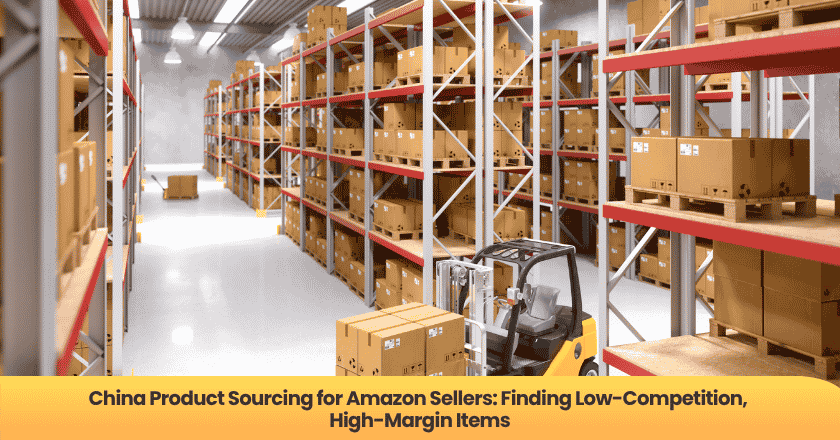
Introduction
Most new Amazon sellers pick a product they like, find it cheap on a sourcing platform, launch into a category with forty established competitors, and wonder why they're stuck on page nine bleeding ad spend. The problem is rarely the supplier. It's that the product was chosen backward — by what was easy to source rather than by what could actually win on Amazon and survive the platform's fees. Sourcing for Amazon is a different discipline than just buying from China.
Finding low-competition, high-margin products means leading with market research and margin math, then sourcing to fit — and vetting suppliers carefully, because a quality problem on Amazon turns into negative reviews that sink a listing. The sellers who profit are the ones who validated demand and margin before they ever contacted a factory.
Key Takeaways
• Choose the product by Amazon demand and margin first, then source to fit — not the reverse.
• Low competition plus steady demand beats a "cool" product in a saturated category.
• Calculate true FBA margin (fees, ads, returns, landed cost) before committing to any product.
• Differentiation, not the lowest price, is what wins on Amazon and justifies sourcing custom.
• A quality problem becomes bad reviews, so supplier vetting is margin and ranking protection.
Picking the Product Before the Supplier
Research demand and competition first
The winning sequence is research-then-source, not source-then-hope. Use Amazon's own data and research tools to find products with steady demand and manageable competition — enough sales to be worth it, few enough strong competitors that you can rank. Signals of a workable opportunity include consistent demand, a top of search results that isn't dominated by entrenched brands with thousands of reviews, and listings with visible weaknesses you can beat on quality, photos, or features. A product you can source cheaply means nothing if forty sellers already own the category.
Avoid the obvious traps: oversaturated categories, products dominated by Amazon's own brands, items with seasonal-only demand, and anything restricted or gated. The goal is a product with real, year-round demand and a competitive field you can realistically break into.
Product size and weight belong in this early screen, too, because they quietly shape your whole economics. A small, light product is cheaper to ship from China, cheaper to store and fulfill through FBA, and less prone to damage in transit and returns — all of which protect thin Amazon margins. A large or heavy product carries higher freight, higher FBA fees, and more return-shipping cost, which can sink the margin before you account for ads. Many experienced sellers deliberately favor compact, lightweight products for exactly this reason. Screening for size and weight alongside demand and competition, rather than falling for a bulky product with great sales, is a discipline that keeps the FBA math workable. A product can have strong demand and still be a poor Amazon choice purely because its dimensions eat the margin.
Low competition with real demand
The sweet spot is a product with steady demand and a competitive field weak enough to enter, where you can differentiate. This is harder to find than a popular product and far more profitable to own. It often means a niche within a broad category, an improved version of a flawed best-seller, or a bundle competitors don't offer. Finding it is research work, and it's the work that determines whether your launch ranks or stalls.
Expert Tip: Read the one-, two-, and three-star reviews of the top listings in your target category before sourcing anything. They're a free product-development brief — customers telling you exactly what's wrong with what's selling now. A strap that breaks, a part that's missing, confusing instructions: each complaint is a feature you can fix and market. Sourcing a product that solves the documented complaints of a category's best-sellers is how you enter with a genuine edge rather than just another me-too listing.
The Margin Math That Decides Everything
Calculate true FBA margin before committing
Amazon's fees are substantial, so a product's real margin is what's left after everything, not the gap between landed cost and retail price. Account for the referral fee (Amazon's commission, often around 15%), FBA fulfillment fees (storage and shipping Amazon handles), advertising cost (PPC to rank and stay visible), returns, and your full landed cost. A product that looks like a healthy margin on paper can be break-even once ad spend and fees are real. Build the full model before committing — many seemingly good products fail this test.
Advertising deserves particular attention because it's where new sellers underestimate. Ranking a new listing takes sustained PPC spend, and a thin-margin product can't fund the ads needed to rank, trapping it in obscurity. A higher-margin product can buy its way to visibility and still profit, which is why margin and competition are linked: you need enough margin to fight for the ranking.
There's also a launch-cost reality beyond ongoing ads. Getting a new product's first reviews and initial ranking often means spending more aggressively up front — heavier PPC, promotions, and accepting near-break-even or loss-leading economics for the first weeks until the listing gains traction and organic sales build. Budgeting for this launch phase, not just steady-state margin, is what separates sellers who push a product over the ranking hump from those who run out of runway just short of it. A product whose margin only works at scale, with no cushion to fund the launch, is a common way new sellers stall. Factor the cost of getting to rank into your model from the start, and choose products whose margin can absorb that early investment and still profit once established.
Why differentiation beats price
Competing on price alone on Amazon is a race to the bottom that the lowest-cost seller wins and everyone else loses. The durable strategy is differentiation — a better product, a useful bundle, superior branding — that justifies a price supporting real margin. This is where sourcing connects to strategy: a differentiated product often means custom or improved manufacturing, not the identical generic item your competitors buy from the same factory. Sourcing to differentiate, rather than to match the lowest price, is what makes an Amazon product defensible.
Bundling deserves a specific mention because it's an underused, low-cost form of differentiation. Combining your core product with a complementary item — a storage bag, an accessory, a consumable refill — creates a listing competitors selling the bare product can't directly match on price comparison, since it's a different offering. Bundles also raise the order value and can improve perceived value without proportionally raising your cost, especially when the added item is cheap to source. From a sourcing standpoint, a bundle may mean coordinating two suppliers or finding a factory that can assemble the kit, which is more work than buying one generic item but creates a defensible listing. The sellers who escape pure price competition often do it not with a radically new product but with a smarter package around a solid one.
Common Mistake to Avoid: Choosing a product because it's cheap to source, then trying to make it work on Amazon. Sellers find a $2 item, assume the low cost guarantees margin, and launch into a saturated category where price competition and ad costs erase the gap. Cheap sourcing is meaningless without demand, beatable competition, and margin after fees. Validate the Amazon opportunity and the true FBA margin first; let that analysis choose the product, then source to fit it.
Sourcing and Supplier Vetting for Amazon
Quality is ranking protection
On Amazon, product quality isn't just customer service — it's survival. A quality defect generates negative reviews and returns, and a listing's star rating directly affects its ranking and conversion. A few one-star reviews early can sink a new product before it gains traction. That makes supplier vetting and quality control not optional extras but direct protection of your ranking and your investment. A pre-shipment inspection against an approved sample, tied to your balance payment, is the standard safeguard.
Independent quality oversight matters because a supplier's own check comes from the party motivated to ship. An independent layer exists so an Amazon product matches its approved sample across the run, protecting the reviews and ranking your launch depends on.
Finding and verifying the right supplier
Most Amazon sellers source through the obvious platforms, where listings are thick with trading companies reselling generic products with a markup. For a differentiated product, you often need a real factory that can customize, which is harder to find — the maker that can actually build something distinctive rarely sits among the resellers crowding the platforms. Verify any supplier with specific production questions and a business-license check, confirming the registered name matches the payment account; a mismatch signals a middleman. Reaching past those resellers to a factory that can differentiate your product is what protects both your margin and your listing.
Expert Tip: Order and inspect a pre-production sample against your exact spec before committing to bulk, and treat it as your locked reference for inspection. Amazon sellers under launch pressure sometimes skip straight to a bulk order to hit a date, then receive product that doesn't match the listing photos or has a defect that draws one-star reviews. The sample stage is cheap insurance for a launch that lives or dies on early reviews. Lock the sample, inspect the bulk against it, and protect the ranking your whole investment rides on.
How NewBuyingAgent Helps You Source for Amazon
Amazon is won on differentiation and reviews, yet the platform search is mostly trading companies reselling generic goods with a markup — so building a product that competes means reaching a factory that can genuinely customize, not another middleman. Finding that real maker and then protecting quality and reviews from a distance is a lot to carry alone, which is why many sellers hand the sourcing side to a partner. NewBuyingAgent is your perfect partner for global sourcing from China, backed by 30 years of expertise in trade, manufacturing and quality control.
Connecting your product to a factory that can actually customize, rather than the resellers crowding the platforms, is the starting point: with 100% Access to China's Factories, you use their 50,000+ cooperated partner factories—no language/region/time zone barriers. Their local reputation gets you full factory cooperation. Amazon margins are already thin after FBA fees, so every point saved on the sourcing side goes straight to protecting your margin: with Lower Prices Than Direct Sourcing, their wide factory network lets them pick low-cost, high-cooperation suppliers. Even with their margin included, they cut your costs by 5%-10%. And because Amazon answers a quality miss with bad reviews and a ranking drop, the bulk has to match the sample, held by independent checking: NewBuyingAgent's 20,000+ product development & QC experts ensure your products match market needs and stay high-quality. Contact now.
Frequently Asked Questions
How do I find low-competition products to sell on Amazon?
Lead with research, not sourcing. Use Amazon data and research tools to find products with steady, year-round demand and a competitive field not dominated by entrenched brands with thousands of reviews. Look for categories with listings you can beat on quality, features, or photos. A cheap-to-source product means nothing if the category is already saturated.
How do I calculate my real margin on an Amazon product?
Subtract everything from your retail price: the referral fee (often around 15%), FBA fulfillment fees, advertising (PPC) cost, returns, and full landed cost including duties and freight. The result is your true margin — often far thinner than the gap between factory price and retail suggests. Build this model before committing, since many seemingly good products fail it.
Should I compete on price or differentiate on Amazon?
Differentiate. Competing on price alone is a race to the bottom only the lowest-cost seller wins. A better product, a useful bundle, or stronger branding justifies a price that supports real margin and funds the advertising needed to rank. Differentiation usually means custom or improved sourcing, not the identical generic item competitors buy from the same factory.
Why does supplier quality matter so much for Amazon?
Because quality defects become negative reviews, and a listing's star rating directly affects its ranking and conversion. A few early one-star reviews can sink a new product before it gains traction. Supplier vetting and a pre-shipment inspection against an approved sample aren't optional — they directly protect the reviews, ranking, and investment your launch depends on.
How do I source a differentiated product rather than a generic one?
Find a real factory that can customize, not a trading company reselling generic items, which is harder since most sellers reach only a small slice of China's factories directly. Use review-driven product improvements as your spec, verify the supplier is a genuine manufacturer, and approve a custom pre-production sample. A sourcing partner with broad factory access can reach makers that can actually differentiate your product.
Conclusion
Sourcing for Amazon succeeds when you reverse the usual order: research demand and competition, calculate true FBA margin, and design a differentiated product first — then source to fit it. The product chosen backward from a cheap quote is the one that stalls on page nine; the one chosen from a validated, beatable opportunity with margin to fund its ranking is the one that wins. And because Amazon punishes quality misses with reviews, supplier vetting is ranking protection, not overhead. When finding factories that can differentiate your product and protecting your margin and reviews from a distance is more than you want to manage, it's worth having a partner handle the sourcing and quality end while you build the listing.
NewBuyingAgent
Related Resources
Get Started Today
Let's Turn Your Sourcing Goals into RealityWeChat:+86 15157124615
WhatsApp:+86 15157124615
Address:Building 10 #39 Xiangyuan Road, Hangzhou, China
