

Introduction
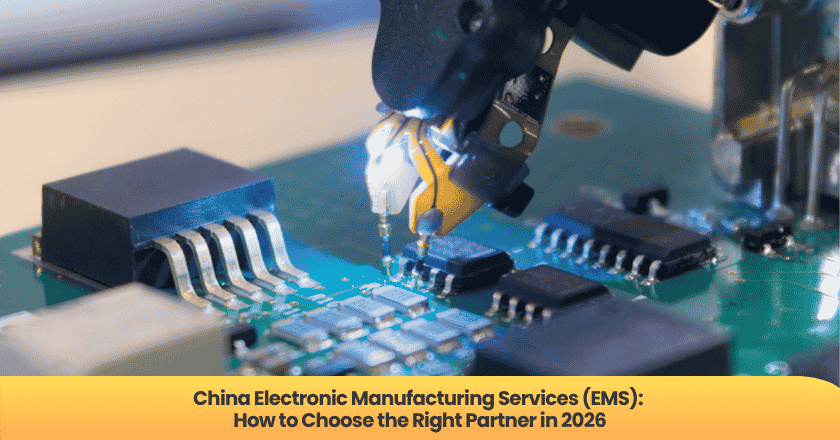
Your prototype works on the bench, the bill of materials is locked, and now you need someone to actually build thousands of units without the firmware glitching, the solder joints failing, or the components quietly swapped for cheaper equivalents. Choosing a China EMS partner is where a lot of hardware projects either scale cleanly or fall into months of rework. The provider that quotes lowest is rarely the one that gets you to reliable mass production.
Electronic manufacturing services (EMS — companies that assemble printed circuit boards and full electronic products for other brands) span a huge range, from board-stuffing shops to full turnkey partners that source components, build, test, and ship. Matching the right tier to your product and stage matters more than the headline per-unit price. The projects that scale well start with choosing a partner whose capability fits the product, not just the quote.
Key Takeaways
• EMS providers range from board assembly to full turnkey; match the tier to your product and stage.
• New product introduction (NPI) capability separates partners that can scale you from those that only build.
• Quality in electronics is about testing and traceability, verified through certifications and process, not appearance.
• Protecting your firmware, design files, and IP requires explicit agreements before any files change hands.
• Component sourcing and counterfeit-part risk make supply-chain integrity a core selection criterion.
Understanding the EMS Landscape
Turnkey vs. consignment
The first distinction shapes your whole relationship. In a turnkey model, the EMS provider sources all components, assembles, tests, and delivers finished units — you hand over the design, they handle the supply chain. In a consignment (or partial-turnkey) model, you supply some or all components and the EMS provides assembly labor. Turnkey is simpler for you and leans on the provider's purchasing power; consignment gives you control over critical components but loads coordination onto you.
For most buyers without an established component supply chain, full turnkey is the practical choice, especially at smaller volumes where your individual purchasing power is weak. A provider buying components across many clients gets better pricing and allocation than you would alone — relevant in a market where component shortages still flare up.
EMS, ODM, and where they overlap
EMS builds to your design. ODM (Original Design Manufacturer — the provider offers an existing design you rebrand and modify) starts from the provider's own product. Some Chinese providers do both, which blurs the line. If you have a finished design, you want EMS or OEM-style manufacturing; if you want to launch fast on a proven platform, an ODM base modified to your needs can be quicker and cheaper, at the cost of differentiation. Knowing which you're buying prevents a mismatch between your expectations and what the provider actually delivers.
Expert Tip: Ask a prospective EMS partner to walk through how they handle a component that goes end-of-life or out of stock mid-production. A capable provider describes an approved-alternates process, engineering change orders, and how they'd flag it to you before substituting anything. A weaker one waves it off or implies they'd just swap in "an equivalent." In electronics, an unauthorized component substitution can change performance or compliance, so how a provider handles this single scenario tells you whether they manage a real supply chain or just stuff boards.
Matching the provider's size to your project
EMS providers range from small shops to facilities serving global brands, and size affects fit as much as capability. A massive provider built for million-unit consumer runs will deprioritize your ten-thousand-unit project, with rigid minimums and slow engineering support for an account that doesn't move its numbers. A small board shop may welcome your order but lack the NPI engineering and testing depth to scale you. The right fit is usually a mid-sized provider whose normal business sits in your volume range, where you're a meaningful client who commands real engineering attention. Being in the comfortable middle of a provider's order book buys you responsiveness during the critical NPI phase, when you need an engineer to actually pick up the problem rather than queue it behind a far larger client's.
NPI: The Capability That Predicts Scaling
Why new product introduction matters
The gap between a working prototype and reliable mass production is where most hardware projects struggle, and bridging it is called NPI (New Product Introduction — the engineering process of taking a design from prototype to stable volume manufacturing). A strong EMS partner has a real NPI process: design-for-manufacturability review, a pilot run to shake out assembly issues, test development, and a controlled ramp to volume. A provider without NPI capability will build exactly what you sent — including the manufacturability problems you didn't know were there.
This is the clearest predictor of whether a partner can actually scale you. A board shop can assemble a hundred units; getting ten thousand to come off the line with consistent yield is an engineering discipline, not just more labor. Ask about the NPI process directly, because it separates partners who grow with you from those who only execute.
Design-for-manufacturability feedback
A good EMS partner reviews your design and flags issues before building — a component spaced too tightly for reliable placement, a test point missing, a thermal concern. This feedback is free engineering value and a strong signal of capability. A partner that accepts your files without comment and quotes immediately is either not reviewing them or planning to build the problems straight through.
The pilot run is where NPI proves itself. Before committing to volume, a capable partner builds a small batch under near-production conditions to surface the issues that only appear when real lines, real operators, and real component reels meet your design. A connector that's awkward to seat, a board that's hard to test efficiently, a tolerance that drifts at speed — these show up in a pilot and get fixed cheaply, or they show up at ten thousand units and get fixed expensively. Budgeting time and money for a proper pilot is one of the highest-return decisions in a hardware launch, and a partner that pushes you to skip it to "save time" is one that either lacks the NPI discipline or doesn't understand how costly a yield problem at scale becomes.
Common Mistake to Avoid: Choosing an EMS partner on per-unit price without evaluating NPI and test capability. A provider that quotes low but can't do design-for-manufacturability review or proper testing delivers a cheap first batch and a yield problem at scale — boards that pass visual inspection but fail in the field. Buyers discover the true cost in returns and rework, which dwarf the per-unit saving. Evaluate the provider's ability to get you to reliable volume, not just the price of the first run.
Quality, Testing, and IP Protection
Quality is testing and traceability
Electronics quality can't be judged by appearance — a board that looks perfect can have a cold solder joint or a marginal component that fails under load. Real quality lives in testing and traceability: automated optical inspection (AOI) of boards, in-circuit and functional testing, and the ability to trace which component lot went into which unit. Ask what tests run on every unit versus a sample, and whether the provider can trace a field failure back to its component batch. Certifications like ISO 9001 (a quality-management standard) and IPC assembly standards indicate process discipline, though they should be verified, not taken on a logo alone.
Independent quality oversight matters because the provider's own testing is reported by the party motivated to ship. An inspection layer answering to the buyer exists so electronics match spec and pass real testing, rather than passing a visual check and failing in the customer's hands.
Component sourcing integrity is part of quality, not separate from it. The global electronics supply chain has a real counterfeit-parts problem — relabeled, recycled, or fake components that pass a glance but fail under load or age — and a provider's defenses against it directly affect your product's reliability. Ask whether the provider buys from authorized distributors and franchised sources rather than open-market brokers, and how it verifies incoming components. A turnkey provider with disciplined purchasing protects you here in a way a bare assembly shop using whatever's cheapest cannot. Through periods of component shortage, the temptation to source from gray-market channels rises, so a provider's sourcing discipline is most tested exactly when parts are hard to get — which is when a substituted or counterfeit component is most likely to slip in.
Protecting firmware and design IP
Handing over schematics, Gerber files, and firmware means handing over your product's crown jewels. Settle IP protection before any files move: a confidentiality and IP agreement, clarity on who owns tooling and test fixtures, and terms preventing the provider from building your product for others or producing unauthorized overruns. Overproduction — building extra units to sell on the gray market — is a real risk in electronics, so explicit terms and production-quantity controls matter. Reputable providers accept these readily; resistance is a warning. Through 2026, IP protection has only grown more important as hardware buyers diversify and scrutinize where their designs are built.
Expert Tip: Keep firmware control on your side wherever possible — for example, flashing final firmware yourself, or using secure provisioning so the factory never holds the complete, deployable image. Separating the hardware build from the firmware that gives it value limits what an overrun or a leak is worth to anyone. Even if you trust your EMS partner, designing the process so the factory can't easily produce sellable units without your final step is a structural protection no contract clause matches.
How NewBuyingAgent Helps You Choose an EMS Partner
Getting a prototype to stable volume hinges on picking a capable EMS partner rather than the cheapest quote, and pinning down a provider's service tier, testing, and traceability from a distance is hard to do alone — which is why many hardware buyers bring in a sourcing partner to help vet it. NewBuyingAgent is your perfect partner for global sourcing from China, backed by 30 years of expertise in trade, manufacturing and quality control.
Reaching the EMS provider that genuinely fits your product — not just the handful that market in English — is the starting point: with 100% Access to China's Factories, you use their 50,000+ cooperated partner factories—no language/region/time zone barriers. Their local reputation gets you full factory cooperation. In electronics, quality doesn't show on the surface; it lives in testing and traceability, and that line has to be held independently: NewBuyingAgent's 20,000+ product development & QC experts ensure your products match market needs and stay high-quality. Contact now.
Frequently Asked Questions
What's the difference between turnkey and consignment EMS?
In turnkey, the EMS sources all components, assembles, tests, and ships — you provide the design. In consignment, you supply some or all components and the EMS provides assembly. Turnkey is simpler and leans on the provider's purchasing power; consignment gives you component control but more coordination. Most buyers without a component supply chain choose turnkey.
What is NPI and why does it matter when choosing an EMS partner?
NPI (New Product Introduction) is the engineering process of taking a design from prototype to stable volume production — design-for-manufacturability review, pilot runs, test development, and a controlled ramp. It's the clearest predictor of whether a partner can scale you reliably. A provider without NPI capability builds your prototype's flaws straight into volume.
How do I evaluate an EMS provider's quality?
Look at testing and traceability, not appearance: automated optical inspection, in-circuit and functional testing, and the ability to trace a failure to its component lot. Certifications like ISO 9001 and IPC standards indicate process discipline. Ask what's tested on every unit versus a sample, and verify certifications rather than trusting a logo.
How do I protect my firmware and design from being copied?
Sign a confidentiality and IP agreement before sharing files, clarify tooling and fixture ownership, and include terms against unauthorized overruns and building for others. Where possible, keep firmware control on your side — flashing final firmware yourself or using secure provisioning — so the factory can't easily produce sellable units without you.
Should I worry about counterfeit or substituted components?
Yes. Counterfeit and unauthorized substitute parts are a real risk and can change performance or compliance. Choose a provider with a documented approved-alternates process and component traceability, and confirm they'll flag any substitution for approval before building rather than swapping in an "equivalent" on their own.
Conclusion
Choosing a China EMS partner is about capability and integrity, not the lowest quote. Match the service tier to your product, weigh NPI and test capability as the real predictors of scaling, verify quality through testing and traceability, and lock down IP before a single file changes hands. Get those right and the move from prototype to reliable volume becomes an engineering process rather than a gamble. When evaluating providers, managing NPI, and protecting your design from a distance is more than you want to take on alone, it's worth having a partner vet the right EMS provider and oversee quality through to stable production.
NewBuyingAgent
Related Resources

Get Started Today
Let's Turn Your Sourcing Goals into RealityWeChat:+86 15157124615
WhatsApp:+86 15157124615
Address:Building 10 #39 Xiangyuan Road, Hangzhou, China
